
The 10 Best Chess Books For Club Players
There are a vast number of chess books out there. In fact, it is said that more chess books have been published about than about every other sport and game combined!
That being said, there are a few titles that stand head and shoulders above the rest. In this article, we cover some of the classic books that ought to be in every competitive chess player’s library.
Each of these books will:
- Be enjoyable to read.
- Improve your game.
- Look great on your bookshelf.
Related: How To Effectively Use Chess Books To Improve.

Opening Chess Books
Part of what makes chess special is that every player has a different and unique opening repertoire. You should choose openings that match your strengths. Your repertoire should be geared to lead to the style of game you prefer - whether that be quiet and positional, or sharp and aggressive, or somewhere in between.
The following two opening books will be useful regardless of whether you already have a solid opening repertoire or if you are looking to try something new.
Modern Chess Openings
This book has been the authoritative guide to opening play for over a century. The first edition was published all the way back in 1911! Since then, it has been updated every few years and is now in its 15th edition. This gives it an important place in chess history. An earlier edition of Modern Chess Openings even appears in the hit Netflix series The Queen’s Gambit!

Modern Chess Openings presents each opening in its own chapter. Each of these chapters presents the character of the opening in question along with the strategic objectives for both White and Black. This overview helps readers decide whether they want to invest more time in studying the opening in greater depth.
For instance, here is how this book introduced the Ruy Lopez:
“The strategy begun by White’s third move, 3. Bb5 is logical and strong, so Black must play involved defenses to combat it. This results in long, complex variations. The theory has evolved for five hundred years, with analyses employing all the principles of chess strategy developed over the centuries. This makes for much to learn and long variations to remember if one is to play the opening successfully.”

Chess Opening Repertoire: Accelerated Dragon

Lasker-Capablanca - World Chess Championship Match 1921 - Expanded and Updated Edition

Drill Your Chess Strategy! 2
It then moves on to the variations, each of which are presented with commentary such as “easier to play for White”, or “Black has good compensation for the sacrificed pawn”. It is an indispensable guide to opening play for all serious chess players.
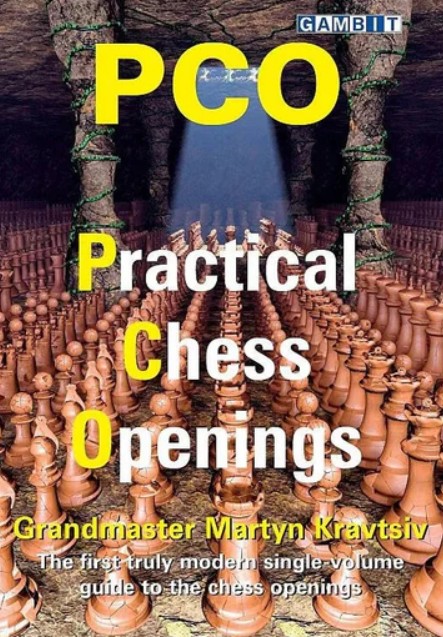
Practical Chess Openings
Think of this as the perfect companion to the previous book. Whereas Modern Chess Openings approaches opening play from its many decades of updates and refinements, Practical Chess Openings addresses the subject with a fresh approach, with cutting-edge computer analysis at the heart of it all.
The fact that any chess player can access a computer engine that is far stronger than the top human grandmasters has added a new dimension to opening preparation in the 21st century. Certain lines that once were popular have fallen by the wayside, while others have risen to take their place.
Related: Which Chess Engine Is The Best?
Most of the space in Practical Chess Openings is dedicated to the lines that are popular today, and that should remain topical in the future based on trends in computer analysis. Even so, the book does take great care to emphasize human understanding. If you want to gain an advantage out of the opening in today’s hyper-competitive world of opening preparation, then this book is for you.
Tactics
Making puzzle training a cornerstone of your chess improvement routine will surely improve your results. Here are two of the best books to help sharpen those tactical skills.
The Checkmate Patterns Manual
Checkmate ends the game! As such, checkmate is the most serious threat you can make in chess. It is the foundation behind many chess tactics.
The Checkmate Patterns Manual shows how to trap the enemy king in every conceivable way. From Boden’s Mate to Smothered Mate to Anastasia’s Mate… these are just a few of the 30 checkmate patterns that this comprehensive guide contains.
Work through each pattern, study the examples, and solve the exercises. Soon, you will be finding checkmating ideas faster than you ever thought possible.
A secondary benefit is that you will become more resistant to blundering. You will start seeing your opponent’s checkmating ideas in advance. This heightened awareness will help you to take appropriate countermeasures before the danger becomes too great.
1001 Chess Exercises For Club Players
When it comes to training tactics, consistency is the key. You need to put in the work, day after day, until the patterns become so familiar that you can spot them automatically.

1001 Chess Exercises For Club Players provides enough training material for even the most ardent chess improver. The first ten chapters have the exercises arranged by theme:
- Elimination of the Defense
- Double Attack
- Discovered Attack
- Skewer
- Pin
- Trapping A Piece
- Promotion
- Draw
- Mate
- Defending
Finally, the 11th chapter provides a mix of exercises where you must find the winning continuation without any clues as to what the motif may be - just like in a real game.
This book is meant for players with an elo rating between 1500 and 2000.
- Those below 1500 can try 1001 Chess Exercises For Beginners.
- Those above 2000 can check out 1001 Chess Exercises For Advanced Club Players.
Strategy
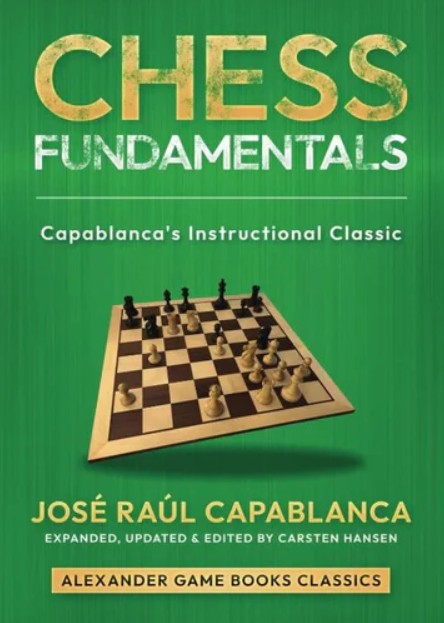
Chess Fundamentals
Chess Fundamentals is an excellent all-round strategy guide for players at the intermediate level. Adding to the appeal, it was written by the third World Chess Champion, José Raúl Capablanca. It is split into two parts:
The first part contains six chapters, each dealing with a different aspect:
- First Principles: Endings, Middlegame, and Openings
- Further Principles in Endgame Play
- Planning a Win in Middlegame Play
- General Theory
- Endgame Strategy
- Further Openings and Middlegames
The second part consists of 14 of Capablanca’s own games. He provides commentary that illustrates how the material from the first part of the book can be applied in practical play. These games feature several other legendary names from the early decades of the 20th century, including Frank Marshall, Akiba Rubinstein, and Emanuel Lasker.
Improve your positional understanding by learning from one of the greatest players of all time!
My System
Advanced players should study Aron Nimzowitsch’s classic book My System. It revolutionized chess understanding when it was first published back in the 1920’s. Today the lessons are just as relevant as ever. It can help you master positional chess.
Some regard My System as one of the most important chess books of all time. It popularized strategic ideas such as prophylaxis and introduced the idea that the center of the board can be effectively controlled using pieces rather than pawns. This is a core tenet of hypermodernism, a school of thought that Nimzowitsch was a leading advocate of.
Several of the most famous chess quotes originated from this book. For instance: “A passed pawn is a criminal who should be kept under lock and key.” Nimzowitsch’s expressive writing style is a real point of difference, making it a nice change from purely technical chess books.

Drill Your Chess Endgames!

The English Opening Vol 2: The Continuations 1.c4 e5 and 1.c4 Nf6

Chess Informant - Issue 165
Endgame
Endgame skill becomes essential as you climb through the ranks. At higher levels everyone knows their opening theory. Strong players also blunder less often in the middlegame. However, once most of the pieces have been traded from the board, the endgame provides the forum for real chess expertise to shine through.
These are the two books that no club chess player can afford to be without:
Dvoretsky’s Endgame Manual
The fact that Magnus Carlsen provided the foreword is a ringing endorsement of this book’s outstanding quality. Carlsen was the 16th World Chess Champion and is widely regarded as one of the greatest (if not the greatest) endgame players of all time.
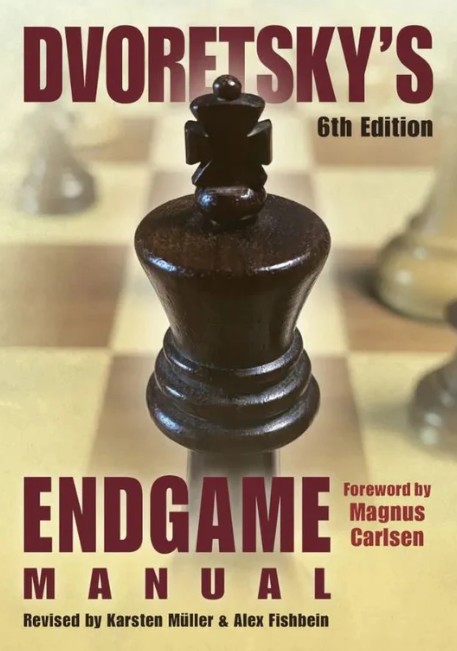
Here’s part of what Carlsen had to say about Dvoretsky’s Endgame Manual: “So, how will you benefit by reading this book? Its most compelling characteristics are that it is interesting, enjoyable, and very instructive. That also means you will learn more and retain your knowledge longer.”
Related: Understanding the Mindset of a Chess Champion.
The focus of Dvoretsky’s book is theoretical endgames. Certain configurations of pieces and pawns have known outcomes if played correctly. If you have studied the technique, you will gain many extra points as compared to flying blind and trying to figure it out under pressure while at the board. For example, the bishop and knight checkmate is almost impossible to calculate if you have not studied it before - whereas if you have studied it, it can be done reliably, every single time.
Fair warning: the book may feel quite dense for lower-rated players. Work through the material at your own pace. Follow the author’s suggestions and approach it with a curious mindset.
Mastering Endgame Strategy
The endgame is more than theoretical knowledge. It is also a practical fight between two imperfect human minds. Mastering Endgame Strategy shows how to not only apply the correct technique, but also how to apply pressure - the all-important “squeeze” in positions which may be theoretically drawn but still offer the opponent the chance to go wrong and thereby claim the full point.

The eight chapters cover the following:
- King Themes
- Pawn Themes
- Rook Themes
- Minor Piece Themes
- Queen Themes
- Miscellaneous Themes
- Exchanges
- Classical Themes
Then there are exercises for each of these chapters, along with solutions. It all combines to make this book the perfect way to level up your endgame play.

Did You Come Here To Play Chess Or To Have Fun?

Mastering Chess Defence

PRE-ORDER - The Iron English
Game Collections
To really bring everything together, you need to study entire games played by master players. By looking at how they conduct their games from beginning to end, you can see how phases such as “opening”, “middlegame”, and “endgame” flow into each other.
Here are two game collections that belong on every serious chess player’s bookshelf.
Garry Kasparov On My Great Predecessors
Garry Kasparov’s series My Great Predecessors is highly instructive. But it is also so much more. Readers are treated to a lesson in chess history. Across five volumes, Kasparov provides a history of the World Chess Championship - from Steinitz in the late 19th century to Kasparov’s own reign at the top in the final decades of the 20th century.
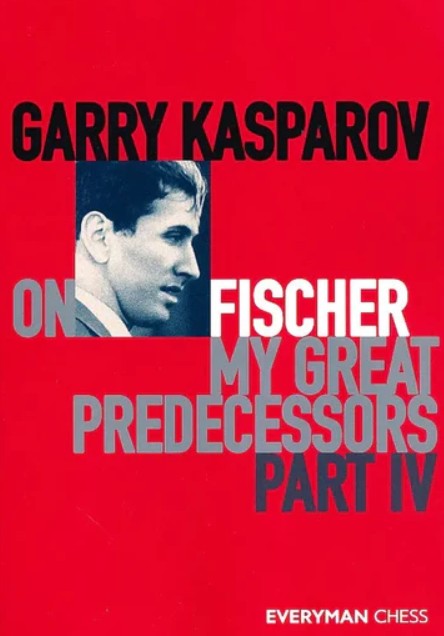
Kasparov takes the reader on a journey through some of the key games that defined each player’s career. The volume linked here sees Kasparov providing his thoughts on the games of Bobby Fischer - probably the two biggest names in chess history.
My Best Games of Chess, 1908-1937
Alexander Alekhine, the fourth World Chess Champion, was a genius at the chess board. This game collection provides a priceless window into Alekhine’s thought process as he takes on other world-class players.
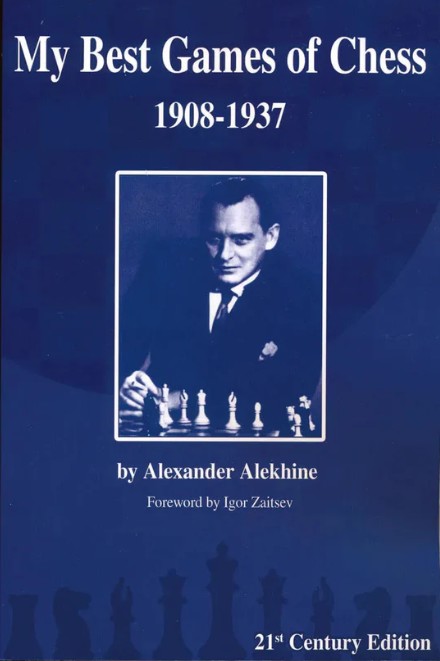
Alekhine’s games are particularly instructive as they feature clear plans that all club chess players can learn plenty from. Additionally, some of the tactical finishes are truly mind-blowing. Studying Alekhine's games is a treat for all chess lovers.
Next Steps
With so many outstanding chess books to choose from, you may be wondering where to start.
If rating improvement is your main goal, then focus on whichever aspect of your game is currently weakest. Most people benefit more from fixing their weaknesses than spending even more time on areas where they are already strong.
However, if gaining a rating is not currently your priority, then feel free to pick whichever book you think you would enjoy the most. There is always plenty to explore in this wonderful game! The main thing is that you are motivated and enjoying the experience of diving deeper into chess.
For more, check out our post: How to Choose the Right Chess Books for You.
Frequently Asked Questions
The best book to study chess depends very much on your level. Bobby Fischer, the 11th World Chess Champion, authored two books which are considered some of the finest ever written. Beginners can learn from Bobby Fischer Teaches Chess, while advanced players can study My 60 Memorable Games.
The 20-40-40 rule is a suggestion for how chess players should allocate their study time. It recommends spending 20% of time on opening study, 40% on the middlegame, and 40% on the endgame. The important part about this ratio is that, for most players, the middlegame and endgame are more important to improving at chess than studying openings.
Begin by asking yourself what your greatest weakness in chess is. Then, create a shortlist of books which promise to help with improving this aspect. To make your final decision, check what reader reviews said about the different choices. If you are a member of a chess club, you could also ask the other members for their experiences with the books on your list.