
Your Complete Guide to the Chess Engine
Chess engines have changed a lot about chess since they came onto the scene in the 1970s. What are they, and what can they do for regular chess players? They’re pretty amazing, and they can do a whole lot, it turns out. From the simplest calculating engine to the modern marvels that dominate elite grandmasters, it’s worth learning more about chess engines.

The Origins of Chess Engines
The idea of playing chess against a machine is hundreds of years old. In 1770, Hungarian inventor Wolfgang von Kempelen created a chess-playing machine called The Mechanical Turk. He claimed it was the world’s first fully automated chess master. It was revealed later that the chess master was a person hidden inside the cabinet.
Chess engines built real momentum in the late 1950s. Because chess is a game of pattern recognition on a limited field (the 8x8 board), it’s ideal for the development of mathematical computer algorithms. Alex Bernstein created the first program capable of playing an entire game of chess in 1957, building on work by the famed mathematician Alan Turing. Bernstein’s chess computer and IBM 704 mainframe took eight minutes to make a move.

The Guardian Series Chess Pieces - 3.75" King

Premium Chess Box - Mahogany

Chronos GX Clock Carrying Bag
One of the most famous examples of early chess engines is Deep Blue, the computer everyone knows from its matches with GM Garry Kasparov. Deep Blue played Kasparov twice, finally prevailing in 1997, fueling a barrage of marketing by IBM about the superiority of computers. Deep Blue calculated millions of positions, using probabilities and known strategies specific to Kasparov to make its moves. It was retired to the Smithsonian after its success.
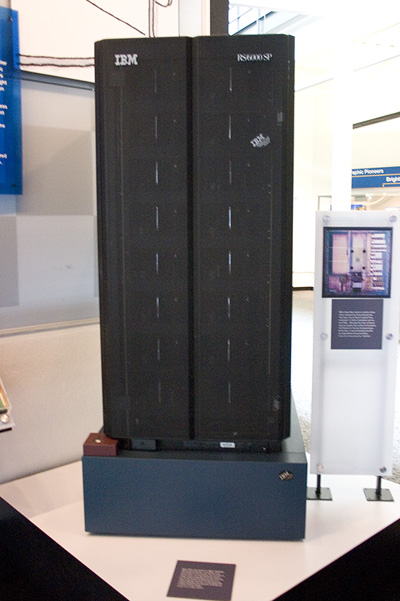
Deep Blue and others paved the way for today's complex, powerful engines by showing what was possible. As computing power became more compact and affordable, the vision of a truly powerful engine came to life.
How Do They Work?
There are two basic approaches used by chess engines. The simpler of the two relies on the computer's ability to calculate millions of positions per second and select the best move. This is called the “brute force” approach. The earliest chess computers, like IBM’s Deep Blue, relied on brute force to outplay their opponents. This is still a valid method today, but many of the top engines don’t rely on it exclusively.
The more popular approach today is a neural network. Per IBM, “A neural network is a machine learning model that stacks simple ‘neurons’ in layers and learns pattern-recognizing weights and biases from data to map inputs to outputs.” What does that mean? It describes a machine learning model that continuously updates itself based on new information. Rather than calculating the best move based on information fed in by programmers, a neural network can recognize patterns and adapt its approach based on game outcomes.

Photo by Tara Winstead for Pexels
Is this AI? The answer is yes, but… Machine learning is a type of artificial intelligence. Deep machine learning allows the machine to adapt based on real world outcomes (weights and biases). It’s not the “AI” everyone is talking about, however, like ChatGPT or Gemini. Those programs are very broad in scope and combine language models and neural network architecture to answer questions and simulate conversations. Chess engines are an example of computer learning, and neural network architectures enable this example of narrowly defined AI.

The *NEW* Austrian Coffeehouse Series Chess Pieces - 4.0" King

DGT 3000 Digital Chess Clock

The Camaratta Signature Championship Chess Table - Dark Brown
Modern Engines: Stockfish, Leela Chess Zero, and More
Modern chess engines are more powerful than anything early developers envisioned. Let’s look at a few of the best.
Stockfish
Stockfish is currently the top of the heap in publicly available engines. With an ELO of 3700+, it has all the power any chess player could want. After integrating an efficiently updatable neural network (NNUE) architecture in 2020, Stockfish has been unstoppable. It’s currently the default engine in many familiar chess apps, including Chess.com, Lichess.org, and Fritz. It’s also dominated the Top Chess Engine Championship since 2020.
Leela Chess Zero
Leela Chess Zero (LCZero) is the toughest competitor Stockfish has right now in competitive play, coming in runner-up in ten of the last twelve Top Chess Engine Championships. It uses a reinforcement learning strategy to improve its neural networks through self-play. Its ELO was tougher to pin down, but estimates ranged from 3300 to 3600+. One unique thing about LCZero is its ability to run on both the CPU and the GPU (graphics processing unit), which makes it very fast. Players say that LCZero is a bit more nuanced in its play, with some surprisingly “human” abilities to look forward and recognize uncommon strategic gambits.
Shredder
Shredder is a quality engine and user interface developed by Stefan Meyer-Kahlen in a table-based architecture rather than NNUE. Three decades of optimizing this architecture have snagged a rating of ~3300 ELO. The biggest strength of this engine is the library of “Shredderbases” that deep dive into endgames. Deep Shredder 13 is optimized to work on parallel processors but will work on a single processor as well.

The Modern Series Chess Pieces - 3.75" King

DGT Pegasus Chess Board (e-Board) - Wireless Bluetooth with USB Charger

Bobby Fischer Teaches Chess
Pure engines require a graphical user interface (GUI) to work on your computer. Arena is a free GUI that will work with any of these engines. There are other engines out there, of course, and you may find something else makes more sense for you. All the engines will play a mean game of chess and analyze it until the cows come home.

Photo by cottonbro studio for Pexels
(Note: I didn’t overlook Komodo. It was discontinued May 31, 2026. RIP Komodo.)
What Can an Engine Do for a Chess Player?
Chess engines are a convenient way to play chess. If you’re playing bots on any of your chess games, you’re playing the embedded engine. They’re also great for stretching yourself against a known quantity, as you can specify the ELO rating for the engine. Most will adapt to your play over time to give you an increasing level of challenge as you improve.
The other real strength of chess engines is analysis and study of completed games. If you ever wanted to know what you should have played, where you went wrong, or what mistakes your opponent made, a chess engine will tell you. It will also tell you what the most accomplished GM did wrong in their game, and what a historic chess master should have done. Engines can help you learn from your mistakes (and anyone else’s).

Photo by Vlada Karpovich for Pexels
For competitive chess players, chess engines are helpful in preparation. This is especially true if you have any of your opponent’s previous games to analyze. Do they have a favorite opening? What has thrown them off? The engine can recommend strategies designed to counter and frustrate a specific opponent or line of play. Just remember that humans are unpredictable!

The Camaratta Collection - The Botvinnik Flohr Series Chess Pieces - 4.0" King

Leap Digital Classic Chess Clock

US Chess Premium Chess Box
An Interesting Aside
Chess matches forbid the use of engines during play for obvious reasons. One exception is correspondence chess! The International Correspondence Chess Federation explicitly allows use of computers (but not people) to analyze moves. In 2022, American Jon Edwards took the ICCF title after two years of play. While many computer-aided correspondence games end in draws, players press small advantages and capitalize on human errors when they can.
What Can’t an Engine Do?
This is an interesting question. Chess engines are unbeatable when unrestrained. There are a couple of things they won’t do, however.
Chess engines don’t really innovate, though some of the newer NNUEs are pushing this boundary. Because they’ve been learning from established patterns and strategies, it would be surprising to have a chess engine stray into new territory. Chess engines won’t invent new game variations like Chess960, for example. Moves that appear “creative” to us are still the product of mathematical calculations, not intuition or genius.

The Sovereign Series Chess Pieces - 4.0" King

Premium Chess Box - Brazilian Rosewood

The House of Staunton PROFESSIONAL Tournament Bag
Chess engines won’t be your friend. I know, I know, that sounds childish, but playing against real people is something every chess player should do. In a world starved for connection, chess can bring people together over a shared interest. By all means, use your engines to study, analyze, and improve, but don’t forget to play against real people for fun.
Make Good Choices
Many players use a chess engine without even realizing it when they play bots and analyze games on their chess apps. If you’re ready to be more competitive, a high-powered engine can help you learn and improve as a chess player. Fire up your computer and start exploring those hypotheticals! As long as you can stay away from the temptation to peek during a game, engines are an invaluable resource.