
Why Is the Knight Chess Piece the Most Confusing? (And How to Master It)
If you want to start teaching chess to a new player, maybe a friend or family member, you are going to start by teaching them how the pieces move. The pawn is a little weird, but they can grasp that one quickly enough. The bishop and rook are not too difficult, and the queen moves like both of those combined. The king, well, it just moves like a worse queen. No, the problem arrives on horseback. Why is the knight so confusing, and how can you master it?

Understanding How the Knight Chess Piece Moves
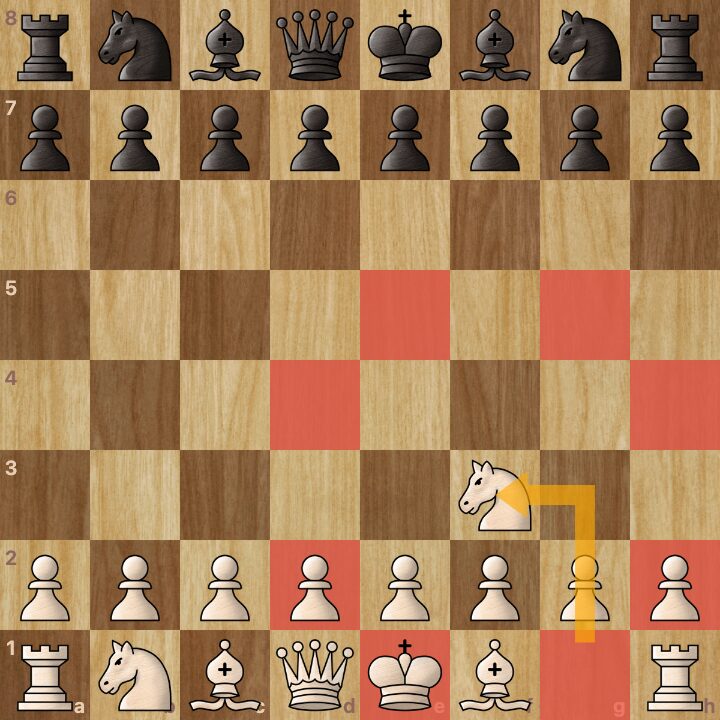
There are a few different ways to understand how knights move. Most people learn that the knight moves in an “L” shape. This shape is formed by the fact that the knight moves “up two squares and over one.” This can be done in any direction. If the knight has been moved to f3, then below in red are all of the squares the knight is now attacking. Because the knight moves in this unique way, it makes it an incredibly unique piece.
How the Knight is Different
Even though the queen is the most powerful piece, there are things a knight can do that the queen cannot. The knight is the only piece that can jump over other pieces. This makes the knight incredibly useful in certain situations and very strong in more closed positions where other pieces might be cramped and unable to move. It also means that, in the starting position, it is the only piece other than a pawn that can move on the first turn. You do need to be mindful of where you place your knights to make sure they are optimized.
The Knight's Tentacles
I like to think of the knight as an octopus. Its eight tentacles hovering over the board, ready to grab your opponent's pieces or propel them to a new location. With that in mind, you wouldn’t want to limit the reach of that Kraken! If you put the knight on the side of the board, you limit its reach.

The Collector Series Luxury Chess Pieces - 4.0" King

The Camaratta Signature Master Chess Table

LIMITED EDITION - DGT 3000 Digital Chess Clock
“Knights on the Rim are Dim”
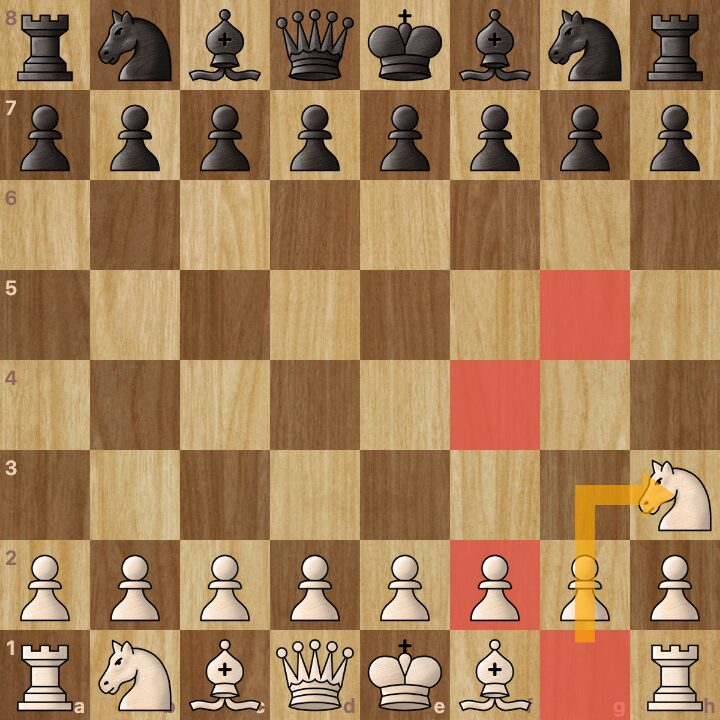
You may have heard this saying in chess that knights on the rim are dim, and it’s true! Compare this position with the previous one. If the knight had instead moved to h3, look at how many fewer squares that knight is now attacking. A piece's value in chess often depends on how many squares it affects and how quickly it can be useful in attack or defense. If your knight is on the side of the board, it is further away from action and more likely to be trapped and unhelpful.
Knights Used In Tactics
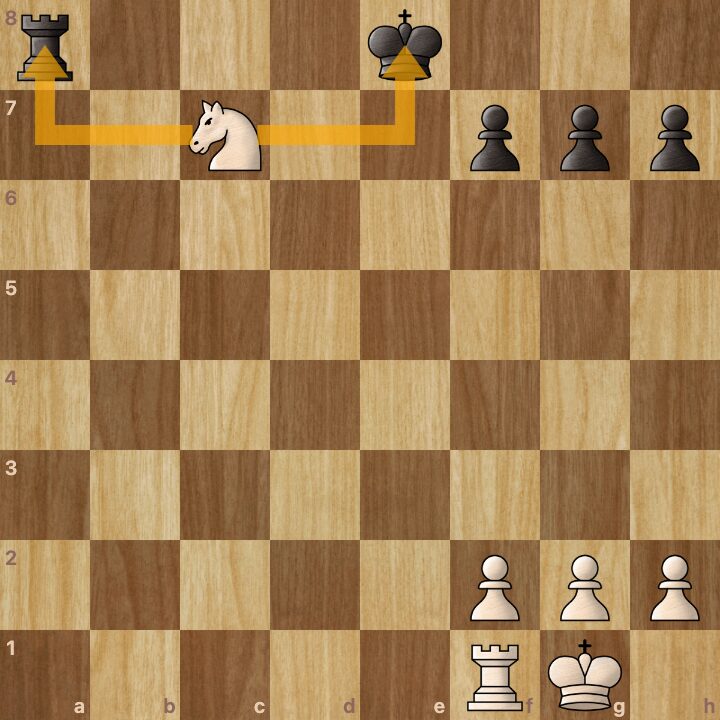
The most famous use of a knight, tactically speaking, is in a fork. A fork is a move where you attack two or more pieces at once. This can be done with any piece, but because a knight attacks in such a unique pattern and can jump over other pieces, it is very dangerous tactically speaking. A fork doesn’t have to involve a check, but if you attack the king and another piece, your opponent will not have the tempo they need to save that piece. Anytime your knight is within striking distance of the king, make sure you are calculating the checks that you have available to you. Look at the position below; this is one of the more famous kinds of knight forks that there are. The king is not yet castled, and the rook is still on its starting square.
Tempo
In chess, tempo is the amount of time in moves that it takes to do something. If I gave you five moves in a row, I’m sure you could even checkmate Magnus Carlsen! That’s the power of tempo. So, by attacking the king and another piece, your opponent doesn’t have the tempo they need to both escape and also to save their piece from your knight's attack. Always be on the lookout for checks, because many tactics in chess revolve around attacking the king.
Where Knights Like to Be
Knights thrive most on outpost squares. An outpost is a square where the knight cannot be scared away by a pawn. If a knight can set up on an outpost square deep in the opponent's territory, it can be a very frustrating piece to deal with. The value of a knight, like with any piece, can be dependent on its placement. Knights on the rim are not very strong, but knights on an outpost near the center of the board can be stronger than a rook. If you find yourself dealing with a strong knight in your position that is on an outpost, you may look to trade off that knight as quickly as you can.

The Bohemian Series Chess Pieces - 4.0" King - Lacquered

DOWNLOAD - CHESSBASE '26 - Premium Package

The Millennium King Competition Chess Computer
Knights vs. Bishops
The question that gets asked the most, especially by newer players who want to find any advantage they can, is what's better: a knight or a bishop. Most people asking this question have heard somewhere along the line that a bishop is somehow a stronger piece. But, like with most things in chess and life, it depends. Remember, piece value almost always depends on placement. Much of the value of a knight and a bishop comes from whether or not the position is open or closed.
Closed Positions
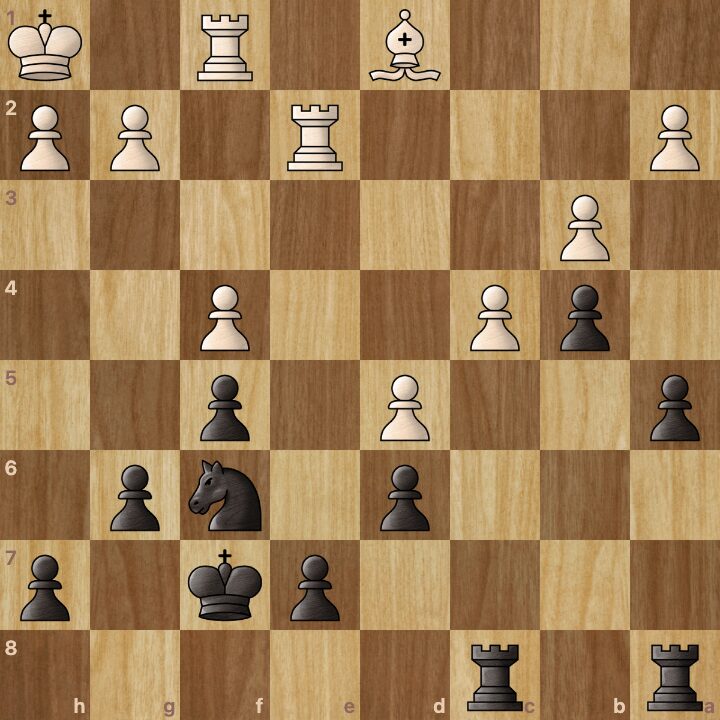
For Bishops, closed positions are often bad; closed down diagonals mean that the bishops have nowhere to go. But the knight doesn’t have that problem. Because the knight can jump around and over pieces, it will thrive in these closed positions. Often in these positions, a knight can find a good outpost because other pawns have been pushed and will leave undefended squares behind. When you have these closed-down kinds of positions, make sure you value your knights! Don’t just trade them away without purpose.
Open Positions
An open position occurs when pawns do not block the center of the board. Bishops favor open lines, and long diagonals become more valuable in such situations. If the central pawns have already been exchanged, your bishops can become particularly strong. In these kinds of positions, your knights may be less desirable than bishops, but at any moment during the game, a tricky knight fork might arise! If a knight is still on the board, you have to be on the watch for tactics.

The Burnt Dubrovnik Series Chess Pieces - 3.75" King

DGT 2500 Digital Chess Clock

Premium Chess Box - Brazilian Rosewood
How to Restrict Your Opponent's Knight Chess Pieces
If your opponent has a knight later in the game, it can be a tricky piece to deal with, but there are some strategies that you can use to restrict their piece. The biggest downfall of the knight is that there are only eight squares it can move to, and sometimes fewer. You can often position a piece in such a way as to restrict the knight from having any safe squares, therefore successfully trapping it somewhere on the board.
Defending Against and Using Knight Forks
Being late in a game, maybe winning, maybe drawing, and being hit by a knight fork is one of the worst feelings in chess. How do you keep this from happening? There is no surefire way to avoid missing tactics, but a few tips can help you stay ready to spot the pattern. First, do as many fork puzzles as you can.
Puzzles With Knight Chess Pieces
If you go online or find a chapter in a puzzle book dedicated to forks, studying that one pattern over and over will kick your pattern recognition in both offense and defense. During your games, you will stop seeing knights as stagnant pieces and start always being aware of where their eight tentacles reach. Online, you can practice by going somewhere like Lichess and doing puzzles from the themed fork section. If you are new to chess, set the difficulty to easy and do a hundred of these (or as many as you can make yourself stomach). Then, in your next game, I promise you will start to see those knight forks in your positions.

The Library Imperial Collector Series Luxury Chess Pieces - 3.0" King

Luxe Premium Chess Box - Amboyna Burl

The House of Staunton DELUXE Tournament Bag
Learning the Knight
If you want to master the knight, you need to play more chess. Do puzzles. Get comfortable with how the pieces move. The more you play, the more familiar you will be with that L-shape. If you struggle to feel confident as you play, getting more comfortable with the pieces will help. Right now, you may find yourself having to count out squares or thinking about where the pieces can move. As you get more experienced, the way the pieces move will feel more comfortable, and the knight will jump around the board with ease.