
The Best Way To Fight The Catalan Opening
The Catalan Opening has been labeled "one of the most frustrating openings in chess." Sophisticated, flexible, and hard to break down, White all too often succeeds at gaining a gradual positional advantage to squeeze out a slow, tormenting victory.
In this article, however, you'll learn about a fascinating antidote. Nicknamed the ‘Rapport Stonewall Variation,' this sideline has garnered a cult following for its courageous flair and impressive track record in both grandmaster and amateur games.
We’ll not only share how to play the Rapport Stonewall but also two more openings that sidestep the Catalan altogether—which may be the most sensible option for beginner and intermediate players!

The Catalan Opening: Rapport-Stonewall Variation
Richard Rapport, one of the world’s youngest-ever grandmasters, has never been afraid to stray from convention. Renowned for his aggressive, unpredictable style, he often utilizes offbeat, imaginative openings to bewilder opponents.
One such sideline that Rapport has become famous for is his aggressive answer to the Catalan Opening. By playing an early Ne4 followed by f5, Black builds a setup reminiscent of the Stonewall Dutch Defense—hence why some have nicknamed this variation the ‘Rapport Stonewall Dutch.'

The Library Imperial Collector Series Luxury Chess Pieces - 3.0" King

Luxe Premium Chess Box - Amboyna Burl

The House of Staunton DELUXE Tournament Bag
If White isn’t careful, their typically rock-solid Catalan can fall foul to a fierce kingside attack. Let’s see how it’s done!
The Rapport-Stonewall Statistics
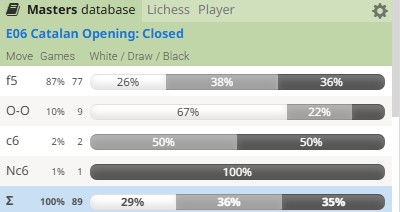
Trawling online chess openings databases, it’s tough to find lines that score well for Black against the Catalan. The Rapport Stonewall, however, is one of the few that scores a majority for Black at master level.
Start With 4...Be7, 5...Ne4, and 6...f5
The Catalan is a highly flexible opening system that can be reached in a wide variety of ways. Let's start with one of the most typical: 1. d4 Nf6 2. c4 e6 3. Nf3 d5 4. g3.

Continue with 4...Be7 5. Bg2. Now, it’s time to surprise White! 5...Ne4. White now usually castles, after which you play 6...f5. By move 6, you’ve already created your distinctive setup that even strong club-level players may have never encountered before:
1. d4 Nf6 2. c4 e6 3. Nf3 d5 4. g3 Be7 5. Bg2 Ne4 6. O-O f5
7. b3 and a Kingside Pawn Storm
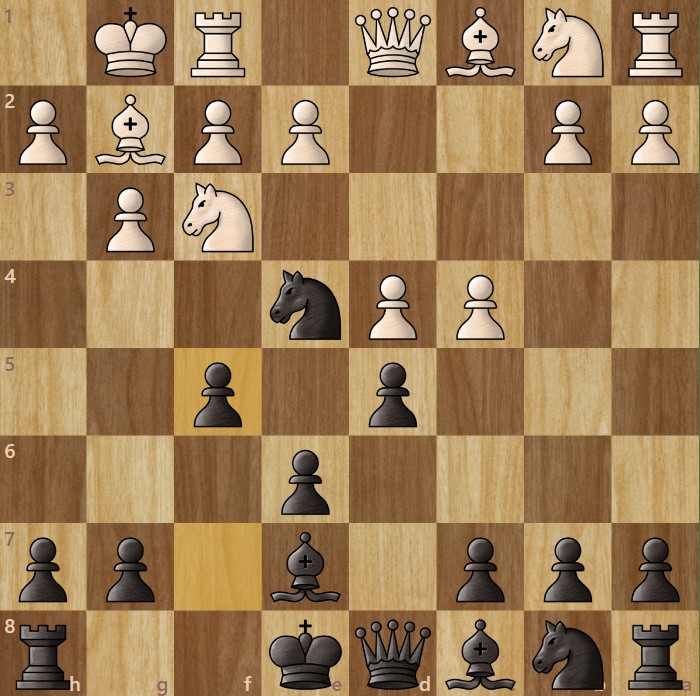
White’s favorite way to continue at club level is 7. b3. In other Stonewall Dutch setups, following with Ba3 is a typical way to challenge Black’s dark-squared bishop—though this time it’s questionable. Continue with 7...Nc6. Then, when White tries 8. Ba3, simply play 8…Bf6 to keep your bishop poised to support h4.
Now White has many options such as 9. e3 or 9. Nbd2. To most of them, simply continue with your outrageous kingside pawn storm: 9...h5!
1. d4 Nf6 2. c4 e6 3. Nf3 d5 4. g3 Be7 5. Bg2 Ne4 6. O-O f5 7. b3 Nc6 8. Ba3 Bf6 9. e3 h5

Almost regardless of what your opponent plays next, continue with 10...h4 and open up White’s defenses as much as possible. Then, castle long and use your queen, rooks, and other pieces to pressure White’s remaining defenses. To demonstrate, let’s take a look at White’s most common response among club players.

The *NEW* Austrian Coffeehouse Series Chess Pieces - 4.0" King

Premium Chess Box - Golden Heart

The Large Ultimate Chess Bag
10. h4
White’s most common way to tackle the threat in amateur games is 10. h4. While this move is even sometimes seen in master games, it’s a weak choice. Did White not spot 10...g5 coming?
White is pushed to capture, leading to the sequence 11. hxg5 Bxg5 12. Nxg5 Qxg5. Black is now threatening to push 13...h4.

White’s kingside is now significantly weakened and will suffer a barrage from Black's rooks and queen. Oftentimes, it becomes worth sacrificing the e4 knight to finish off White’s defenses and finish the job with a mating attack.
7. Nc3
Now, let’s rewind all the way back to the move. 7. Of course, White has many options besides 7.b3. The most commonly played is 7. Nc3. To meet this move, you must change your plans substantially. Begin by playing 7...c6 to create the classic Dutch Stonewall setup. Again, White has several options.
1. d4 Nf6 2. c4 e6 3. Nf3 d5 4. g3 Be7 5. Bg2 Ne4 6. O-O f5 7. Nc3 c6
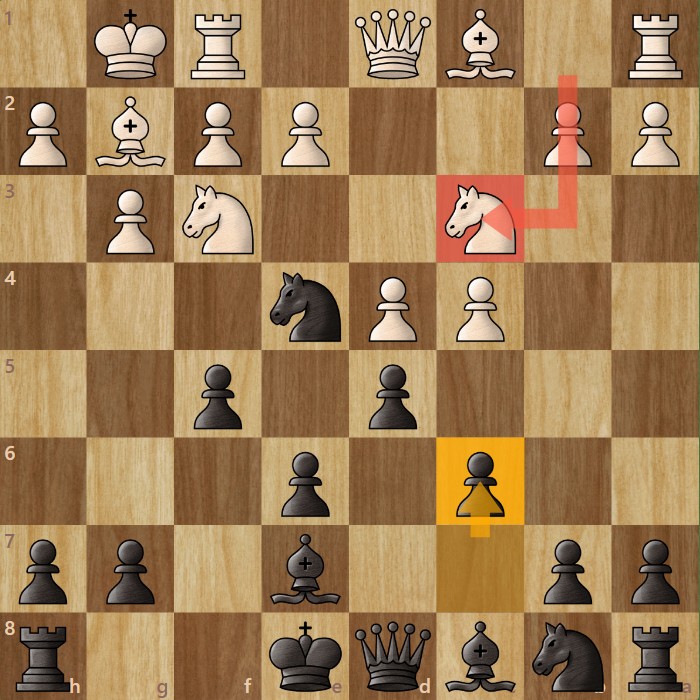
- If White plays 8. Ne5, be sure to challenge with 8…Nd7. If White chooses not to trade, make sure you do on the next move—even if White kicks your other knight! (9. f3 Nxe5)
- If White plays typical development moves such as 8. Qc2 or 8. Bf4, continue with Nd7 and castling kingside.
- If White trades pawns in the center (cxd5), capture with your e-pawn rather than your c-pawn.
- If White plays Rb1, beware that b2-b4 is coming. Answer with a7-a5 to prevent White from gaining too much space on the queenside.
- In some lines, it’s possible to continue with kingside pawn storm ideas, usually g7-g5 followed by h7-h5. Be warned this is much more nuanced than in the 7. b3 line and requires careful study!
In summary, playing against other lines such as 7. Nc3 really does take a lot of study and a firm grasp of the Catalan Opening system to combat effectively. If you’re an advanced player and ready to do the homework, then the Rapport Stonewall is one of the most rewarding lines you could study.
If, however, you are a beginner or intermediate player, you might wish to avoid the Catalan altogether and focus on simpler alternatives.

The Fischer Spassky Series Chess Pieces - 6.0" King

DOWNLOAD - CHESSBASE '26 - Premium Package

The Millennium King Competition Chess Computer
How to Avoid the Catalan Opening
The Catalan Opening is so flexible that it can be played against most responses to 1. d4. There are, however, some exceptions that give Black more power to shape the course of the game. Let's take a look at two examples.
Best for Intermediate Players: The Benko Gambit
The Benko Gambit is an extremely assertive opening that upsets White’s usual plans and puts Black in the driver’s seat. It can be reached in a few of different ways. The most common are:
- Via the ‘Old Benoni Defense’: 1. d4 c5. 2. d5 Nf6 3. c4 b5
- Via the Indian Defense/Modern Benoni Defense: 1. d4 Nf6 2. c4 c5 3. d5 b5
Either way, the board ends up looking like this:

The central tenet of the Benko Gambit is piece activity over material. By allowing White to capture two pawns, you win a lead in development, leading to tactical opportunities and often crushing pressure down the a- and b-files with your rooks.
A great example is this aggressive line that has been used to great effect by the world’s greatest chess players like Magnus Carlsen and Alireza Firouzja: 1. d4 Nf6 2. c4 c5 3. d5 b5 4. cxb5 a6 5. bxa6 g6 6. Nc3 Bg7 7. e4 O-O 8. Nf3 Qa5.
Better for Beginners – The Englund Gambit
The Benko Gambit may be easier to understand than the Catalan opening, yet it still requires solid positional understanding and isn’t ideal for beginners either. Instead, an interesting, provocative choice vs. 1. d4 for beginners is the Englund Gambit (1. d4 e5)
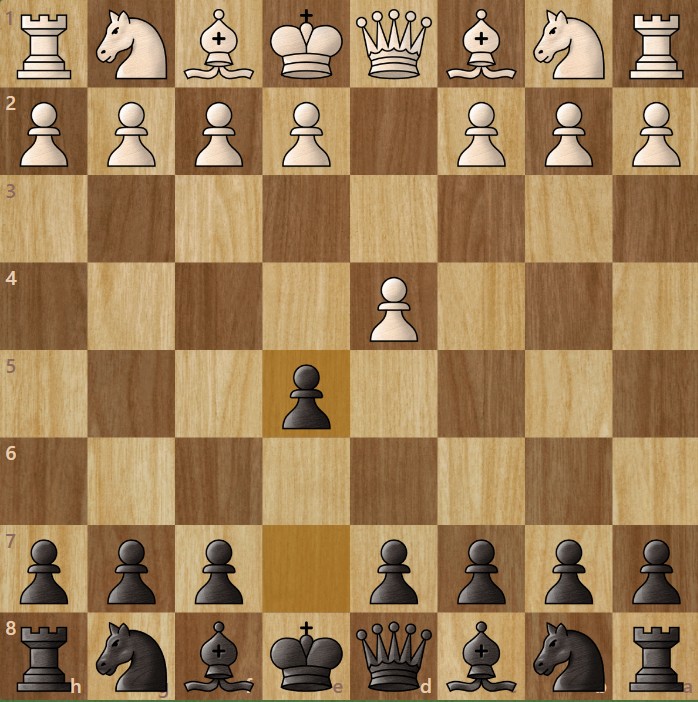
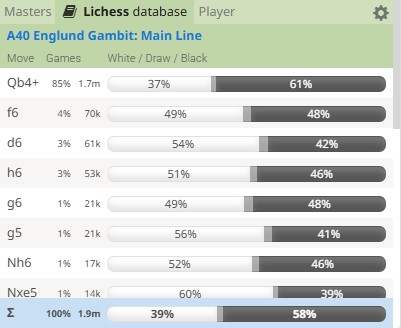
Be warned—this risky opening is consistently considered unsound against stronger opponents, yet it contains many chess tactics that can easily catch beginners out. The main line is dangerous for both sides and is laden with traps that can end the game very quickly.

The Library Collection - The Anderssen Dropjaw Series Luxury Chess Pieces - 3'' King

DOWNLOAD - FRITZ 21

Millennium eONE Electronic Chess Board for playing on chess.com
The lesser-known Hartlaub-Charlick Gambit is a fun sideline of the Englund Gambit that leads to exciting, open games, full of attacking opportunities for Black. Despite being dubbed reckless, both of these lines score extremely well for Black at the beginner level, and at higher levels at faster time controls too!
Fighting the Catalan Opening: Our Conclusion
The Catalan Opening is truly one of the toughest chess openings to counter with the black pieces. For advanced players, the Rapport Stonewall Variation is one of Black’s best chances to break down White’s defenses and create dynamic counterplay. It must be remembered, however, that the Catalan is flexible, complex, and requires extensive study to answer the myriad variations.
For most beginner and intermediate players, therefore, the Catalan Opening is better avoided altogether. By beginning the game with an assertive gambit such as the Benko gambit, you take the driver’s seat, ready to steer the game into territory where it might be White who is forced to fight for equality instead!