
The History of the World Chess Championship: From Steinitz to Today
The World Chess Championship 2026 is set to start soon and I think we need a history lesson, what say you?
I, for one, was a massive fan of the 2024 championship when Gukesh won the title by defeating defending champion Ding Liren.
Watching that final game in Singapore, seeing the moment Gukesh realized what had just happened on the board, watching him press his face into both hands and clutch his chest before walking back to accept his opponent's handshake... I genuinely had goosebumps.
Now with Geneva confirmed for the 2026 match between Gukesh and Javokhir Sindarov, I think this is the perfect moment to go back to the very beginning.
So grab a coffee… this is going to be a good one.
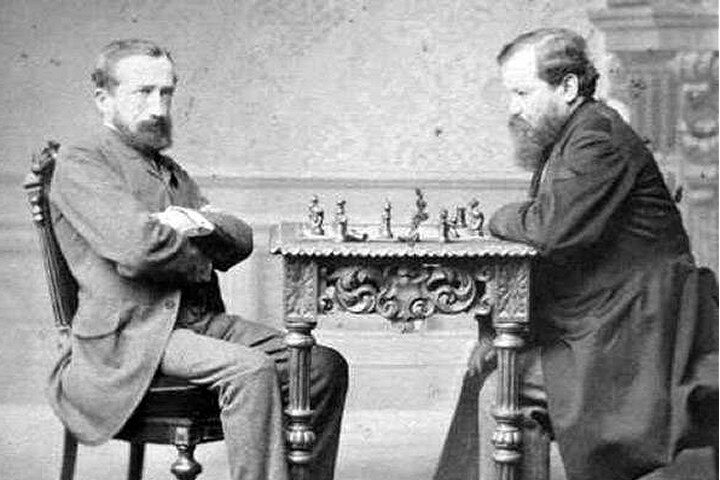
1886: Two Men and an Argument That Needed Settling
Here is something I find genuinely fascinating about the Chess World Championship. Before 1886, the whole thing was just... vibes. Strong players challenged each other, matches were played, reputations were made and destroyed across European clubs and newspapers.
However, no governing body existed. There was no formal title on the line, and nobody had agreed on who actually wore the crown. Two players got tired of the ambiguity and decided to settle it properly.
The First Agreement That Changed Everything
The most significant thing about the 1886 match between Wilhelm Steinitz and Johannes Zukertort was the first sentence of their pre-match agreement. Which stated that both players agreed to "play a match at Chess for the Championship of the World."

The Guardian Series Chess Pieces - 3.75" King

Premium Chess Box - Mahogany

Chronos GX Clock Carrying Bag
Those words created the classical chess lineage that runs unbroken from that New York parlor in 1886 all the way to Geneva in 2026.
Wilhelm Steinitz vs Johannes Zukertort
The Chess World Championship match three years later finally resolved that ambiguity. Steinitz won 10–5, became the first official World Chess Champion, and established the title that every player since has spent their career chasing.
When World Chess Champions Held the Title for Decades
The early 20th century produced a kind of chess aristocracy where champions reigned for extraordinary lengths of time. Emanuel Lasker held the Chess World Championship title for 27 years from 1894 to 1921, the longest reign in the entire history of the game.
He lost it to the Cuban prodigy José Raúl Capablanca in Havana.
Then Alexander Alekhine happened.
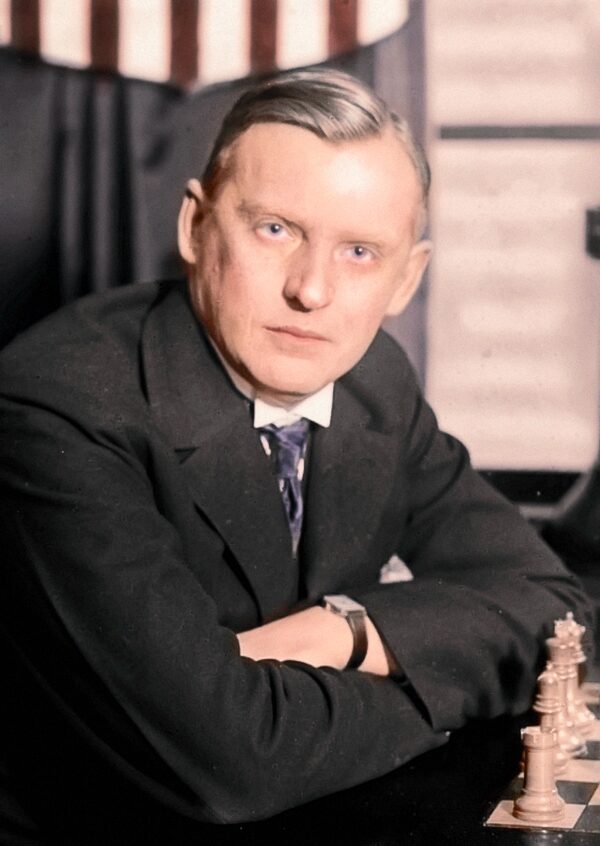
Alekhine defeated Capablanca in Buenos Aires (1927). The 34-game total match score was 6 wins, 3 losses, and 25 draws.
Capablanca spent the rest of his career seeking a rematch that Alekhine kept finding reasons to avoid. Alekhine briefly lost the title to Max Euwe of the Netherlands in one of the biggest upsets in championship history. But then won it back in 1937 and held it until his death in 1946.
Suddenly, for the first time since 1886, there was no living world chess champion.
Soon, FIDE stepped in, organised a match tournament in 1948, and a Soviet named Mikhail Botvinnik won it.

The Modern Series Chess Pieces - 3.75" King

DGT Pegasus Chess Board (e-Board) - Wireless Bluetooth with USB Charger

Bobby Fischer Teaches Chess
The Soviet Machine and the American Who Broke It
The Soviet Union dominated chess through its state-funded program, using the game to demonstrate intellectual superiority. The USSR had held the Chess World Championship without interruption since 1948.
Champions and challengers were funded, coached, and deployed as symbols of ideology. Chess was politics. Then Bobby Fischer arrived, and the whole apparatus shook.
Fischer, Kissinger, and the Most Dramatic No-Show in Sports History
By 1972, Bobby Fischer had already made the chess world pay attention with 6-0 qualifying sweeps against elite grandmasters.
However, his journey to the Chess World Championship match in Reykjavik nearly collapsed before a single piece was moved.
Bobby Fischer objected to the prize fund, to the television arrangements, to the venue itself. The opening ceremony came and went and his chair stayed empty.
Then Henry Kissinger, the National Security Advisor to President Richard Nixon, picked up the phone.
"Bobby, this is the worst player in the world calling the best player in the world," Kissinger reportedly said with his diplomatic charm. "America wants you to go over there and beat the Russians."
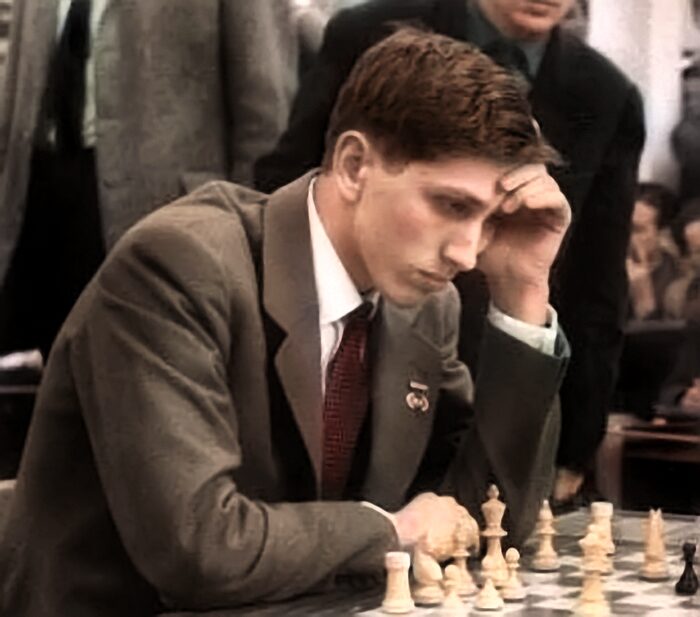
British financier Jim Slater simultaneously doubled the prize fund to $250,000. Between national duty and a doubled purse, Fischer ran out of reasons to stay home.
The Match That Stopped the World
Bobby Fischer won the match 12.5-8.5, ending 24 years of Soviet domination. He became the first American-born World Chess Champion.

The Sovereign Series Chess Pieces - 4.0" King

Premium Chess Box - Brazilian Rosewood

The House of Staunton PROFESSIONAL Tournament Bag
Membership of the US Chess Federation doubled in the two years that followed. Chess columns appeared in newspapers where there had been none before.
Not just that… shops across the world sold out of boards and pieces in what the trade still calls the Fischer boom!
Kasparov Vs Karpov
Fischer then refused to defend his title in 1975, forfeiting it due to disputes over match conditions.
Because of that Anatoly Karpov became champion by default and spent the next decade proving he deserved it.
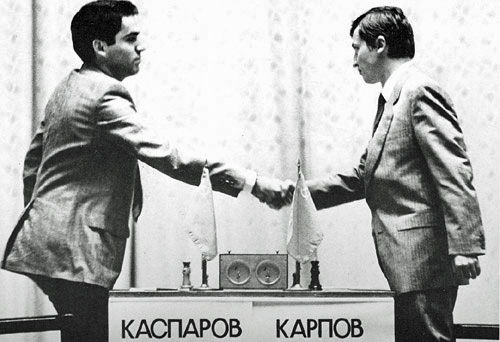
Then, in 1984, a 21-year-old named Garry Kasparov arrived and started the greatest rivalry the Chess World Championship has ever produced.
The Match That Never Ended
Karpov led 4–0 after nine games, reached 5–0 after Game 27, and Kasparov fought back across draws and three wins to make it 5–3 before the match was stopped.
After Kasparov won games 47 and 48, FIDE President Florencio Campomanes unilaterally terminated the match without a result.
Five Matches That Defined an Era
The 1985 rematch saw Kasparov win, becoming World Chess Champion at 22 — the youngest in history at that point. All in all, Garry Kasparov vs Anatoly Karpov produced five Chess World Championship matches between 1984 and 1990.
Kasparov won three, the 1984 match was aborted, and the 1987 match ended level when Kasparov won the final game precisely when he needed to. The rivalry was a profound stylistic collision: Karpov's cold, precise, positional stranglehold against Kasparov's explosive preparation and relentless initiative.
Critically, opening preparation and seconds became central to the Chess World Championship during this era, with both players investing enormous resources in pre-game analysis. That culture transformed how the championship is contested today.
Kasparov held the title until 2000, when Vladimir Kramnik built a defensive fortress with the Berlin Defence that he simply never broke through.

The Collector Series Luxury Chess Pieces - 4.0" King

The Camaratta Signature Master Chess Table

LIMITED EDITION - DGT 3000 Digital Chess Clock
The Split That Confused Everyone; and the Reunification That Fixed It
Honestly, this is the chapter of chess history I find most genuinely confusing, and I say that as someone who has spent considerable time trying to understand it. From 1993 to 2006, there were essentially two Chess World Championship titles running simultaneously.
Kasparov broke from FIDE in 1993 over match condition disputes, forming the Professional Chess Association with Nigel Short.
He defended his own classical chess lineage independently while FIDE ran a separate championship.
This meant two players simultaneously called themselves world champion, which satisfied nobody. Vladimir Kramnik finally resolved the mess in 2006 by defeating FIDE's champion Veselin Topalov in a reunification match in Elista, Russia, restoring the single classical chess lineage.
Viswanathan Anand then took the title from Kramnik in 2007 and defended it until 2013, when Magnus Carlsen defeated him in Chennai.
The Carlsen Decade
Magnus Carlsen won the Chess World Championship in 2013 and defended it four consecutive times.
He played against Viswanathan Anand in 2014, then Sergey Karjakin in 2016 and against Fabiano Caruana in 2018.
He went up against Ian Nepomniachtchi in 2021.

I think the 2018 Fabiano Caruana match deserves its own mention because all 12 classical games ended in draws, making it the first Chess World Championship in history where neither player won a single classical game during the classical portion.
Carlsen then won the rapid and blitz tiebreaks 3-0.
During his decade at the top, Magnus Carlsen held a peak FIDE rating of 2882 (the highest in chess history) and dominated rapid and blitz chess simultaneously.
His influence on opening preparation and seconds culture transformed what championship preparation looks like. Entire teams of grandmasters now work full-time preparing opening lines for championship contenders.
Carlsen eventually declined to defend his title in 2023, citing a lack of motivation, which set up the 2023 match between Nepomniachtchi and Ding Liren.
Ding Liren won the rapid tiebreaks to become the 17th World Chess Champion.

The Burnt Dubrovnik Series Chess Pieces - 3.75" King

DGT 2500 Digital Chess Clock
Premium Chess Box - Brazilian Rosewood
Singapore 2024
I want to tell you about game 14 in Singapore, because I genuinely think about it more than I probably should.
Fourteen classical games between Gukesh Dommaraju, 18 years old, born in Chennai in 2006, and defending champion Ding Liren, and neither player had been able to separate themselves from the other.
Thirteen games in, the score was tied.
Everything came down to the final game. And in that final game, on move 55 of a rook endgame that should have been a draw, Ding made a blunder.

The kind of blunder that a player of his caliber makes perhaps once in a career.
So, Gukesh won match 7.5-6.5, with three wins, two losses, and nine draws.
Ding said afterward: "I was totally in shock when I realised I made the blunder." Gukesh, for his part, pressed his face into both hands and walked away from the board.
He needed a moment that the cameras followed him into, and when he came back he shook Ding's hand and held it together long enough for the photographs.
At 18 years old he was the 18th World Chess Champion, the youngest in the entire history of the game, breaking the record that Garry Kasparov had held since 1985.
He also became the second Indian, after Viswanathan Anand, to hold the title. He had qualified by winning the FIDE Candidates Tournament in Toronto in April 2024, scoring 9/14 as the youngest Candidates winner ever at 17 years old.
When the press asked him about it afterward, he said: "I've been dreaming about this moment for more than 10 years. Every chess player wants to experience this moment and very few get the chance."
Meanwhile, Ju Wenjun of China continues to do something quietly extraordinary on the women's side that deserves far more attention than it typically receives.
She has now defended the Women's Chess World Championship five times since first winning it in 2018, most recently defeating Tan Zhongyi 6.5-2.5 in 2025.
How the Modern Chess World Championship Works
I want to walk you through this clearly because the qualification path genuinely confuses most casual fans, and honestly, it confused me for a long time, too.
Getting to the FIDE Candidates Tournament
The centerpiece of the entire qualification system is the FIDE Candidates Tournament, an eight-player double round-robin where the winner earns the right to challenge the reigning champion.
The 2026 Candidates Tournament took place in Pegeia, Cyprus, from March 28 to April 16, 2026.
Javokhir Sindarov won it with an undefeated score of 10/14.
Players reach the Candidates through three main routes. The FIDE World Cup, a large knockout tournament, awarded three qualifying spots for the 2026 cycle with players finishing first, second, and third earning berths.
The Grand Swiss Tournament, held in Samarkand, Uzbekistan in September 2025, offered two qualifying spots to the top two finishers in an 11-round Swiss-format event.
Additionally, the FIDE Circuit points system accumulates across the full calendar year, awarding points based on elite tournament results weighted by format and field strength.

The Bohemian Series Chess Pieces - 4.0" King - Lacquered

DOWNLOAD - CHESSBASE '26 - Premium Package

The Millennium King Competition Chess Computer
The Match Format
The Chess World Championship match uses a 14-game classical match format with classical time control: 100 minutes for the first 40 moves, 50 minutes for the next 20, then 15 minutes for the remainder with a 30-second increment from move 1.
If the match is tied 7-7 after 14 classical games, rapid and blitz tiebreaks follow. Four rapid games at 15 minutes plus 10 seconds increment begin first. If those remain level, blitz games at 5 minutes plus 3 seconds follow.
If everything is still tied, an Armageddon chess game settles it definitively.
The Armageddon chess game gives Black a draw advantage but White more time, guaranteeing a decisive result regardless of how evenly matched the players are.
The FIDE prize fund for the 2024 match totaled $2.5 million, with $200,000 awarded per win and the remaining funds split between the two players.
Similar prize structures are expected for Geneva 2026.
Geneva 2026: What Comes Next
The World Chess Championship 2026 schedule runs from November 25 to December 15 in Geneva, Switzerland.
FIDE confirmed the venue on July 28, 2026, bringing the title match back to Switzerland for the first time since Kramnik and Leko met in Brissago in 2004.
Both players, Gukesh and Sindarov, will be 20 years old when the match begins, making this the youngest Chess World Championship contest in history.
Javokhir Sindarov qualified through the FIDE World Cup 2025 in Goa, India. He performed brilliantly there and then produced a dominant, undefeated Candidates campaign that announced him as a genuine force.
The Chess World Championship has always been where the game's greatest stories happen.
Geneva is about to add another one.