
Paul Morphy: A Chess Career in Brief
Chess history is full of larger-than-life figures, but none made a bigger impact in fewer years than Paul Morphy. In two short years, this chess prodigy fundamentally changed the way the game was played around the world. While we’ll never know exactly where he stands in the pantheon of great chess players, there’s a good argument to be made that Morphy was the best player of all time. Let’s back that bold statement up with a brief look at his life and accomplishments.
Early Life in America
Paul Morphy was born in 1837 in New Orleans, Louisiana. His parents were prominent in New Orleans society, enjoying wealth and status conferred by his father's seat on the Louisiana State Supreme Court and his mother's French Creole heritage.
There’s no definitive story of how Paul Morphy learned to play chess. In a story told by his uncle, Ernest Morphy, young Paul watched a game between his father and uncle that ended in a draw. Paul announced that his uncle should have won and reset the pieces to show how. While this story is likely apocryphal, he almost certainly learned to play by watching the adults.
The Prodigy of the Century
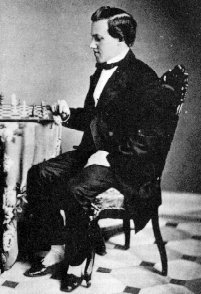
In 1846, when he was nine, there was no question that Morphy was a true prodigy. He’d built a strong reputation in New Orleans. Simply put, Morphy dominated every game he played. When a visiting luminary wanted a formidable opponent, Morphy was summoned and quickly dispelled any disbelief that a child was a master of the game.
In 1857, Morphy reluctantly stepped onto the national chess stage by decisively winning the First American Chess Congress. The 16-player knockout tournament was a showcase for the top talent in the country. Morphy won with 14 wins, one loss, and three draws. He initially turned down the tournament invitation, then turned down the prize money, but it didn't stop people from hailing him as the chess champion of the United States.

The Sovereign Series Chess Pieces - 4.0" King

Premium Chess Box - Brazilian Rosewood

The House of Staunton PROFESSIONAL Tournament Bag
Morphy played a style of chess that was far advanced from a1850s focus on conservative positions and gaining material. Morphy was one of the first to play in the modern style—controlling the center, developing pieces rapidly, and sacrificing material as needed. If his opponent could contend with that, he was also unparalleled at seeing the best move and taking it. Many of his games continue to be studied today for their simplicity and brilliance.
Storming Europe
As the popularly recognized chess champion of the United States, Morphy was encouraged to play the great chess players of Europe. One of the most famous games that never happened was Howard Staunton vs. Paul Morphy. Staunton lost his own London International tournament in 1851 and was considered past his prime years. Nevertheless, he was one of the most renowned players in Europe. In 1958, Morphy traveled to Europe to set up a meeting with Staunton without success. Staunton made several excuses, but it’s likely that he declined the match to avoid being trounced by the 21-year-old prodigy.
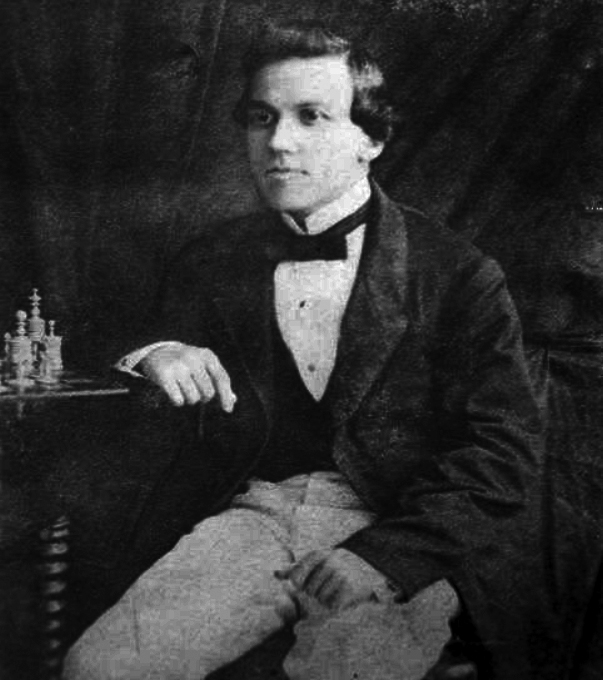
By Unknown author, Public Domain
Morphy traveled to Paris, playing those who would accept his challenges. Adolf Andressen, the winner of the London International and titular “world champion” agreed to play Morphy and was defeated 7-2-2. Despite being ill during the match, Morphy dominated Andressen. Andressen played with an aggressive attacking style unlike many of his contemporaries, but it was no match for Morphy’s brilliance. Anderssen acknowledged after the match that Morphy simply outclassed him. Many people hailed Morphy as the strongest player in the world.
The Opera Game
The Opera Game of 1858 is one of the most famous games of chess in history. The game pitted Morphy against two amateurs, Karl II, Duke of Brunswick, and Comte Isouard de Vauvenargues. His opponents played black. They collaborated on each move. The game was played at the Salle Le Peletier opera house while an opera was performed (possibly The Barber of Seville, which I am most familiar with via Bugs Bunny). Morphy’s play was fast and aggressive, but his rapid development and final queen sacrifice led to checkmate in 17 moves.

After his grand tour of Europe cemented his place as the top player in the world (unofficially), Morphy continued to play exhibitions and matches, but no longer played competitive chess. He insisted on giving odds to everyone he played, even elite chess players. He’d effectively retired from competitive chess in 1859, going so far as to say it could not be a career one pursued professionally.

The Broadbent Series Chess Pieces - 3.0" King

DOWNLOAD - Chess King Learn Beginners 6 - Forever Pack All Platforms
Morphy’s Law…Career
Prior to this, Morphy attended Spring Hill College in Alabama and University of Louisiana, obtaining a law degree in 1857. At the time, Louisiana required attorneys to be at least 21 to be admitted to the bar. Morphy used the time for his extraordinary “gap year" in Europe.
When Morphy (mostly) retired from chess at 22, he endeavored to start practicing law as he had always intended. It did not go well. His law practice had not taken off before the start of the Civil War in 1861, and his stance on Southern secession (he thought it mostly illegal) was unpopular in Louisiana. His celebrity may have worked against him, as people primarily associated him with chess.
A Life of Idleness and Mental Illness
When three attempts to start his law practice failed, Morphy gave up on law and lived off his family money. At loose ends, Morphy descended into a state of mental illness and paranoia. There are accounts of him talking to himself and imaginary people, as well as accusing those around him of persecuting him. His family attempted to have him committed against his will, but he argued convincingly that he was competent. His mental deterioration and paranoia continued until his death in 1884 from “congestion in the brain,” likely a stroke in today’s terms.

The Collector Series Luxury Chess Pieces - 4.0" King

The Camaratta Signature Master Chess Table

LIMITED EDITION - DGT 3000 Digital Chess Clock
The inevitable comparison with another great American grandmaster, Bobby Fischer, unfortunately includes a similarity in their mental health struggles. Paranoia, erratic behavior, and difficulty with authority pushed both men onto the fringes of society.
Legacy
While Paul Morphy was a somewhat unwilling chess superstar, he had a lasting impact on the game. He founded the Chess Club of New Orleans in 1857 and was the co-editor of Chess Monthly for several years after. As the first global chess phenom from America, Morphy forced the European chess elite to take American chess more seriously. Many of today’s chess players hail Morphy as the prototype of the modern player. His style of play would indeed seem right at home at any club now, making him far ahead of his time.
While it’s impossible to say who the best chess player of all time is definitively, Paul Morphy deserves to be in the top five, if not the top three. GM Magnus Carlsen, GM Bobby Fischer, or GM Garry Kasparov might have easily beaten him thanks to 150 years of advances in chess theory, but it would be a fun contest to see. No guarantee on that outcome!

If you’d like to dive deeper into the genius of Paul Morphy, the recent biography “The Real Paul Morphy: His Life and Chess Games” by Charles Hertan is a must-read. Charles Hertan is an award-winning chess writer and professional psychotherapist, and this book delves into both the chess and the mind of the man at the board.

The Harrwitz Series Timeless Chess Pieces- 3.5" King

Super Deluxe Tournament Director Kit

Large Wedge Chess Clock Carrying Bag
Conclusion
Paul Morphy was the kind of prodigy who is born once in a century. Seemingly absorbing chess theory from the atmosphere around him, he dominated the world chess scene as a brief but blinding phenomenon in the 1850s. In two short years, he cemented his place in chess history and foreshadowed the way modern chess would be played decades later. The greatest player ever? We’ll never know, but we can say with certainty that he belongs in the final few.