
The Best Chess Openings for Beginners
So much of chess theory revolves around grandmaster-level chess, but what about the best chess openings for beginners? It turns out that the best openings for beginners are often very different from the best for grandmasters—and you’ll seldom find well-researched chess tutorials for the best beginner openings.
It’s time to change all that. In this guide, we won’t waste your time teaching you the Ruy Lopez or other elite chess openings. Instead, we’ll focus on six openings that are fun, easy to understand, and score statistically strongly at the beginner level.
If you’re a beginner looking for an edge on your rivals, this is a guide you’ll be glad to read.

The Best Chess Openings for Beginners for White
Three carefully selected chess openings for beginners with the White pieces.
The King’s Gambit
The King’s Gambit might just be the best chess opening for beginners who like attacking play. Why? It’s fun, exciting, easy to understand, and very dangerous for an unprepared opponent.

The central idea of the King’s Gambit is to sacrifice a pawn and gain control of the center. Gambiting the f-pawn also opens the f-file for your rook to attack later in the opening. Herein lies the best beginner game plan in the King’s Gambit: Attack f7!
Simple Game Plan: Attack f7
Because the f-file is flung open in the King’s Gambit, you can often castle short to give your rook a clear shot at f7. Use your other pieces to mount an attack—your light-squared bishop on c4, knight on g5 or e5, and queen on f3 or h5 can combine to create crushing pressure on the vulnerable square.

In the above continuation of the King’s Gambit, White has just played Ng5 to discover the rook and launch a 4-piece attack on f7. With h7 also hit, Black is simply overwhelmed—there's now no way to defend f7 and prevent White from cracking open its king’s defenses.


Remember 3. Nf3 and Early Castling!
While the King’s Gambit can be a thrilling opening to play, it doesn’t come without its dangers! By advancing the f-pawn before castling, you risk opening yourself up to checks leading to crippling attacks from Black’s queen on h4.
To prevent checks from h4, keep a knight on f3 until you’ve castled. In almost all cases, it’s best to play 3. Nf3 and castle early as a safety measure before planning your own attack.
The Fried Liver Attack
The Fried Liver Attack is one of the most notorious and effective attacking openings for chess beginners. It starts with the Italian Game, which is a good beginner’s opening in itself (1. e4 e5 2. Nf3 Nc6 3. Bc4).
If Black now responds with 3...Nf6, you can commence the Fried Liver Attack with 4. Ng5, attacking f7. How would you defend f7 as Black?

Answer: 4...d5. This is Black’s only way of defending f7. Now continue with 5. exd5
The Fried Liver Trap
The problem now for Black is that the next intuitive move leads to disaster. According to data from lichess.org's opening database, 67% of beginners stumble into the trap with 5...Nxd5. Now, stun your opponent with a knight sacrifice: 6. Nxf7. Black is forced to capture your knight with its king, leaving it vulnerable. Continue with 7. Qf3+, forking the king and knight on d5.
1. e4 e5 2. Nf3 Nc6 3. Bc4 Nf6 4. Ng5 d5 5. exd5 Nxd5. 6. Nxf7 Kxf7 7. Qf3+
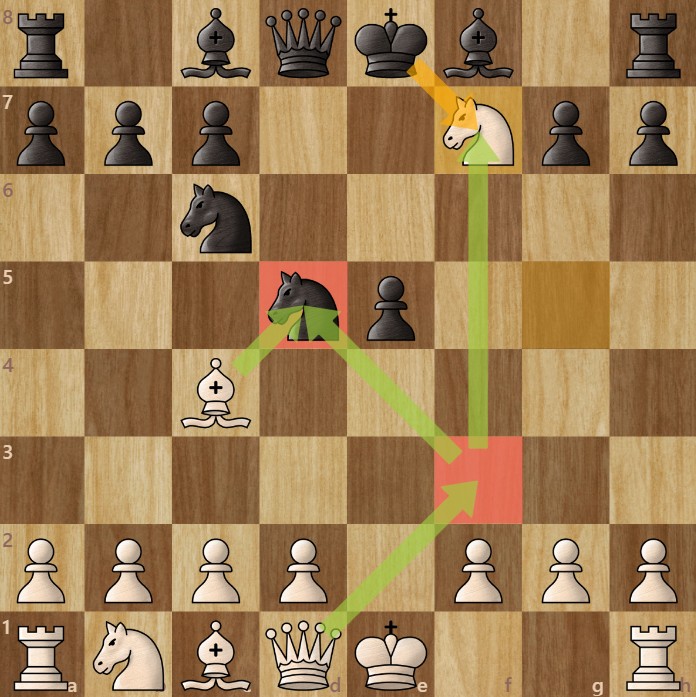
Congratulations! After the exchange, you’re a pawn up, Black’s king is extremely vulnerable, and you’re in great shape to continue with a mating attack for sweet victory.
The Scotch Game
The Scotch Game is an excellent opening for beginners for two reasons. Firstly, it follows classic opening principles such as central control and quick development that beginners can apply to other openings.


Secondly, the Scotch Game is very hard for unprepared opponents to play against. Statistics show that most beginner opponents fail badly, frequently making inaccurate moves that hand White an immediate advantage.
The Scotch Game starts with 1. e4 e5 2. Nf3 Nc6 3. d4, and it is almost always followed with 3...exd4. White can now choose whether to capture on d4 with its knight (the Main Line) or play Bc4 (the Scotch Gambit). Both are strong choices.

The Scotch Game Main Line
In the Scotch Game Main Line, White captures back in the center with its knight (1. e4 e5 2. Nf3 Nc6 3. d4 exd4 4. Nxd4). The great thing about the main line at beginner level is that most opponents make the mistake of trading knights in the center! Recapture to centralize your queen.
While a centralized queen is not normally recommended during chess openings, Black now has no way to attack it. The queen can sit safely in the center, controlling a huge number of squares.
1. e4 e5 2. Nf3 Nc6 3. d4 exd4 4. Nxd4 Nxd4 5. Qxd4 Nf6 6. e5

Black’s most frequently played next move is even weaker. 5...Nf6 is poor because White can simply push its pawn to kick it: 6. e5. Now, where will the knight go? White often succeeds in trapping the knight in the following moves, which only highlights how powerful its position is!
The Scotch Gambit
Stronger beginners may opt instead to play the deadly Scotch Gambit (1. e4 e5 2. Nf3 Nc6 3. d4 exd4 4. Bc4). By sacrificing the central pawn and instead focusing on rapid development, White can often succeed in mounting a swift, devastating attack.
Just like the King’s Gambit and Fried Liver Attack, the Scotch Gambit aims to attack f7, Black’s weakest square. Many opponents will try to hang onto their pawn advantage by playing 4…Bc5. Respond with 5. c3—the ‘Haxo Gambit,' which lures Black into a deadly trap:

If Black accepts your offering on c3, you surprise them with a sacrifice reminiscent of the Fried Liver Attack: 6. Bxf7+!! After the king captures, 7. Qd5+ forks the king and bishop!
With massive win rates, this is one of White’s most successful openings at the beginner-intermediate level. You can study this variation by pasting this notation into your favorite chess analysis board: 1. e4 e5 2. Nf3 Nc6 3. d4 exd4 4. Bc4 Bc5 5. c3 dxc3 6. Bxf7+ Kxf7 7. Qd5+ Ke8 8. Qh5+ Kf8 9. Qxc5+


The Best Chess Openings for Beginners With Black
When playing as Black, it may surpise many readers to learn that the Symmetrical King’s Pawn Opening (1. e4 e5) or Symmetrical Queen’s Pawn Opening (1. d4 d5) are statistically poor choices at beginner level. By playing these, you hand your opponent the chance to play their favorite opening, which they will know better than you!
Instead, you may prefer to choose rarer answers that narrow down your opponent's choices. Then, you can play on your home turf.
The Scandinavian Defense Modern Variation
Against 1. e4, there is one reply that narrows down your opponent’s options more than any other. 1...d5, the Scandinavian Defense, is a direct challenge to the center, leaving White with only two reasonable options: capture the challenger or push the pawn. Most opponents will opt to capture.
In the Scandinavian Defense main line, Black captures back with the queen, but centralizing the queen on move two has its problems. Instead, the Scandinavian Defense Modern Variation (1. e4 d5 2. exd5 Nf6) attempts to recapture the pawn with a knight. Statistics of online games reveal this is a much more successful strategy.
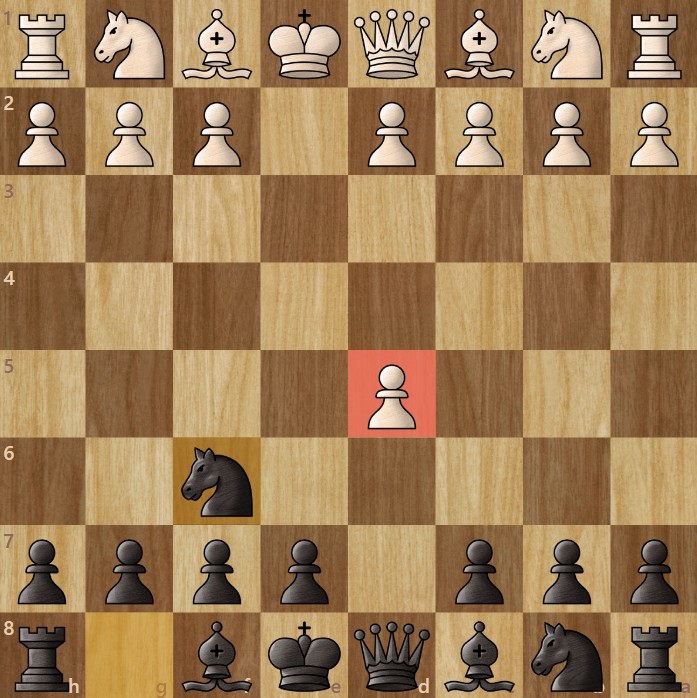
3. Nc3 – White's Most Common Response
In more than half of games, White will answer with 3. Nc3 with a plan to trade knights on d5 to bring your queen into the center. As we saw in the Scotch Game, however, it plays into your hands. With Black’s queenside knight missing, your queen can’t be challenged and stands powerfully in the center.
Castle Long and Crush the d-file
By castling queenside as quickly as possible, you can often wield crushing pressure on the d-file, which may see you entering the middlegame with a distinct advantage. In this typical example below, Black has swiftly developed its queenside pieces to enable long-castling. The attack on d5 is now extremely strong.
(1. e4 d5 2. exd5 Nf6 3. Nc3 Nxd5 4. Nxd5 Qxd5 5. Nf3 Nc6 6. d4 Bg4 7. Be2 O-O-O 8. c3 e5)

Black can now play 8...e5 to exert even more pressure, and White’s best choice is to let the pawn go. Black enters the middlegame a pawn up with a great position!


The Caro-Kann Defense
According to the lichess.org database of online games, the most successful response to 1. e4 is 1...c6, the Caro-Kann Defense. It scores Black 53% of wins and draws yet is only played by 4% of beginner chess players!
Why is the Caro-Kann so successful? Primarily because it makes a very strong challenge to White’s center. After 1...c6, play typically continues with 2. d4 d5, challenging White’s e4 pawn head-on.

White must choose now whether to push, defend, or trade the pawn. Because most beginners have little prepared response, however, you can often gain the upper hand.
Tackling the Advance Variation
White’s most common answer to the Caro-Kann is 3. e5, the Advance Variation. While this e5 pawn can cramp your development, it can also be difficult for White to hang onto. Your plan now is simple: attack White’s e5 pawn and anything defending it! A great way to begin is with 3...c5, attacking the defending pawn.
White will to try everything it can to hang on to the e5 pawn. It may try to defend its central pawns with Nf3 or by building a longer pawn chain from c3. Undermine these attempts by pinning the knight with Bg4 and by moving your queen to b6 or a5 to add pressure to White’s pawn chain.

With practice you should get better and better at eroding White’s defenses and eventually winning the central pawns. Remember, if you can control the center, you control the game! That’s exactly why the Caro-Kann is so effective for beginners and grandmasters alike.
The Englund Gambit
There’s one extremely tricky answer to 1. d4 that grandmasters would never contemplate, yet often works wonders for beginners. By replying with 1...e5 - the Englund Gambit, you lure White into a series of potential traps, and it’s amazing how many opponents stumble into them!
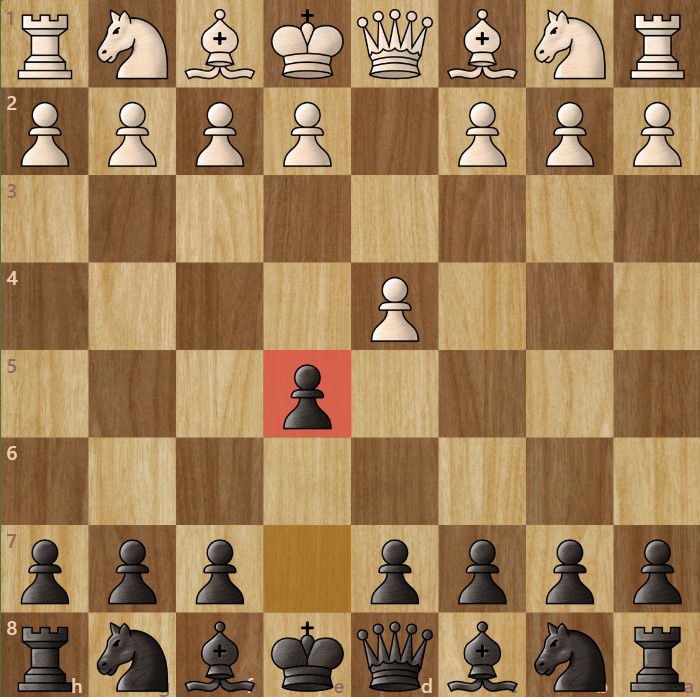
The Englund Gambit Main Line Traps
After typical play continues, 2. dxe5 Nc6 3. Nf3, you continue with a surprising move. 3...Qe7. This puts more pressure on White’s e-pawn, and they’ll usually continue with 4. Bf4. Can you see your dangerous next move?
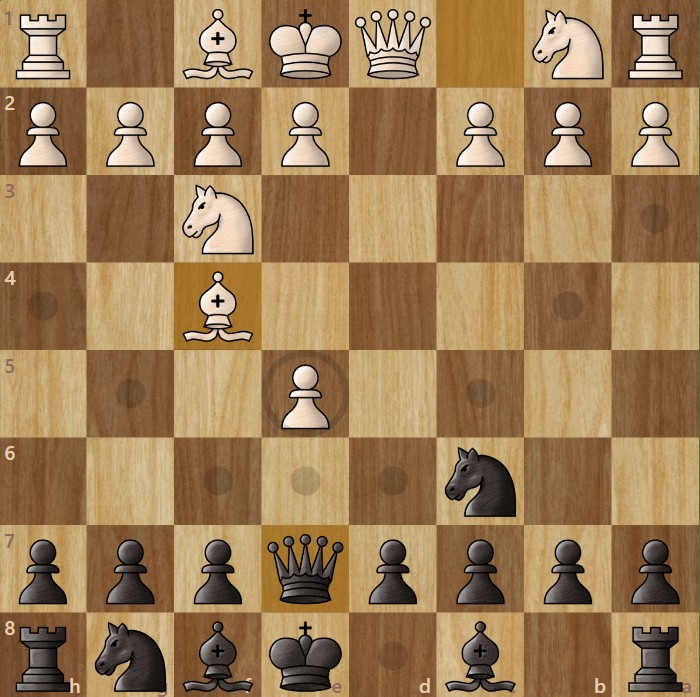
Answer: Qb4+. This three-way fork attacks White’s king, bishop, and b2 pawn all at once. Curiously, White may fail to spot the attack on its bishop altogether—remember, lateral threats are much easier to overlook than vertical ones!
Of course, White’s correct move is to retreat the bishop, after which you collect the b2 pawn (5. Bd2 Qxb2). In over 25% of games, White loses immediately by playing 6. Bc3.
1. d4 e5 2. dxe5 Nc6 3. Nf3 Qe7 4. Bf4 Qb4+ 5. Bd2 Qxb2 6. Bc3 Bb4
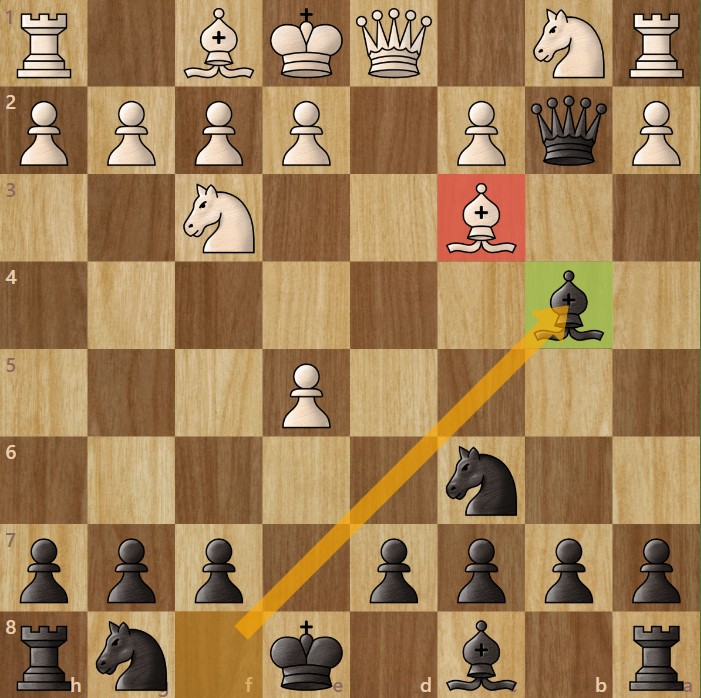
Sometimes White will even blunder checkmate by playing 7. Qd2. Now you can capture the bishop, displace the queen, and finish the game with 8. Qc1#. Can you see why the Englund Gambit is so fun to play?
The Best Chess Openings for Beginners? The Choice is Yours
The best chess openings for beginners are very different than the best for advanced chess players. While openings like the Fried Liver Attack and Englund Gambit may be objectively dubious, real statistics of online games show they score brilliantly for beginners.
Discovering such fun and successful openings is a great way for beginners to get excited about chess studies and improving their game. There’s nothing quite like scoring your favorite trap or seeing your opening plan unfolding perfectly before your eyes!
Try out whichever of these openings best suits your style of play. Above all, have fun with these openings. The more you enjoy chess, the more you'll play. Then, improvement will happen all by itself.