
The 10 Best Chess Starting Moves For Black
The opening sets the tone for the battle ahead. That is why it pays to know the best chess starting moves to begin the game as strongly as possible!
We have compiled this list of the best openings for Black to help improve your play in this phase of the game. Use it as inspiration for your own opening repertoire.
In creating this list, we have taken several factors into consideration:
- How well the opening performs, statistically.
- How easy is the opening to learn?
- How challenging is the opening to play against for your opponents with the White pieces?
Let’s get to it!
Introduction
Your opening repertoire ought to be a reflection of your strengths as a chess player. Different openings tend to lead to different types of middlegames. Think of the opening as an opportunity to steer the game towards the types of positions you prefer.
If you thrive in sharp, tactical situations, then you should have a different opening repertoire than a player who does better when the play is slow and strategic.
Related: The 10 Best Chess Starting Moves For White.
For each of the chess starting moves listed below, we have provided guidance as to the “character” of the opening, as in which type of player it will be best suited for.

The Library Imperial Collector Series Luxury Chess Pieces - 3.0" King

Luxe Premium Chess Box - Amboyna Burl

The House of Staunton DELUXE Tournament Bag
Against 1. e4
The King’s Pawn Opening (1. e4) is White’s most popular first move at all levels. It is associated with sharper play in the early part of the game and tends to necessitate greater opening memorization.
In a single stroke, it fights for the center and also opens diagonal lines for both the light-squared bishop and for the queen. Bobby Fischer once called 1. e4 “best by test”, so it’s vital for Black to learn how to effectively counter it.
#1: Symmetrical King’s Pawn Opening
The Symmetrical King’s Pawn Opening (1. e4 e5) is a principled reply for Black. It contests the center directly and keeps the position balanced. It has stood the test of time at every level of chess, from beginners to elite grandmasters.

If White is in an aggressive mood, they may go for 2. f4 (the King’s Gambit). However, more commonly White will opt for 2. Nf3, threatening Black’s pawn on e5. Black’s most natural response is 2. …Nc6, defending the pawn while developing a piece towards the center. After this series of moves (1. e4 e5, 2. Nf3 Nc6), the game will head into one of several different opening systems, including:
- The Ruy Lopez (3. Bb5).
- The Italian Game (3. Bc4).
- The Scotch Game (3. d4).
A great strength of the Symmetrical King’s Pawn Opening is that it closely follows sound opening principles. Black develops their pieces to natural squares, rapidly castles kingside, and aims for harmonious coordination.
#2: Sicilian Defense
The Sicilian Defense (1. e4 c5) is widely regarded as Black’s most ambitious response to the King’s Pawn Opening. Instead of mirroring White’s first move, Black immediately imbalances the position. It signals that Black intends to play for a win.
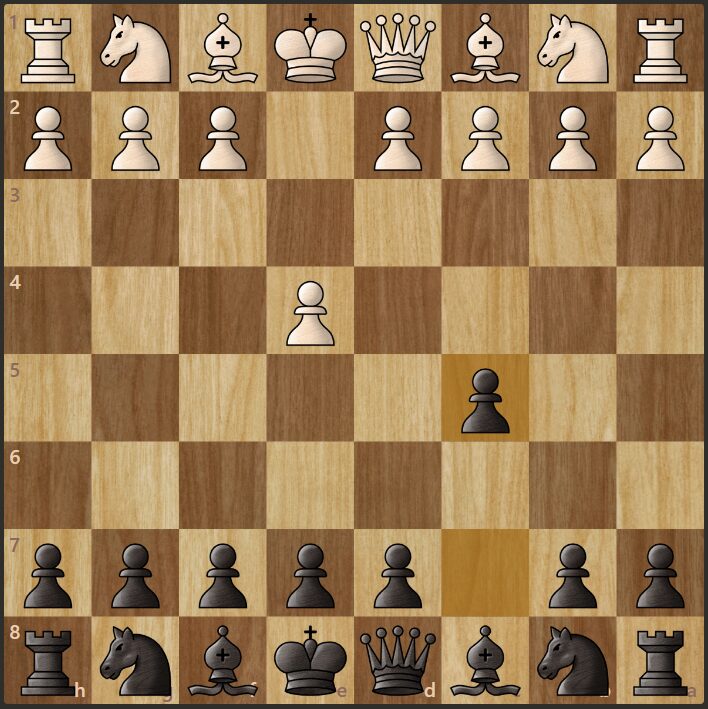
The pawn on c5 sees Black fight for the center from the flank rather than occupying it directly. If White plays d4, Black’s pawn on c5 stands ready to capture via …cxd4, thereby creating a central pawn majority for Black.
The Sicilian Defense does require learning substantial opening theory. However, the reward is significant for those who invest the time. If you enjoy sharp positions and want to put pressure on your opponents from the outset, then the Sicilian Defense is one of the best chess starting moves for Black.

The Library Collection - The Anderssen Dropjaw Series Luxury Chess Pieces - 3'' King

Millennium eONE Electronic Chess Board for playing on chess.com
#3: Caro-Kann Defense
The Caro-Kann Defense (1. e4 c6) is a favorite among players who value solidity and long-term positional strength. The pawn on c6 prepares the …d5 advance.
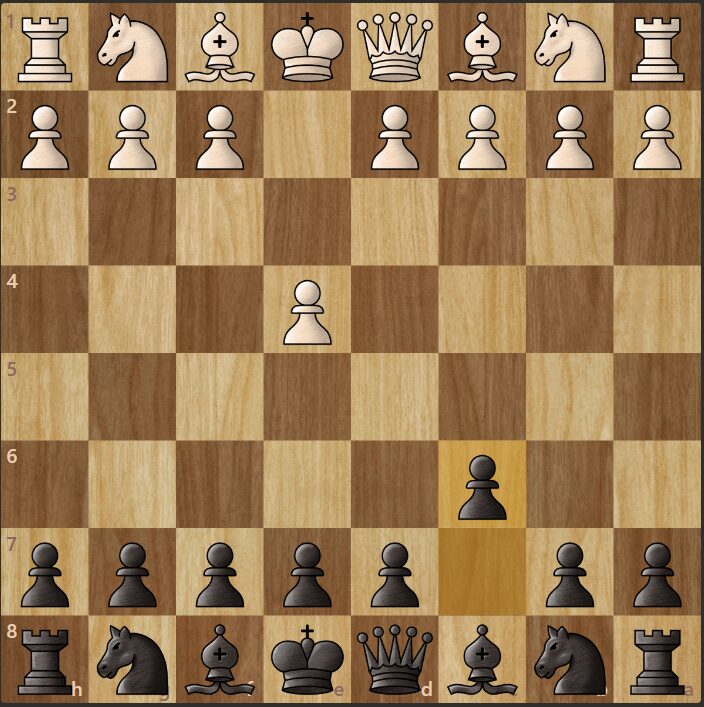
After the most common continuation 2. d4 d5, White must decide how to handle the tension in the center. Regardless of which variation White chooses, Black’s position is typically very sound. One of the defining features of this opening is the development of Black’s light-squared bishop outside of the pawn chain before playing …e6. This means that, unlike in the French Defense, the light-squared bishop is not a bad piece for Black in the Caro-Kann.
Black rarely faces early tactical disasters in the Caro-Kann, and the pawn structure tends to remain healthy. This makes it especially attractive for players who prefer steady, strategic battles rather than wild complications.
#4: French Defense
The French Defense (1. e4 e6) is another way of preparing to challenge White’s pawn center via the 2. …d5 advance. Once this is achieved, Black gets a solid pawn structure and will often try to play on the queenside.
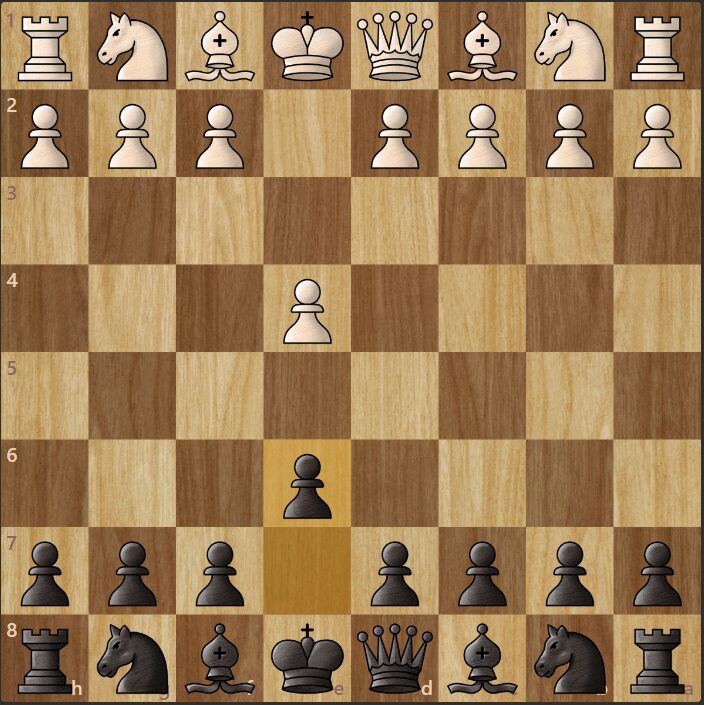
After 2. d4 d5, the central tension becomes the defining feature of the position. White may choose to resolve this tension immediately via 3. exd5 (the Exchange Variation), but after 3. …exd5 Black gets full equality and should hold no fears.
If White instead opts to hold the tension or advance their e-pawn to e5, Black will aim to undermine White’s pawn center with pawn breaks such as …c5 and …f6.

The Burnt Dubrovnik Series Chess Pieces - 3.75" King

DGT 2500 Digital Chess Clock

Premium Chess Box - Brazilian Rosewood
The French Defense rewards patience and understanding. If you are comfortable playing slightly behind in space while waiting for your chance to strike back, then the French Defense can be a powerful weapon against 1. e4.
#5: Alekhine’s Defense
Alekhine’s Defense (1. e4 Nf6) is a provocative opening that invites White to advance their central pawns early in the game. Rather than contesting the center immediately, Black encourages White to overextend.
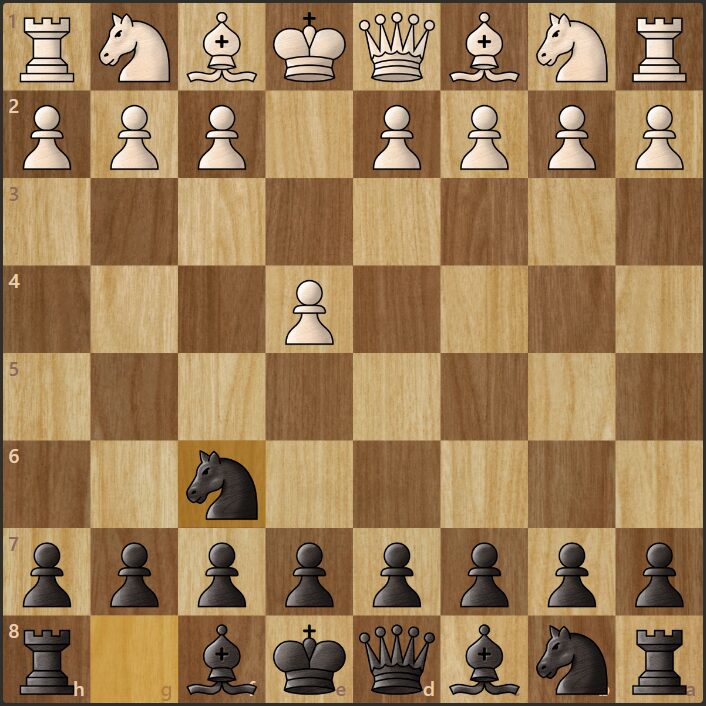
After the most common next moves 2. e5 Nd5, White gains central space. Black will then aim to counterattack White’s center with moves such as …d6 and …c5.
One of the greatest strengths of Alekhine’s Defense is its surprise value. It is less common, meaning that players with the White pieces are often less prepared for it. Learn Alekhine’s Defense well, and you have a great chance of knowing the opening better than your opponents.
If you enjoy unbalanced positions and are willing to challenge your opponent’s understanding of the center, then Alekhine’s Defense can be a highly effective choice.
Against 1. d4 / 1. c4 / 1. Nf3
White’s three opening moves: 1. d4, 1. c4, and 1. Nf3 are treated together when considering Black’s repertoire. When White plays 1. d4, the moves c4 and Nf3 tend to be not long in coming. As a result, similar positions are often reached when those other moves are instead played on move one.
On the whole, these three chess starting moves lead to more positional games than 1. e4 and require less memorization. However, as we will see, there are exceptions!
#6: Queen’s Gambit Declined
The Queen’s Gambit Declined (1. d4 d5, 2. c4 e6) is one of the most respected defenses for Black. The move 2. …e6 supports the d5 pawn, enabling Black to maintain a strong presence in the center. Black also prepares to develop their dark-squared bishop.
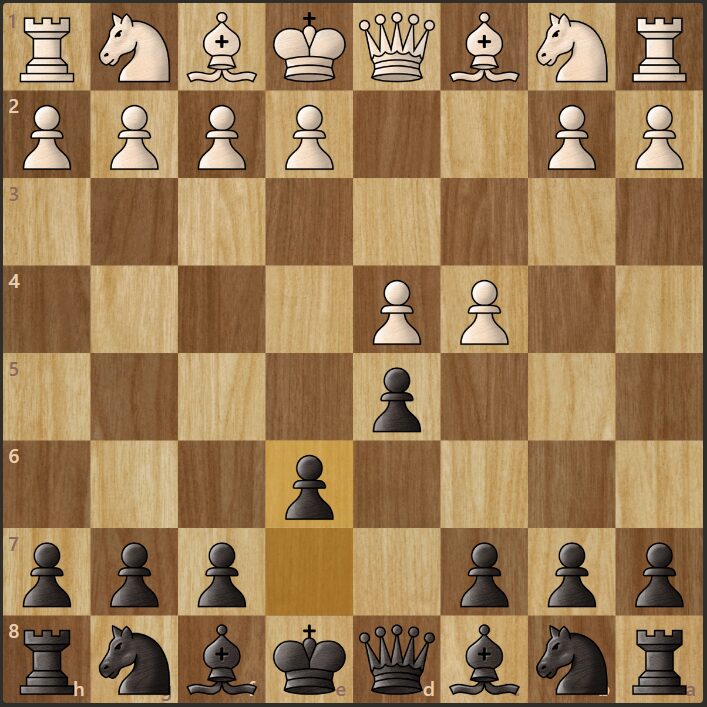
From here, Black will develop naturally, castle kingside, and maneuver for control of key squares. There are no early fireworks, nor is there need for copious amounts of opening memorization. Black also benefits from a compact pawn structure that is difficult to attack.
All of this makes the Queen’s Gambit Declined one of the best chess starting moves for those who excel in positional chess. It reliably leads to balanced positions where long-term strategic planning is rewarded.

The *NEW* Austrian Coffeehouse Series Chess Pieces - 4.0" King

DGT 3000 Digital Chess Clock

The Camaratta Signature Championship Chess Table - Dark Brown
#7: Slav Defense
The Slav Defense (1. d4 d5, 2. c4 c6) is another highly dependable response to the Queen’s Gambit. By reinforcing the d5 pawn with …c6, Black supports the center while giving the light-squared bishop better prospects to develop than is the case in the Queen’s Gambit Declined.

One advantage of the Slav Defense is its flexibility. Black can choose between several setups depending on White’s play. In many lines, Black develops smoothly with moves such as …Nf6, …dxc4, and …Bf5 or …Bg4.
Black’s position is sturdy and tough to break down. At the same time, Black enjoys active piece play and counterattacking chances.
#8: King’s Indian Defense
The King’s Indian Defense (1. d4 Nf6, 2. c4 g6, 3. Nc3 Bg7) is one of Black’s most aggressive answers to the Queen’s Pawn Opening. White is encouraged to take over the center, which Black plans to counterattack.

Black typically castles kingside early. The main line sees Black play …d6 and …e5, and if White chooses to close the center, then Black’s main middlegame pawn advance should be …f5. Often, the outcome of the game swings on the question of whether Black can land a decisive blow on the kingside before White breaks through on the queenside.
The King’s Indian Defense requires deep opening preparation. Many of the lines are very double-edged. A single opening inaccuracy can spell disaster. Black must know the theory and be ready for sharp tactical play.

The Camaratta Collection - The Botvinnik Flohr Series Chess Pieces - 4.0" King

Leap Digital Classic Chess Clock

US Chess Premium Chess Box
#9: Nimzo-Indian Defense
The Nimzo-Indian Defense (1. d4 Nf6, 2. c4 e6, 3. Nc3 Bb4) is an opening that often leads to positional imbalances. By pinning White’s knight on c3, Black challenges White’s control of the center and prevents White from playing an immediate e4.
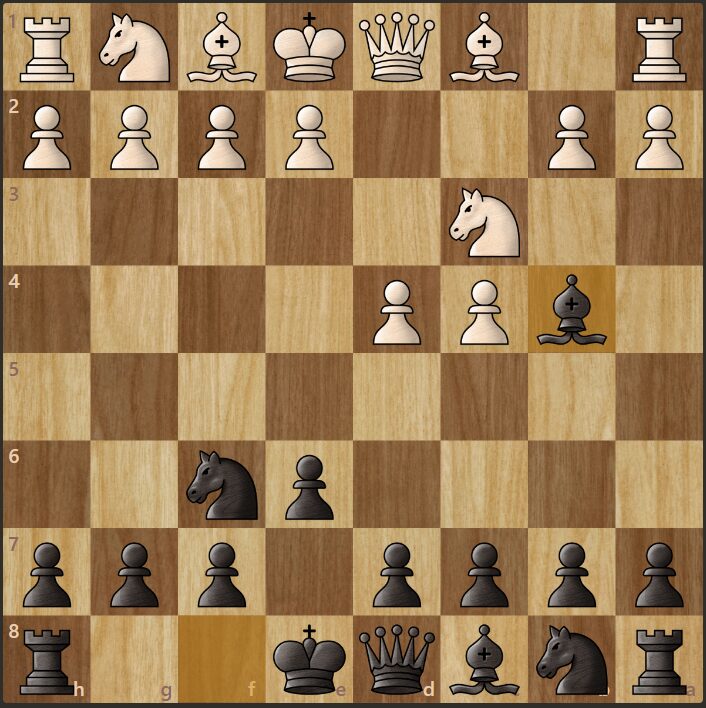
One of the key decisions Black must make is whether to exchange their dark-squared bishop for White’s knight on c3. This capture can damage White’s queenside pawn structure, creating a long-term weakness. However, it comes at the cost of handing White the bishop pair.
Black can adopt a variety of pawn structures and plans depending on White's response. This makes the Nimzo-Indian Defense suitable for players who can adapt their strategy to the subtle demands of the position.
#10: Grünfeld Defense
The Grünfeld Defense (1. d4 Nf6, 2. c4 g6, 3. Nc3 d5) sees Black encourage White to occupy the center with pawns, only to attack it later with active piece play.
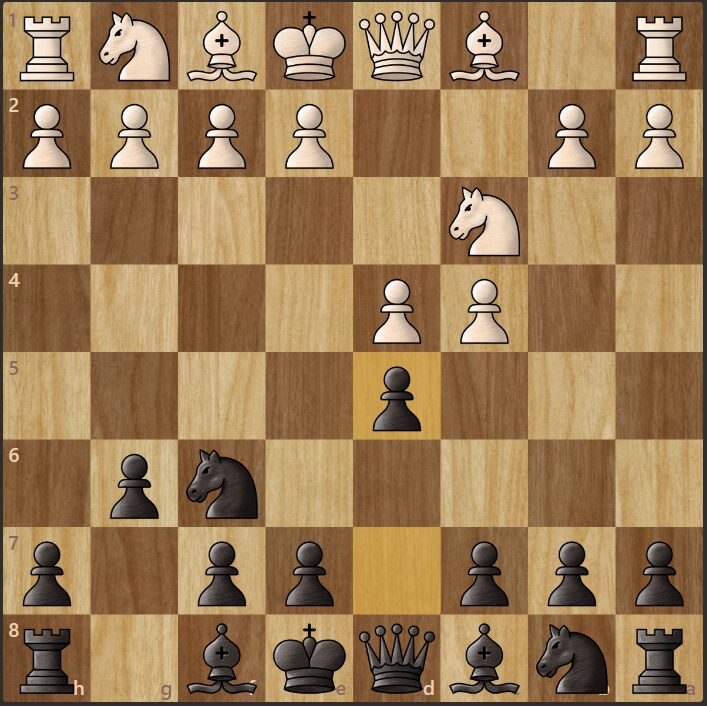
After the most common next moves: 4. cxd5 Nxd5 5. e4 White establishes a strong pawn center with pawns on both d4 and e4. However, this will become a target for Black. Black will play moves such as …c5, …Nc6, and …Bg7 in an attempt to apply pressure to White’s center.
Even though White starts out with more space, Black enjoys excellent counterplay. The resulting positions are dynamic and full of tactical possibilities.
The Grünfeld Defense does require extensive theoretical study, but it offers Black excellent winning chances. If you like to be ambitious with the Black pieces, then the Grünfeld Defense could be the perfect addition to your opening repertoire.
Summary And Next Steps
Each opening contains a vast amount to learn. Very few amateur chess players can play every opening on this list to tournament level. Therefore, we advise learning just one reply to 1. e4, and one reply to 1. d4 / 1. c4 / 1. Nf3 at first. That way, you will be able to go deeper into a more specialized opening repertoire and develop confidence with it.
Related: Tips To Improve Your Chess Opening Study.
Once you have mastered one opening, expanding your repertoire by learning a new opening is a great way to keep chess fresh and interesting! It will also make it more difficult for your opponents to prepare against you.
To further your education in the opening, we recommend the book PCO: Practical Chess Openings.

This comprehensive guide covers all of the chess openings in a single volume. It can be your constant companion as you experiment with your opening repertoire, and as you settle on which chess starting moves you want to concentrate more on.