
How To Counter The Sicilian Defense
When playing 1. e4, many chess players dread the Sicilian Defense more than any other answer. It’s an assertive response that can lead to some of the most complex openings in chess. The main line, the ‘Open Sicilian,' can lead to the sophisticated Najdorf, Dragon, or Kan variations, to name a few!
If you’re a beginner or club chess player, we’d highly recommend that you don’t try to memorize all of these. Instead, choose an anti-Sicilian. This rebellious family of openings sidesteps the main lines of the Sicilian Defense and forces Black to play against setups that you know and love.
In this article, we’ll introduce three classic and highly successful anti-Sicilians: the Grand Prix Attack, the Alapin Variation, and the Smith-Morra Gambit.

Why Avoid the Open Sicilian
The Open Sicilian Defense begins with White playing 2. Nf3 and 3. d4. The Open Sicilian is so-called because with 3. d4, White opens the center. The Open Sicilian is so commonplace that for many, it’s synonymous with the Sicilian Defense itself.

The Library Collection - The Anderssen Dropjaw Series Luxury Chess Pieces - 3'' King

DOWNLOAD - FRITZ 21

Millennium eONE Electronic Chess Board for playing on chess.com
As one of the most heavily analyzed and branching openings in chess, the Open Sicilian is endlessly complex and variable. Black can choose to slide the game into a vast number of variations, such as the Najdorf Variation, Sveshnikov Variation, Classical Variation, Kan Variation, and a whole host of Dragon Variations!
You get the picture. Learning the Open Sicilian isn't just learning one opening—it's learning a whole family of incredibly complex openings. But there is another way. Enter the anti-Sicilian.
Anti-Sicilian Variations
Any way White deviates from the Open Sicilian is termed an anti-Sicilian. The most famous of these are the Closed Sicilian, Alapin Variation, Grand Prix Attack, and the infamous Smith-Morra Gambit.
According to the opening database on lichess.org, many of these options tend to score better for White than the Open Sicilian.
| White’s Win Rate | Black’s Win Rate | |
| Open Sicilian | 48.00% | 48.00% |
| Grand Prix Attack | 50.00% | 45.00% |
| Alapin Variation | 50.00% | 46.00% |
| Smith-Morra Gambit | 51.00% | 45.00% |
The Grand Prix Attack: High Octane Kingside Invasion
The sharp and aggressive Grand Prix Attack begins with the opening moves: 1. e4 c5 2. Nc3 Nc6 3. f4.

By playing 3. f4, White controls the center with the f-pawn and declares intentions for a kingside attack. White typically develops quickly to launch the attack before Black has time to organize its defenses.
With a rook on the f-file and queen on e1, White threatens high-speed forays that can see Black quickly overwhelmed. Opposite-side castling and pawn storms are another recurring motif.
The Grand Prix tends to be easier to learn than other Sicilian lines because the game plan is relatively simple. Rather than memorizing endless variations, you simply adapt your attack around Black’s choice of moves. Because the Grand Prix Attack relies heavily on seizing attacking opportunities, it's better suited to players with a sharp eye for chess tactics.

The Collector Series Luxury Chess Pieces - 4.0" King

The Camaratta Signature Master Chess Table

LIMITED EDITION - DGT 3000 Digital Chess Clock
Magnus Carlsen's Grand Prix Attack
To demonstrate the ruthlessness of the Grand Prix Attack, let’s take a look at an online bullet game played by Magnus Carlsen in 2020. The diagram below shows the board on move 16. Carlsen has already sacrificed a rook in preference for attacking momentum.
Now White just has one move to win the game, and it’s a common motif in the Grand Prix Attack. Can you find it?

Answer: 16. Rxf6. Now, if Black captures back with the queen, White plays 17. Qh7#—checkmate. In this game, Black played 17. Kxf6, but it’s still a mate in two. After 17. Nxe6+, there’s nothing Black can do to prevent checkmate on the next move.
This game is instructive because it exemplifies the key themes of the Grand Prix Attack. It’s a full-throttle opening that can demand courage and even substantial sacrifices to remain committed to an all-out kingside attack.
The Alapin Variation - A Safe and Solid Challenge for the Center
Another classic anti-Sicilian is the Alapin Variation. It’s a more solid approach that scores extremely well at club level. It all starts with the opening moves 1. e4 c5 2. c3. With this, White prepares to take the center with 3. d4.
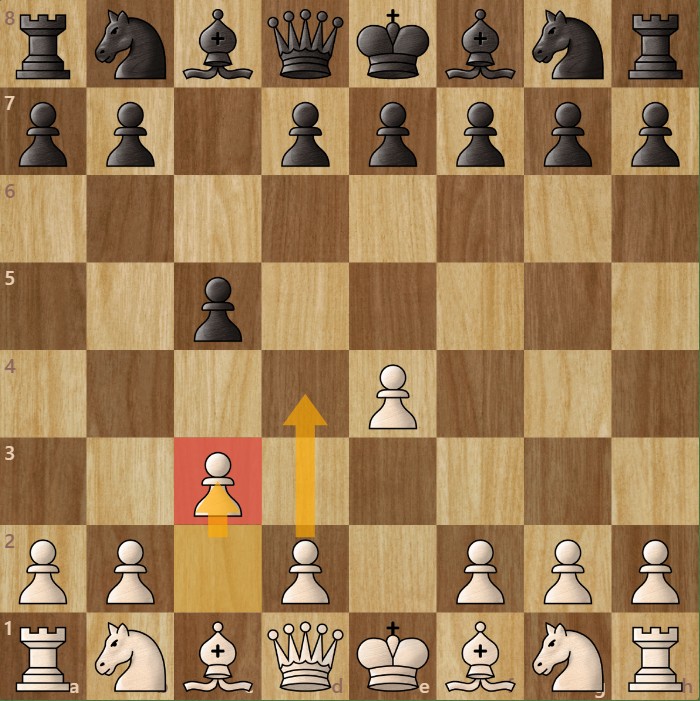
The Alapin leads to positions very different from those in the Open Sicilian; hence, most Sicilian players will quickly find themselves out of their comfort zone and without a game plan.
White, on the other hand, has a simple yet solid plan that works with reassuring regularity. Instead of looking for a quick initiative, White aims to take control of the center and limit Black’s counterplay. From there, White looks to build a long-term advantage through more space, smoother development, and gradual improvement in the middle game.

The Broadbent Series Chess Pieces - 3.0" King

Fitted Briefcase Chess Box - Mahogany

DOWNLOAD - Chess King Learn Beginners 6 - Forever Pack All Platforms
It may not be as fast or flashy as the Grand Prix Attack or the Smith-Morra Gambit, yet the Alapin is an effective system for more solid, positional players who prefer sound chess strategies over the mountains of theory of the Open Sicilian.
The Smith-Morra Gambit – A Tactical Minefield for Black
The Smith-Morra Gambit starts with the opening pawn gambit: 1. e4 c5 2. d4 cxd4 3. c3 dxc3 4. Nxc3:
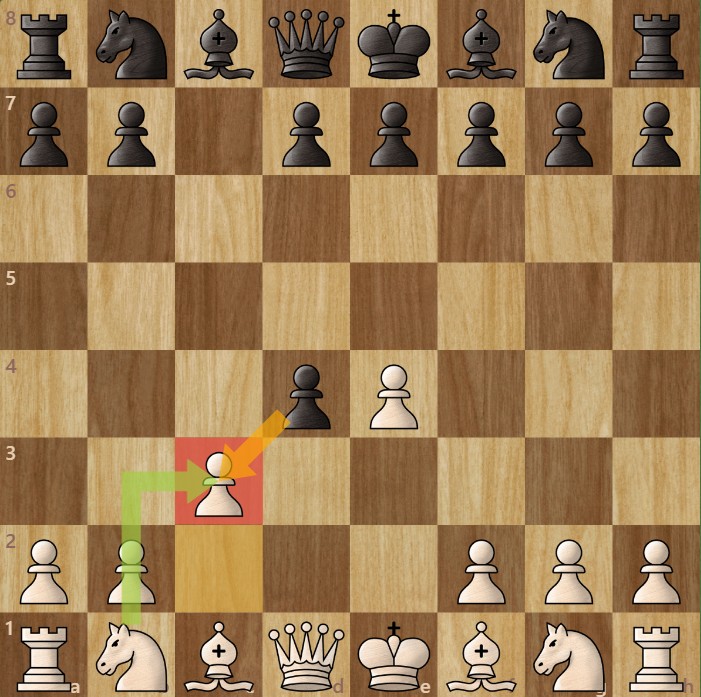
Notice how it was difficult for Black to play anything else! The Smith-Morra Gambit is so persuasive that Black is ill-advised to refuse the first pawn capture and rarely turns down the second (although 3...Nf6 and 3...d6 are possible).
This makes life much easier for White. Since most opponents will follow your carrot on a stick, you can lead them into the territory that you know all too well.
The central tenet of the Smith-Morra Gambit is that by gambiting a pawn, White gains a lead in development, generating intense pressure, tactical opportunities, and galloping attacks. Black must tread extremely carefully to avoid a rapid downfall.
A Setup-based Approach
The next bit of good news is that the Smith-Morra Gambit is less about memorization and more about understanding a setup. The red squares in the diagram below show where, in the most classic setup, your pieces should be placed.
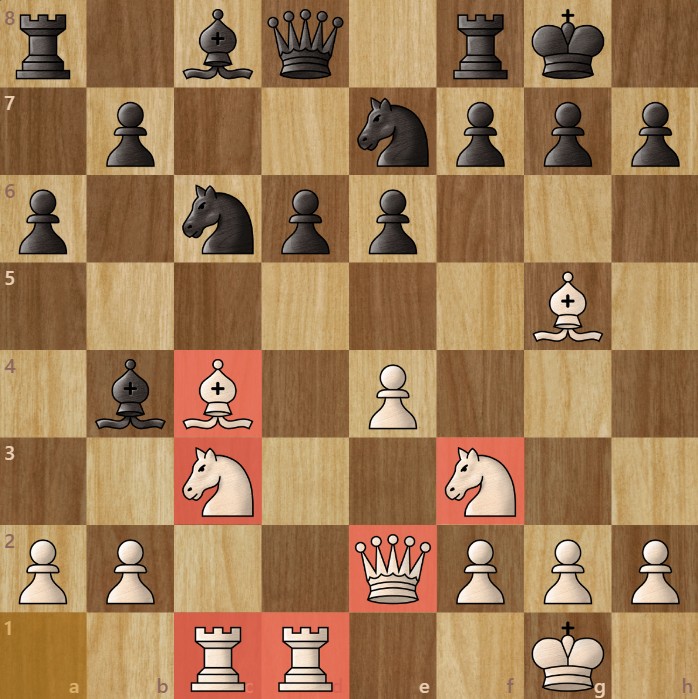
Notice that the only piece without a square is the dark-squared bishop. This piece is less important for our immediate agenda and can be placed flexibly on g5, f4, or even e3, depending on Black’s position.

The Sovereign Series Chess Pieces - 4.0" King

Premium Chess Box - Brazilian Rosewood

The House of Staunton PROFESSIONAL Tournament Bag
To reach this textbook setup, you will usually need 11 moves. This might seem like a long time, but you should always be able to post your pieces on these squares if Black plays strong moves. (We’ll give an example of responding to weaker moves in a moment!)
A typical move sequence could look like this: 1. e4 c5 2. d4 cxd4 3. c3 dxc3 4. Nxc3 Nc6 5. Nf3 e6 6. Bc4 Bb4 7. O-O Nge7 8. Qe2 O-O 9. Rd1 d6 10. Bg5 a6 11. Rac1
The Main Themes of the Setup
So why are White’s pieces placed on these squares?
- Knights on c3 and f3: Both knights control central squares and can leap into more attacking roles if the position allows.
- Bishop on c4: Targets the weak f7 square, even if Black has temporary cover on e6.
- Rooks on c1 and d1: A hallmark of the Smith-Morra, the two rooks on open/semi-open files can exert great pressure, pinning pieces and threatening discovered attacks.
- Queen on e2: Supports attacking ideas without being exposed too early on. If Black fails to castle early, the queen can also create dangerous pressure on the e-file.
Smith-Morra Gambit Traps
The Smith-Morra Gambit is peppered with tricks and traps. Black’s lagging development means they often have to play counterintuitively to avoid becoming ensnared.
One of the classic mistakes Black makes is developing the kingside knight to f6. This natural-looking development move is a poor choice in many instances, whether or not Black already has a pawn on d6. Why? White can still push its e-pawn to kick the knight.

To open up the d-file is not a wise move with the black pieces now. After queens are traded, Black will struggle to resist White’s knights attacking c7 and f7—there are simply too many tricks and traps to mention here!

The Camaratta Collection - The Botvinnik Flohr Series Chess Pieces - 4.0" King

Leap Digital Classic Chess Clock

US Chess Premium Chess Box
To demonstrate how dangerous the situation is for Black, let's look at a classic trap if Black decides to capture with its knight: 7. Nxe5. Now, after the knights are traded and the d-file is opened, can you see White’s killer move?

1. e4 c5 2. d4 cxd4 3. c3 dxc3 4. Nxc3 Nc6 5. Nf3 d6 6. Bc4 Nf6 7. e5 Nxe5 8. Nxe5 dxe5 9. Bxf7+ Kxf7
Answer: 9. Bxf7+!! Black’s king is forced to capture the bishop, after which its queen is left hanging and is snapped up by White’s queen. This trap perfectly demonstrates how dangerous pawn breaks can be in the Smith-Morra Gambit.
When rooks are posted on the c- and d-files, things get even more precarious for Black. Often, White just needs to break open the center with killer timing to grab the spoils.
How to Counter the Sicilian Defense – A Brief Recap
When Black plays the Sicilian Defense, they’re aiming for some kind of Open Sicilian system that they will likely know better than you. Choosing an anti-Sicilian variation is a smart way to sidestep the mountains of theory surrounding each one.
The Grand Prix Attack, Alapin Sicilian, and Smith-Morra Gambit are all statistically proven ways to turn the tables on your opponent. Instead of letting Black lead you into their favorite territory, you stubbornly drag them into yours.
With a little study and practice, the Sicilian Defense could become your new favorite opening to play against.