
The 10 Best Chess Starting Moves for White
What are the very best chess starting moves? There are 20 to choose from, and each is a doorway to a very different game!
In this essential guide, you’ll learn the popularity, pros and cons, and common continuations of the top ten starting moves in chess. We’ll also share some statistics-backed tips on how to play or counter them most effectively.
By the end, you might just discover a new favorite that you’ve never tried before.

The 10 Best Chess Starting Moves
Every chess player has their favorite starting moves, and even the world’s top players argue over which one is best! Instead of bickering, let’s explore the top 10 most popular starting moves so you can decide which is best for you and your playing style.
Notes on Data Sourcing
All statistics cited below are based on the Lichess.org public database. ‘Amateur games’ refers to online games across all time controls and rating ranges from 400 to 2200 Elo. ‘Master games’ refers to games played by National Masters, International Masters, and Grandmasters since the year 2000.
The King’s Pawn Opening (1. e4)
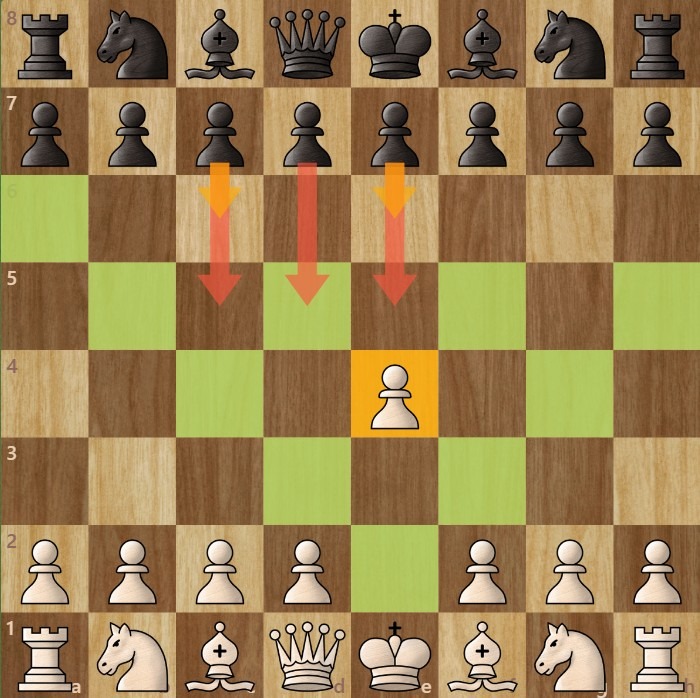
Open and exciting, the King’s Pawn Opening (1. e4) is the most popular starting move in chess among beginners and grandmasters alike. It’s seen in 60% of amateur online games and 46% of master games.
Strengths
- Immediately opens light-squared diagonals to develop the king’s bishop and queen.
- Fights to control the center—immediately controls key squares, d5 and f5.
- Blocks enemy pawns from reaching e4, which might otherwise kick a knight on f3.
- Can lead to many attacking, tactical openings.
Weaknesses
- Since the pawn is unprotected, 1. e4 is inherently less solid than 1. d4, the Queen’s Pawn Opening.
- Heavy theory. You’ll need to learn how to counter strong defenses like the Sicilian Defense, Scandinavian Defense, etc.
Common Continuations
- If Black follows with 1. e5, classic continuations include the Italian Game, the Ruy Lopez, or the King’s Gambit.
- Black can also reply with other strong moves such as 1... c5 (Sicilian Defense), 1... e6 (French Defense), or 1... c6 (Caro-Kann Defense).
- Top Tip! Off-kilter, aggressive gambits like the Vienna Gambit and Danish Gambit tend to score better at amateur level than the more mainstream continuations!
The Queen’s Pawn Opening (1. d4)
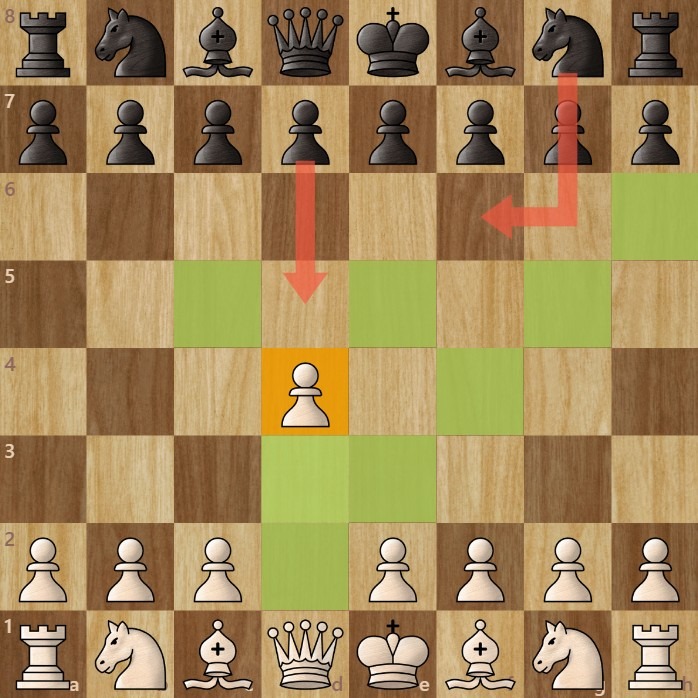
Solid yet assertive, the second-most popular starting move in chess is 1. d4—the Queen’s Pawn Opening. It’s played in 25% of amateur games and in 36% of master games.
Strengths
- Immediately opens up the dark-squared diagonal for the queen’s bishop.
- Controls key central squares: e5 and c5.
- Blocks enemy pawns from reaching d4 where it may ‘kick’ minor pieces.
- Since the d4 pawn is protected by the queen, the Queen’s Pawn Opening is renowned for being safe and solid.
Weaknesses
- Tends to lead to quieter, more positional games than the King’s Pawn Opening, which attacking chess players may find boring.
- No surprise factor! Your opponent will likely have prepared a response.
Common Continuations
- If Black answers 1...d5, the Queen’s Gambit and the London System are the most common continuations. These are two of the most solid and reliable openings in chess!
- If Black answers 1...Nf6 (the Indian Defense), the game can become more tactical. Black may opt to fight for the center in ‘hypermodern’ style—by attacking the center from afar with a fianchettoed bishop on g7.
-
Top Tip! Curiously, Black’s most successful reply at amateur level is the rarely played, yet potentially tricky 1...c5, the Old Benoni Defense. Most opponents simply don’t know how to counter it!
The Zukertort Opening (1. Nf3)
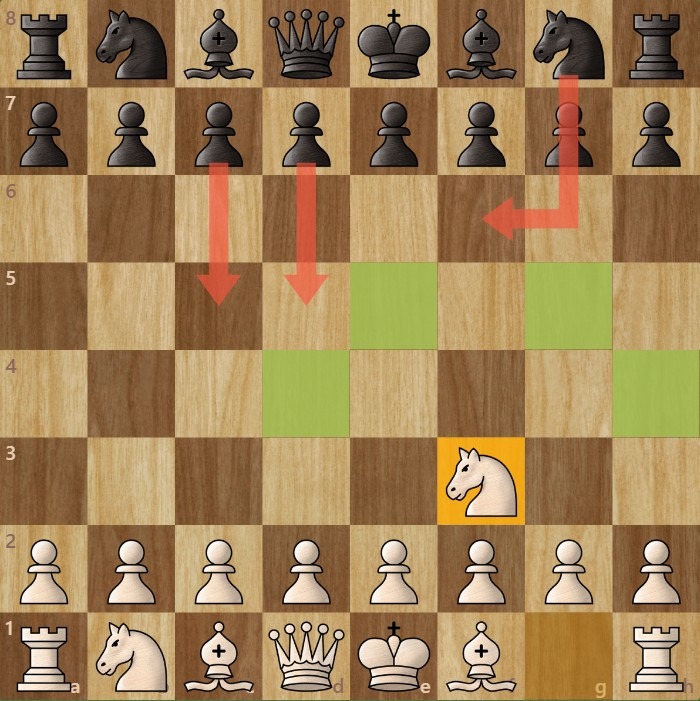
Indirect and versatile, the Zukertort Opening (1. Nf3) is White’s third-most popular starting move. While it’s only seen in 3% of amateur games, titled players use it in 10% of all games!
Strengths
- Noncommittal and flexible. Since White plays Nf3 sooner or later, why not play it straight away to see how Black responds?
- Immediately controls key central squares d4 and e5. Also threatens to hop to g5 to attack f7.
- Frequently leads to the Reti Opening—a high-scoring opening for White at amateur level.
- Good for advanced players who are confident in a wide range of openings that 1. Nf3 can lead to.
Weaknesses
- Unlike 1. e4, Black can answer 1…d5 without a challenge.
- Can lead to a huge number of openings! Black has a vast array of ways to answer.
- Because of the heavy theory, 1. Nf3 makes a doubtful choice for beginner and intermediate players.
Common Continuations
- At amateur level, 1...d5 is the most popular answer. But Black frequently answers with eight others, including 1...e6, 1...Nc6, 1...g6, and even 1...e5!
- Top Tip! 1. Nf3 d5 2. c4 is the Reti Opening—a hypermodern opening that scores an impressive 54% win rate for White at club level.
The English Opening (1. c4)
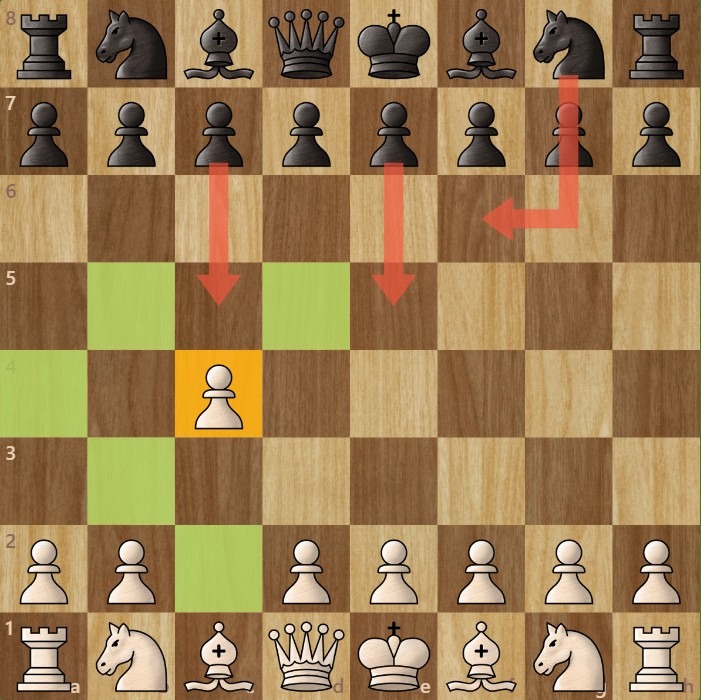
Positional and strategic, the English Opening (1. c4) is White’s fourth most popular initial move. It’s played in 7% of master games and 3% of amateur games.
Strengths
- A more patient approach to win the center. Immediately controls d5.
- Allows the queen immediate access to the flank light-squared diagonal.
- Ensures the c-pawn won’t get blocked behind the queenside knight on c3.
- Reliable, flexible, and positional. Often compared to 1. d4 openings.
Weaknesses
- Doesn’t immediately occupy the center, offering Black the chance to get there first (often with 1...e5)
- Less sharp and tactical by nature. Better suited to advanced players who can convert subtle positional advantages.
- Requires deep study to meet Black’s myriad responses.
Common Continuations
- 1...e5 (the Reversed Sicilian) and 1...Nf6 (the Anglo-Indian Defense) are Black’s most common answers across all levels. 1...c5 (the Symmetrical Variation) is also seen in around 11% of all games.
- Top Tip! The King’s English Variation (1. c4 e5 2. g3) is a high-scoring variation for those looking for a sharp, Sicilian Dragon-style approach!
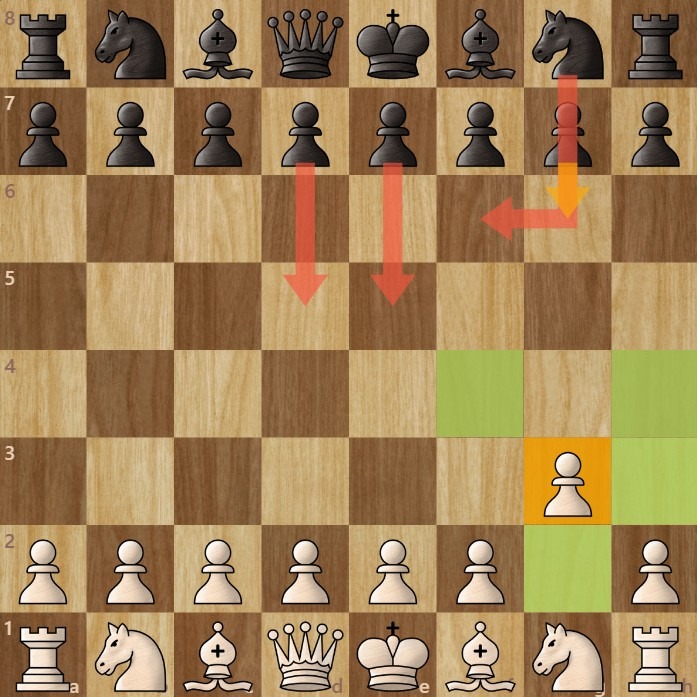
King’s Fianchetto Opening (1. g3)
Passive and eccentric, the King’s Fianchetto Opening (1. g3) is White’s fifth most popular starting move in chess. Also known as Benko’s Opening or the Hungarian Opening, it appears in 1% of master games and 2% of amateur games.
Strengths
- A hypermodern opening that can avoid the burden of building and defending a center from the outset.
- Immediately commits to fianchettoing the kingside bishop on g2—a useful long-range ‘sniper’ weapon, especially in blitz and bullet games!
- May succeed in luring Black into a false sense of security in the center before ambushing it later.
- Surprise factor. Many players don’t know how to play against 1. g3!
Weaknesses
- Very passive and controls no central squares. Allows Black a free hand to own the center.
- Requires skill and experience to recover in the middlegame.
- Statistically weak at longer time controls.
Common Continuations
- 1...d5 is the most popular response among masters and amateur players. White must be careful to avoid surrendering the entire center to Black!
- Other viable responses include 1. Nf6, 1. e5, and 1. g6.
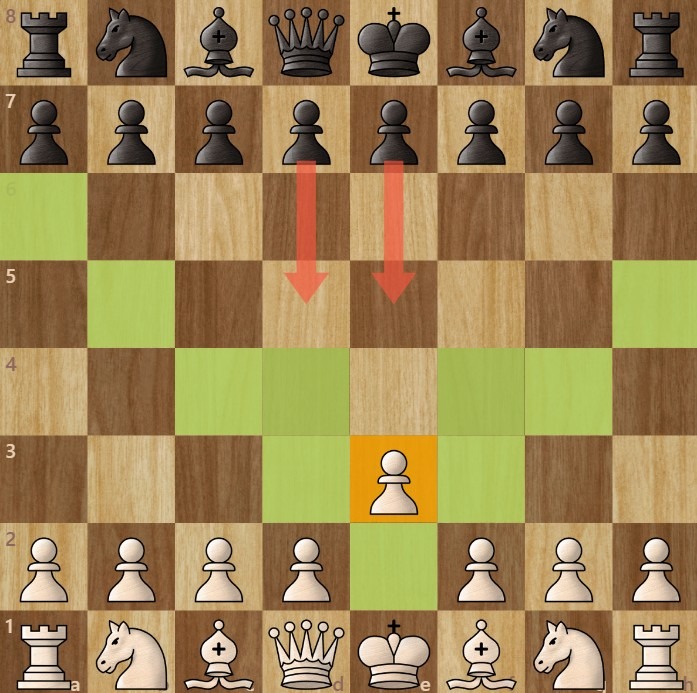
The Van 't Kruijs Opening (1. e3)
Timid and quiet, the Van ’t Kruijs Opening (1. e3) is White's sixth most popular starting move. It’s seen in 2% of games at the amateur level and almost never at the master level.
Strengths
- Controls d4 and f4. May later support pawns on those squares.
- Opens up diagonals for the light-squared bishop and queen.
- Flexible. Can easily transpose into many other openings, including the English and Queen’s Pawn openings.
- Unfamiliar. Most players won’t know much opening theory vs. 1. e3!
Weaknesses
- Extremely passive. This meek move can imply a lack of confidence.
- Allows Black the opportunity to dominate the center.
- Blocks the dark-squared bishop from natural development.
Common Continuations
- The most common replies to the Van ’t Kruijs Opening are 1. d5 and 1. e5. These give Black a strong stake in the center.
- Top Tip! Attacking opponents are well advised to develop quickly and try to take advantage of White’s timid start.
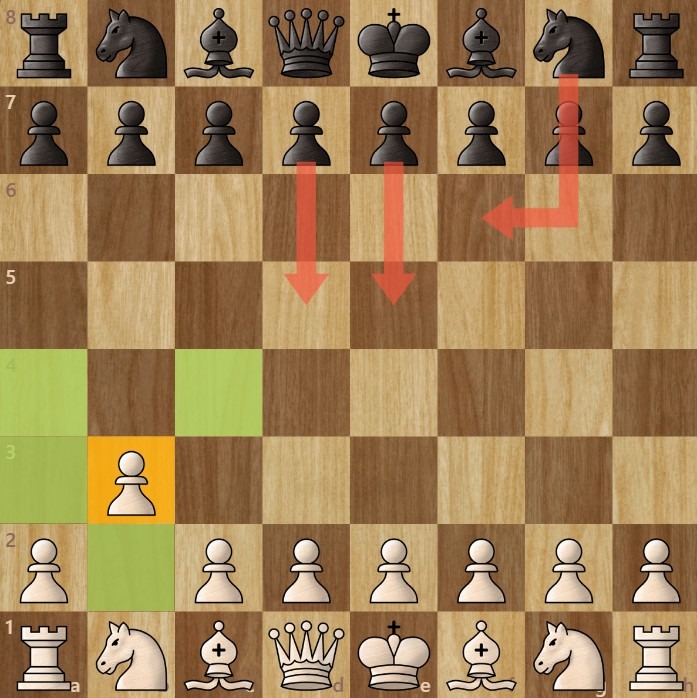
Nimzowitsch–Larsen Attack (1. b3)
Stealthy and patient, the Nimzowitsch-Larsen Attack (1. b3) is the seventh most common starting move in chess. It’s seen in 1% of amateur games and in less than 1% of grandmaster games today.
Strengths
- Prepares to develop the dark-squared bishop on b2, from where it can control the long, central diagonal.
- A stealthy, hypermodern approach that often allows Black to build a center before ambushing it later.
- The fianchettoed bishop poses a long-range threat to Black’s kingside. Often deadly in blitz and bullet games.
Weaknesses
- Passive. Does nothing to immediately challenge for the center of the board.
- If Black successfully builds and defends the center, White has squandered its advantage.
- Scores poorly at longer time controls where the long-range threats are more readily identified.
Common Continuations
- 1...e5 (the Modern Variation) is by far Black’s most popular response at all levels.
- 2...d5 often follows, giving Black the ‘perfect center’ and limiting the scope of White’s b2 bishop.
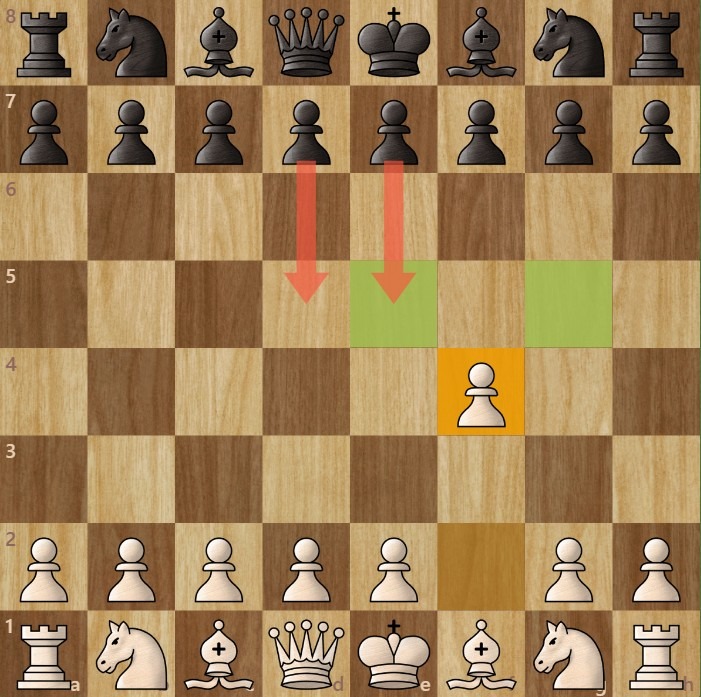
Bird's Opening (1. f4)
Offbeat and flamboyant, Bird’s Opening (1. f4) is the eighth most commonly played first move in chess. It’s seen in 1% of amateur games and almost never at grandmaster level.
Strengths
- Moves the f-pawn before it’s blocked by the kingside knight. Immediately controls e5.
- Surprise factor! Bird’s Opening is a bizarre-looking first move that few opponents will know how to respond to.
- An aggressive, easy-to-learn opening that can lead to some high-scoring lines for White.
Weaknesses
- Doesn’t control the center as directly as 1. e4 or 1. d4.
- Openings moving the f-pawn can compromise kingside safety.
- Advanced opponents may succeed in exploiting weaknesses.
Common Continuations
- Top Tip! Since Black usually counters with 1...d5, White can form a Stonewall Dutch Defense reversed by posting pawns on e3, d4, and c3. Some lines score more than a 55% win rate for White!
- 1...e5 is the vicious ‘From Gambit’ that should be studied first to avoid falling foul to an early checkmate!
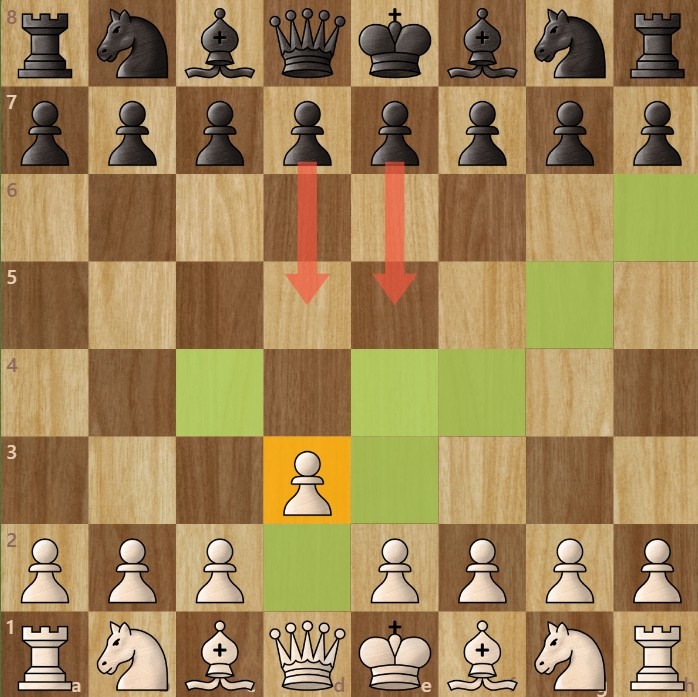
Mieses Opening (1. d3)
Lukewarm and restrained, Mieses Opening (1. d3) is White’s ninth most popular starting move. It’s played in 1% of amateur games and is even rarer at the master level.
Strengths
- Controls e4 and c4. Useful for supporting pawns on those squares later on.
- Opens the diagonal for the dark-squared bishop.
- A rarely played opening that immediately diverts your opponent away from familiar theory.
Weaknesses
- Very passive. Doesn’t control any squares in the opponent’s half of the board.
- Invites Black to claim the center and risks opening the d-file for an unfavorable queen trade.
- Blocks the light-squared bishop from natural development.
Common Continuations
- 1...d5 is the most common response and is recommended.
- Top Tip! Try forcing White to clear the d-file so you can trade queens! After recapturing with the king, White has lost castling rights.
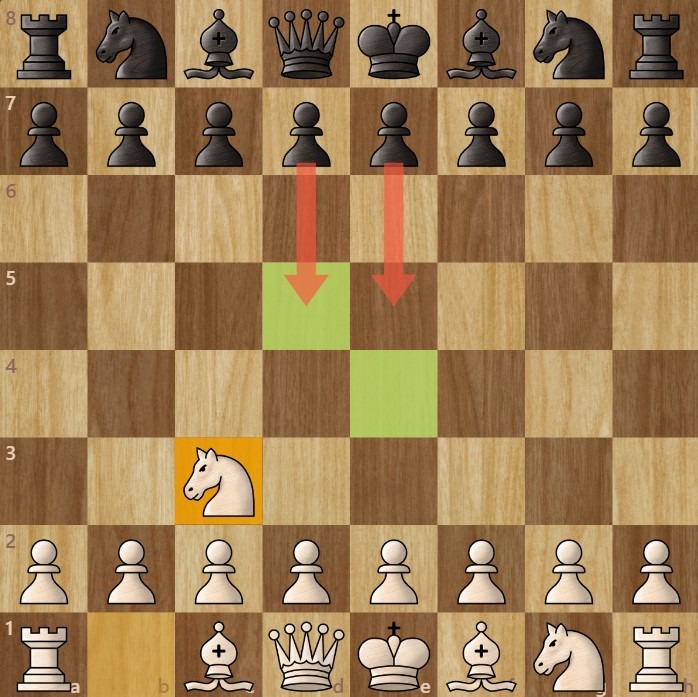
The Van Geet Opening (1. Nc3)
Unconventional and yielding, the Van Geet Opening (1. Nc3) is the tenth most frequently occurring first move in chess. It’s played in 1% of amateur games and is almost never seen among chess masters.
Strengths
- Immediately controls e4 and d5 and threatens to attack from b5.
- Flexible. 1. Nc3 can transpose into almost any opening where the knight would land there anyway.
Weaknesses
- Controlling d5 isn’t as useful as controlling e5! Therefore, 1. Nf3 is considered stronger.
- Blocks the c-pawn from advancing—a hindrance in the queen’s pawn openings that typically follow.
- The knight can easily get kicked by an enemy pawn on d4.
- Since kingside castling is usually preferred, developing the queenside knight first is questionable.
Common Continuations
- In master games, Black typically follows with 1...d5. This often makes for an inferior queen’s pawn game.
- 1...e5 is popular among amateurs, which allows White to transpose into the Vienna Game.
The Worst Starting Moves in Chess
Now that we’ve covered the 10 best starting moves in chess, you might be wondering about the rest. How about the very worst starting moves in chess?
1. f3 – Barnes Opening
Latvian Grandmaster Edmar Mednis once declared 1. f3 the very worst starting move in chess. It doesn’t open up any pieces for development, nor does it help to control the center. On the contrary, it blocks the kingside knight and weakens kingside safety. If Black counters with 1…e5, 2. g4 Qh4#, it’s the fastest way to lose in chess—Fool’s Mate!
1. g4 (Grob’s Attack)
Chess engines will tell you that even worse than 1. f3 is 1. g4. Bizarrely, however, ‘Grob’s Attack’ enjoys a cult following. The opening does boast some entertaining tricks and traps that even seasoned players may fall for in blitz games!
1. h4 – The Desprez Opening
You’ll probably have guessed that opening with either of your rook pawns is one of the worst ways to start a chess match. 1. h4 does nothing to control the center and only offers to develop the king’s rook to a fairly useless square—after which castling rights are lost!
Discussion: What Are the Best Chess Starting Moves?
After exploring the myriad ways to start a chess match, you might still be wondering, which is the best? The answer is, it all depends on the type of chess game and your style of play!
For most attacking players, the King’s Pawn Opening (1. e4) makes the obvious choice. Ultimately, 1. e4 leads to many of chess’ most tactical and exciting openings—perfect for those looking for a thrilling game!
For players who prefer a slower, positional, strategic game, the Queen’s Pawn Opening (1. d4) and the English Opening (1. c4) make strong choices. Continuations like the Queen’s Gambit and London System remain some of the most solid and reliable in chess.
There is a time and a place, however, for every other starting move in the book! Bird’s Opening (1. f4), for example, harbors many tricks and traps and deserves to be played more by adventurous amateur players. Even Magnus Carlsen and Hikaru Nakamura began with 1. h4 in blitz tournaments in recent years, meaning everything is on the menu!
When choosing chess openings, remember that diversity is what keeps things fresh and interesting. Why not experiment with several different starting moves to see which one works best for you?
Best Chess Starting Moves FAQs
The best three moves in chess depend on what your opponent plays. Against the most common opening moves, 1. e4 e5, one of the strongest for amateur players is the Vienna Gambit, which follows with 2. Nc3 and 3. f4.
In your first move in chess, you can either move a pawn or a knight. 1. e4 (the King’s Pawn Opening) is the most popular among amateur players and grandmasters alike and leads to some of the most effective openings at all levels.
The 20-40-40 rule is a rule of thumb for how to divide your chess study time. The rule suggests that you should spend 20% of your study time on openings, 40% on middlegames, and 40% on endgames. In blitz and bullet chess, however, many players find that increased study of tactical openings pays off in more game wins.
The 80/20 rule in chess suggests that 80% of your total improvement in chess comes from focusing on studying just 20% of the most important chess skills. This follows the ‘Pareto Principle’ (not exclusive to chess!), which observes that approximately 80% of effects (output) often result from around 20% of causes (input).