
Chess Piece Values and How They Impact Your Game
When your pawn advances to the opponent’s back rank, you have a choice to make. The obvious exchange is a queen, but why? Even beginners intuit the value of a queen over a pawn, but the system of chess piece values is a framework for understanding all the pieces and their relative values.
If you’ve played much chess, you’ve likely come across chess piece values before as a way of “counting” who is ahead. There’s much more that can be gained from understanding and using point values in your strategy, however. Let’s review some of the basics!
What Are Chess Piece Values?
Chess piece values are a system of points assigned to each of the pieces of a chess set.

The value assigned to each piece signifies its strategic potential. The strongest piece on the board is the queen, because it has the most flexible and powerful move set. The rook is next—and note that two rooks are worth more than one queen! The rook also has a powerful move set and the ability to play great defense for your king. Knights and bishops have equal point values. These minor pieces have to work hard if they want to make it to the endgame. Pawns are the least valuable pieces.

The W.T. Pinney Series Chess Pieces - The Camaratta Collection - 4.75" King

Luxe Premium Chess Box - Amboyna Burl

DGT Pegasus Chess Board (e-Board) - Wireless Bluetooth with USB Charger
Why Material Values Matter
Chess players intuitively know that their queen is a high-value piece after playing for a short time, even if they don’t know the point system. The values assigned roughly reflect the piece's ability to contribute to chess strategy. If a player has a total value of pieces on the board that is higher than their opponent’s total, they are said to have a “material advantage.” It’s one way of judging who is ahead during a game at any point in time.
For newer players, chess piece values are a simple way to play better chess. You can evaluate potential moves to make sure you select one that gives you the biggest advantage or harms your game the least. When you’re still learning, this guideline can make the decisions easier and the results better.
Like any set of simplistic rules, expert players use point values as tools rather than rules. You know your chess is improving when you’re confident enough to make moves that are contrary to what the material values would indicate because of a larger strategy. Know the rules, then break them when it makes sense.
How to Use Chess Piece Values
You can generally tell whether a game is going your way or not by comparing the current material values. If your opponent has a significant advantage in material, they’re most likely in better shape. This is important to be aware of, as it may affect your overall decision criteria. Are you ahead and better able to “afford” losing a piece? Are you behind and in need of a go-for-broke strategy or defensive play?
The most frequent use of piece values is evaluating a potential move. It’s very common to have a potential move that results in a trade, where you and your opponent both capture a piece. Piece values make it much easier to evaluate these situations.
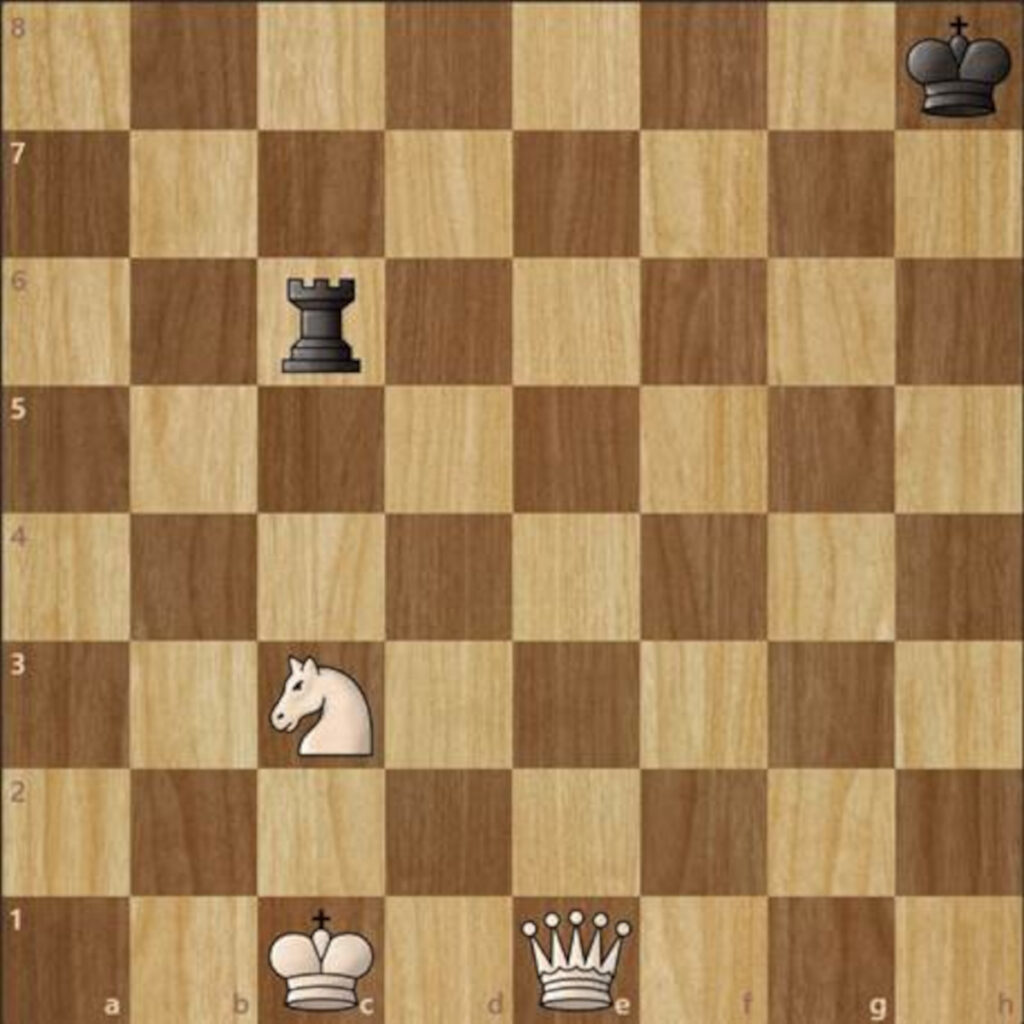
In Exhibit 1, a simplified scenario is laid out. With black to move, is it a good idea to take the knight? It might be tempting to put the white king in check, but point values say no! You’d get a knight (3), but the white queen will take your rook (5) for a reduction in material (-2).

Exhibit 2 is a game in progress after some random and possibly questionable moves. White is up next. There are several moves to contemplate. The bishop on c4 can take the pawn on d5, but there’s a knight and queen protecting that square. That move would be a -2 for white with no real strategic gain. White could also take the black pawn on e5 with its knight, but that would result in the loss of the bishop and a -2. White’s best move is probably to get that bishop out of danger. The black pawn on d5 can take the pawn on e4 next turn, but white can even it up by taking the pawn on e5.

The Burnt Dubrovnik Series Chess Pieces - 3.75" King

The House of Staunton DELUXE Tournament Bag
Watch out for a capture that seems too good to be true—it’s a trap! Giving up material when there’s no reciprocal capture is often a sacrifice play. A sacrifice is different than a mistake that causes you to lose a piece. It’s a deliberate loss meant to break your position or create an opening. If your opponent is giving you a gift, evaluate it very thoroughly before accepting it.
Common Mistakes to Avoid with Chess Piece Values
Playing a purely materialistic game can have some drawbacks. Material values can help you choose between equally good moves, but they may cause you to overlook winning strategies. Even trades may not be neutral if your strategy relies on that piece, but your opponent’s strategy doesn’t. It is usually to your advantage to hold onto pieces rather than trade them aggressively.
Focusing too much on material values can cause unnecessary panic. You’re not “losing” if you’re at a material disadvantage; you’re simply at a disadvantage. You will undoubtedly make unfavorable trades and lose material over the course of a game — everyone does! See if you can play more defensively or if there’s a more aggressive tactic to deploy. Games can turn dramatically after an imbalance in material, so don’t give up.
Pieces don’t have a static value over the course of a game. A player should be aware of both the stage of the game and the position of the piece. In the middle game, a queen is usually the most valuable piece, but in the end, the value of the queen may diminish slightly as the material on the board decreases. Additionally, holding onto both of your rooks for the endgame will increase their value, as there are many paths to checkmate using two rooks. Bishops have a relatively stable value, but may become more or less valuable depending on the strategy employed. Knights enjoy their highest value at the beginning of the game with a trend down through the middle and endgames. A pawn’s value may go up as it approaches the opponent’s back rank.

The Library Collection - The Anderssen Dropjaw Series Luxury Chess Pieces - 3'' King

DOWNLOAD - Komodo Dragon 3.2

LIMITED EDITION - DGT 3000 Digital Chess Clock
Living in a Material World
Chess piece values are a useful tool for all chess players. Novice players can use them to help with decisions about what to capture and what to give away. Experts use them as one tool in their evaluation of best moves. When you’re playing your next game, keep the value of your pieces in mind, and you might just end up with a material advantage!
Frequently Asked Questions:
There are many variations on the values of chess pieces! Some experienced chess players use their own values that work for them. Most variations are small tweaks to the standard numbers, but some are very different. A few assign a value to the king as well, though it’s the one piece that ends the game. Bobby Fischer assigned the king infinity in his system, but some systems assign it a number comparable to other pieces in the endgame. The widespread use of chess engines for training and study has also spawned a few new variations on point systems. Generally speaking, however, the relative value of the pieces varies a little from the standard. The queen is always the highest value, rooks next, knights and bishops next (but not always the same), pawns last.
Playing purely to gain material may work a lot of the time, but it’s also one way to find yourself with an underdeveloped strategy or tricked into a suboptimal move. Skilled players will sacrifice a piece to gain position. When confronted with a tricky situation, evaluating moves based on several factors will yield a more strategic outcome. If there doesn’t seem to be any reason not to, playing for material will likely be to your advantage.
No, chess games are decided by checkmate, draw (or stalemate), or resignation. While you could certainly play a variation using values this way, it would fundamentally change the game. Experienced players often sacrifice pieces to strategically gain position or pull an opponent off their line. If point values were paramount, a queen sacrifice would be a disaster!
In his article, “The Value of Chess Pieces,” Edward Winter posits that the current simple values were put forth in 1942 by Reuben Fine in his book, “Chess the Easy Way.” While many systems were published prior to this, the simplified standard using integers seems to have originated here. Fine did say that the simplified numbers were a “good enough” take on more complex calculations. It’s no wonder that they’ve endured, however, as they are easy to remember and use.