
King Safety First: The Importance of Castling and Protecting Your King
Developing pieces and castling early may be the number one motto in chess openings, but why is castling so important? In this beginner’s guide, you’ll not only learn why castling is almost always recommended for king safety, but also how to bolster a castled king’s defenses to defy enemy attacks.
At the end, you’ll also discover the game-changing +2 rule that even many intermediate chess players don’t know! It might just help you deliver your next crushing attack.

Why is Castling So Important in Chess?
Ultimately, chess is all about hunting the enemy king. Once he’s trapped, it’s game over. But it’s no good only thinking about attacking! You also need to make sure your own king remains safe and well defended throughout the game.
Castling behind a solid wall of pawns and defending pieces is typically the most effective way to ensure king safety—and it's usually better to do it sooner rather than later! Early castling is recommended to avoid early enemy attacks that could put your king in immediate danger. Think of castling as building a strong fortress around your king.

The Burnt Dubrovnik Series Chess Pieces - 3.75" King

DGT 2500 Digital Chess Clock

Premium Chess Box - Brazilian Rosewood
Additionally, castling moves your rook toward the center of the board, where it can become much more active and influential. Think of it as a rook-development shortcut. That’s also why castling is sometimes known as the ‘king rook swap’.

The Six Rules of Castling
Before we get further into understanding the best castling practices, let's do a quick run-through of castling rights rules to make sure everyone’s up to speed. Believe it or not, even advanced players are occasionally unsure of them!
Castling is only allowed if these six conditions all apply:
1. The king has never moved. Even if the king returns to its original square, you can no longer castle if the king has moved during the game. In other words, you have lost castling rights.
2. The rook involved has never moved. The rook you castle with must also have never moved during the game. If it moved and returned to its original square, castling with that rook is still forbidden.
3. There are no pieces between the king and the rook. The squares between the king and the rook must be completely vacant for castling to take place.
4. The king is not currently in check. You cannot castle out of check.
5. The king will not castle through check. The square that the king passes through to castle is not attacked by an enemy piece.
6. The king will not castle into check. The square that the king lands on must not be under attack by an enemy piece.
The Pros and Cons of Short Castling and Long Castling
In chess, short castling (a.k.a. kingside castling) is achieved by moving the king two squares to your right. Long castling (a.k.a. queenside castling) is achieved by moving the king two squares to your left. In both cases, your rook ‘hops’ over to the adjacent square on the opposite side of the king.

The Bohemian Series Chess Pieces - 4.0" King - Lacquered

DOWNLOAD - CHESSBASE '26 - Premium Package

The Millennium King Competition Chess Computer
Short castling is the preferred method of castling in most games since it can be completed without moving the queen. It also tucks the king away into a safer position than long castling. On the other hand, long castling can be beneficial when you want to post your rook immediately on the d-file.
Castling on the opposite side of the board to your opponent (known as opposite-side castling) tends to be an attacking chess strategy when you wish to follow with a ‘pawn storm’ to invade the enemy king.
Note that O-O chess notation signifies short castling, whereas O-O-O chess notation signifies long castling.
What Happens If I Don’t Castle in Chess?
To better understand why castling is so important, let’s take a look at what happens if you don’t castle. In the example below, Black has neglected to castle, leaving the king in the center of the board. Can you find White’s next move to exploit the uncastled king?

Answer: e5! White knows that the key to attacking an uncastled king is to open up the center of the board and attack down an open file. Notice how White’s rook is already X-raying (attacking behind the pawn) Black’s king. All that’s needed now is to push the e-pawn, open up the file, and Black’s king is under attack.
From here, it will be difficult for Black to recover safely. Any piece placed in front of the king will be pinned and under pressure from further attacks. With skill, White will win the game, all because Black neglected to castle!
King Safety – How to Build a Strong Fortress
In simple terms, the king is safest when behind a solid wall of pawns with additional pieces defending them. Let’s take a look at the best ways to build a strong fortress to ensure robust king safety.

The Library Collection - The Anderssen Dropjaw Series Luxury Chess Pieces - 3'' King

DOWNLOAD - FRITZ 21

Millennium eONE Electronic Chess Board for playing on chess.com
Pawn Structure in Front of the King
The formation of the pawns in front of the king is extremely important for king safety. This wall of pawns not only blocks checks but also defends against enemy pieces occupying dangerous squares on the third and fourth ranks in front of the king. Think of them like a shield, which your king shelters behind.
Looking at the four diagrams below, which pawn structure do you think is the weakest?
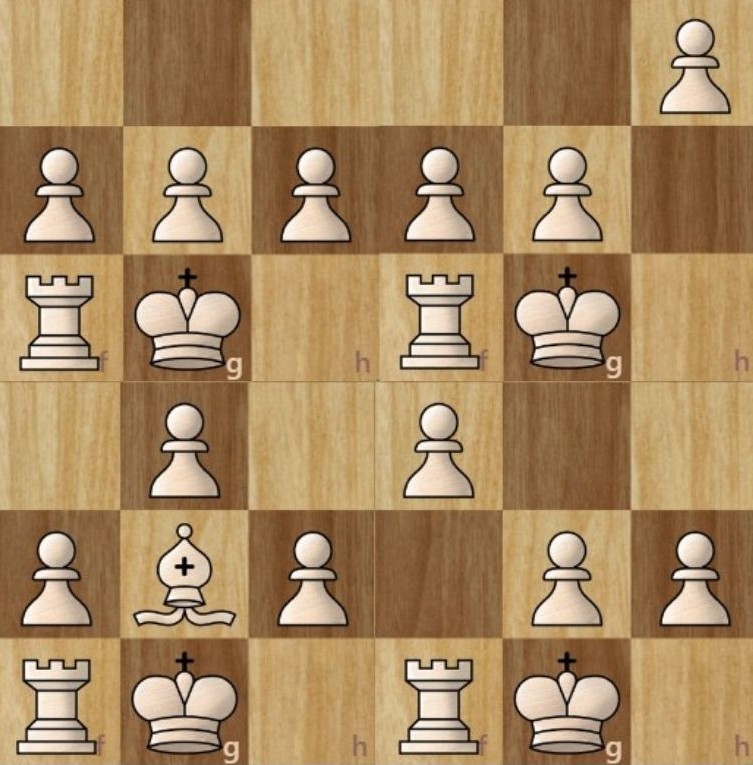
If you picked the bottom right example, you’re on the right track. This pawn formation is weak because it exposes the king to attacks from the dark-squared diagonal. As a general rule, if you have moved the f-pawn, it’s a wise precaution to move the king into the corner where it is guarded against diagonal attacks.
The other formations in the diagram are all conventional, strong pawn structures.
- The flat line of pawns is usually considered the strongest pawn structure. Since none of the pawns left their starting squares, any of them can be moved later if necessary to defend against attacks.
- A pawn on h3 can sometimes defend against enemy pieces on g4. One potential weakness of a pawn on h3 is when an enemy bishop could be sacrificed to capture it in a mating attack.
- A pawn on g3 with a fianchettoed bishop is also a strong formation, as long as the bishop remains there. Without the bishop, the formation becomes vulnerable to enemy pieces entering the ‘holes’ on f3 and h3.
Adding Pieces to Defend the King
While a strong pawn structure in front of the king is the most important element of king safety, additional pieces to defend the fort are often essential to defend against incoming attacks.
Most typically, when castling occurs, a knight (usually on f3) and a rook on f1 already help defend the king. Other pieces, such a fianchettoed bishop or the queen can also join to further bolster the defense.

With practice, you'll learn how to calculate how many defending pieces you'll need to provide the king with adequate protection in any given position. A very useful rule to learn for defending or attacking a castled king is the +2 rule.

The Library Imperial Collector Series Luxury Chess Pieces - 3.0" King

Luxe Premium Chess Box - Amboyna Burl

The House of Staunton DELUXE Tournament Bag
The +2 Rule for Defending or Attacking the King
There are several ways to calculate how many defending pieces are needed to neutralize an enemy attack on your king. One of the simplest methods I’ve seen for beginners comes from YouTube chess guru Levy Rosman. His +2 Rule states that an attack on the enemy king will be successful if there are two more attacking pieces (attackers) than defending pieces (defenders).
In the example below, White has four pieces lined up to attack Black’s kingside, whereas Black has only two defenders. Because White has two more attackers than defenders, the +2 rule suggests White should be able to launch a successful attack. Can you find White’s move to kick off the offensive?
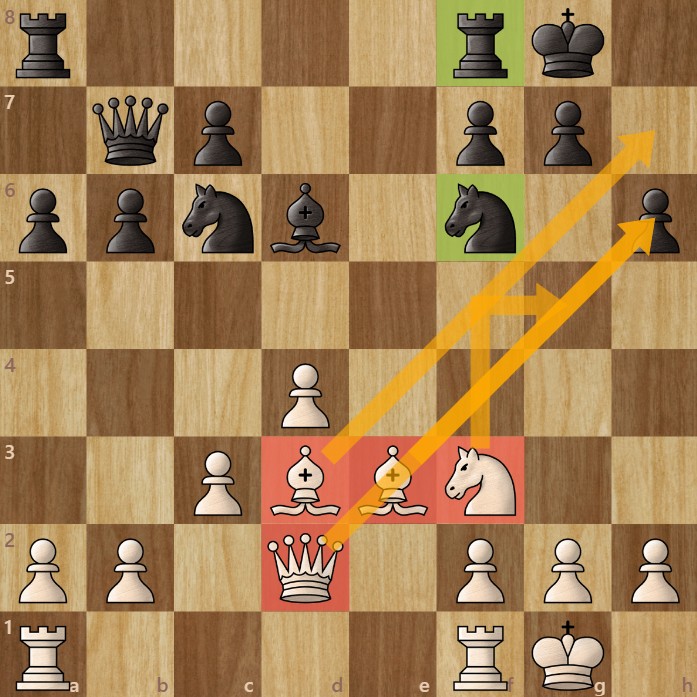
Answer: Bxh6!! White bravely sacrifices the dark-squared bishop to open up Black’s defenses for a mating attack. If Black captures the bishop, White’s queen, light-squared bishop, and knight can combine in a devastating attack. Black may manage to escape checkmate, but won’t do so without sacrificing pieces and position in the process.

The *NEW* Austrian Coffeehouse Series Chess Pieces - 4.0" King

Premium Chess Box - Golden Heart

The Large Ultimate Chess Bag
Conclusion
Prompt castling is almost always recommended in the opening to develop the rook and to place the king on a safer square. For true king safety, however, it’s necessary to also maintain a strong pawn structure, as well as sufficient defending pieces around the king.
Whether you’re defending your own king or setting up a mating attack, always remember the +2 rule. While this often goes overlooked, it’s a game-changing insight that could help you keep your king safe, as well as make stunning sacrifices to punish an under-defended enemy king.