
Chess Positional Strategy: How To Control the Center in Chess
When studying chess positional strategy, there’s one key principle that you’ll hear more than any other: control the center. But how to control the center most effectively, and why is it so important?
While following formulas and plans is a good start, superior chess strategy arises from deeper understanding. In this post, you’ll learn not just how to control the center but why.

Chess Positional Strategy: 7 Tips to Control the Center
Classical Chess—Occupy the Center With Pawns
In classical chess openings, both players battle to occupy the center with pawns from the very first move. While the central four squares are the most important, c4, c5, f4, and f5 may also be fought for. Although many chess players know the theory, many fail to grasp why they are occupying the center with pawns.
Central pawns are important because they control key squares and create more space for your pieces to develop. They also restrict enemy pieces and block enemy pawns from infiltrating your half of the board.

The Broadbent Series Chess Pieces - 3.0" King

DOWNLOAD - Chess King Learn Beginners 6 - Forever Pack All Platforms
The example below is taken from Aron Nimzowitsch’s classic work ‘My System.' White has developed its pieces but has neglected to occupy the center with pawns. Can you see the problems coming? What would you now play with the Black pieces?

If you answered either ...e4 or ...d5, you’re on the right track. White’s failure to occupy the center with pawns has given Black a free invitation to push its pawns and kick White’s pieces. Meanwhile, Black’s pieces have endless space to develop, and Black is bound to gain far greater control of the board.
The immediate race to occupy the center with pawns is easy to understand and is therefore a suitable chess strategy for beginners. Yet, with enough understanding and skill, it’s also possible to hold back central pawns until the perfect moment. It’s called hypermodern chess.
Hypermodern Chess – A More Patient Approach
In the early 20th century, rebellious chess theoreticians like Aron Nimzowitsch and Reti began to question whether it really was necessary to immediately occupy the center with pawns. Instead, they argued that the fight for the center could be patiently prepared before committing any pawns to central squares. This usually involves fianchettoed bishops and timely pawn breaks to dismantle an opponent’s advanced center.
The diagram below is from one of the most classic of all hypermodern openings, the King’s Indian Defense. Black has allowed White to build a big, impressive-looking center unchallenged. While White’s position may look imposing, Black has been quietly preparing for the perfect moment for an ambush: ...e5.
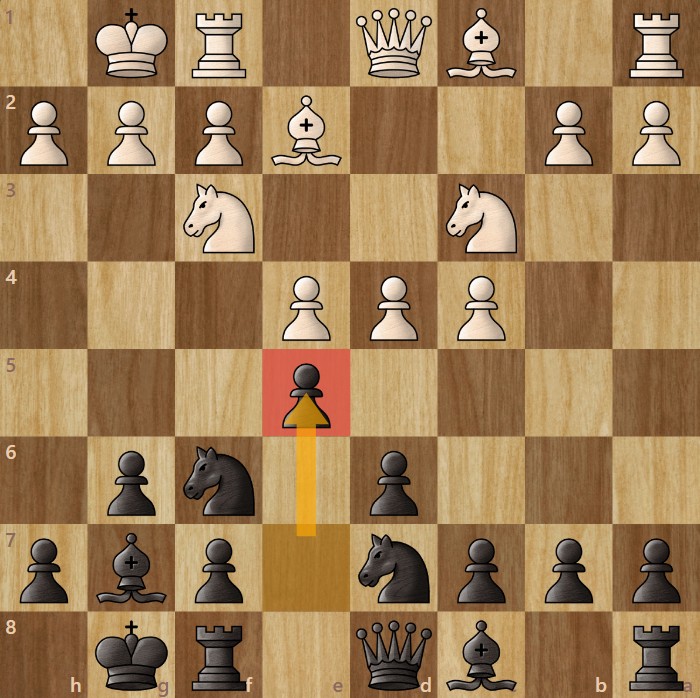
The King’s Indian assertive assault on the center often leads to sharp positions where Black launches a same-side pawn storm on the enemy king. Hypermodern openings are not less aggressive than classical openings, merely more patient.

The Sovereign Series Chess Pieces - 4.0" King

Premium Chess Box - Brazilian Rosewood

The House of Staunton PROFESSIONAL Tournament Bag
It should be noted that, since hypermodern openings are more flexible by nature, they invite a wider range of responses from your opponent. This means that they are more difficult to learn by rote and require deeper understanding for piece coordination and activity and timely pawn breaks to work effectively.
Use c- and f-Pawns to Challenge the Center
In chess strategy, the four central squares are the most important, so how can we challenge them? A classic method is the c- and f-pawn method. Think about the Queen’s Gambit. White offers Black the chance to capture its c-pawn in exchange for ‘the perfect center.'
We see the same pattern on the other side of the board in openings such as the Vienna Gambit. Here, White plays an early 3. f4 to challenge Black’s e5 pawn. In this case, Black should never accept. If they do, White simply pushes its e-pawn, and where will Black’s knight go?
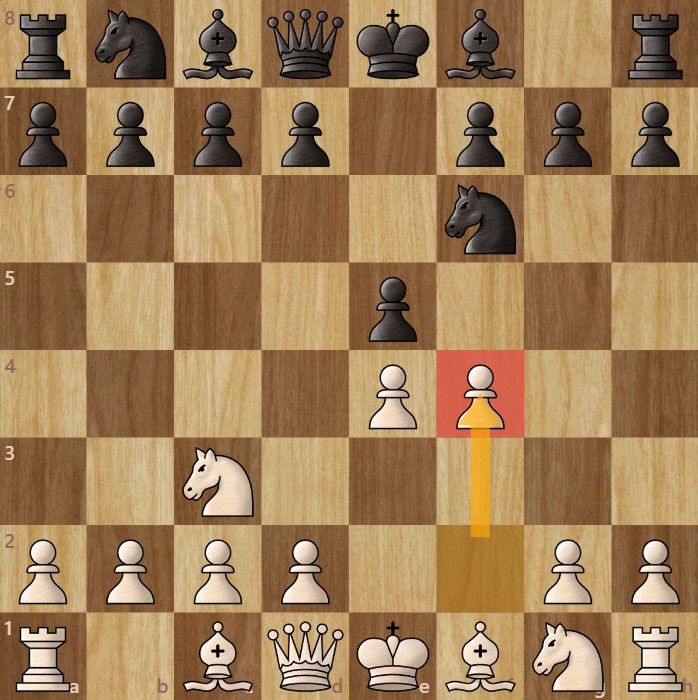
Exactly! The only safe square the knight can move to is its starting square. This is but one example of how effective a challenge from a c- or f-pawn can be. Positional pawn sacrifices on the c- and f-files have the added advantage of creating open and semi-open files for your rooks to control.
While c- and f-pawns can be extremely powerful in challenging for the center, they are often obstructed by knights. Before developing knights to c3, f3, c6, or f6, ask yourself, “Would my c- or f-pawn be useful to challenge the center?” If they would, be sure to push them before you get your knights out!
Pawn Chain Base Targets
A pawn chain is two or more pawns connected on a diagonal. The head of the pawn chain is known as the 'tip,' and the tail of the pawn chain is called the 'base.' Pawn chains are important instruments for controlling the center because, with all pawns are protected, they are difficult to break down.
A classic example of a pawn chain to control the center is in the French Defense Advance Variation. White builds a pawn chain up to its e5 pawn, which restricts space for Black and hinders development. Black must find a way to break down the pawn chain, but it’s no good attacking the tip! Instead, Black must find a way to shorten the chain and attack the base.
Black’s usual strategy is to attack White’s d4 pawn. By placing a pawn on c5, backed up with the queen on b6, Black builds pressure on d4.
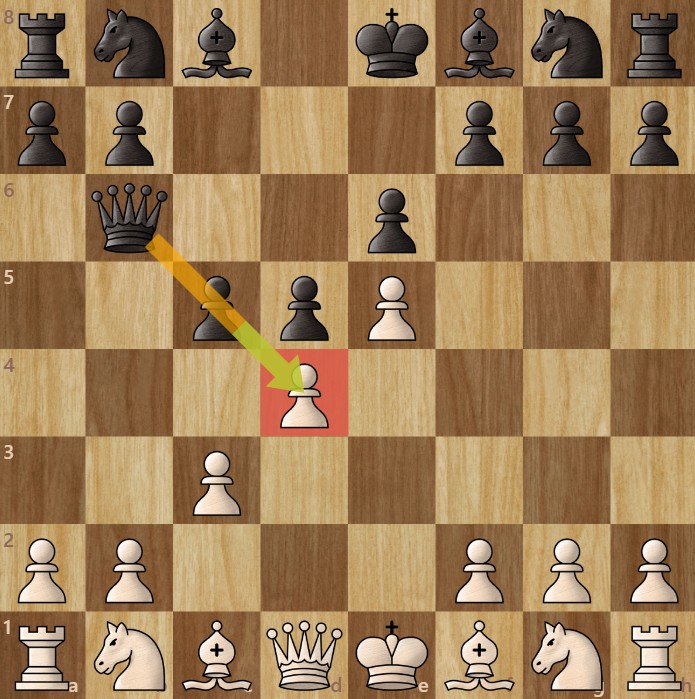
Now, after Black trades pawns on d4 (...cxd4 cxd4), White’s pawn chain is shortened, and the base becomes a backward pawn weakness. It can then be targeted aggressively with other pieces. Oftentimes, Black will even rotate its kingside knight to f5 to join the battle for the crucial d4 pawn!
Since the fight for the center hinges on the survival or collapse of the pawn chain, learning how to maintain or attack pawn chains is a key skill for central control.

The Collector Series Luxury Chess Pieces - 4.0" King

The Camaratta Signature Master Chess Table

LIMITED EDITION - DGT 3000 Digital Chess Clock
Deepen Understanding of Pawn Structure
Most chess players have a rudimentary grasp of pawn structure, yet a more nuanced understanding is needed to control the center with skill. Doubled pawns, isolated pawns, and backward pawns are important concepts, yet in the fight for the center, there are exceptions to the rule.
In the example below taken from the Sicilian Defense, Black has just blocked the check with ...Nc6. What would you now play with the White pieces?

Many players with White imagine that capturing the knight is best because it causes Black to have both doubled pawns on the c-file and an isolated pawn on the a-file.
Stronger players, however, realize that having doubled pawns that support a central pawn is no bad thing! With pawns on both c6 and c5, Black has just gained even greater central control—more than enough compensation for dividing its queenside pawns. This is why we often hear the maxim "Capture toward the center."
Furthermore, doubling pawns can create open and semi-open files for your rooks to control later. Semi-open files on the same side that your opponent has castled can often prove especially deadly for mating attack plans in the middlegame.
Rather than blindly following pawn structure rules, then, think about bigger chess positional strategy. If ‘breaking the rules’ helps you to control the center, it may well be worthwhile.

The Camaratta Collection - The Botvinnik Flohr Series Chess Pieces - 4.0" King

Leap Digital Classic Chess Clock

US Chess Premium Chess Box
Overprotect Key Squares
In the fight for the center, some of the squares that you’ve gained are so crucial that you’ll want to do everything you can to keep them. Overprotection is a concept coined by Nimzowitsch of providing more protection to a piece or pawn than is immediately necessary. Overprotection guards against unforeseen future attacks, frees up defenders, and also coordinates pieces around a key square.
In the example below, reached via the London System, White has landed its knight on the very desirable e5 square — a central outpost in the opponent’s half of the board. Here the knight is highly influential and dangerous, and White wants to keep it that way. Just look at how many pieces are protecting it:
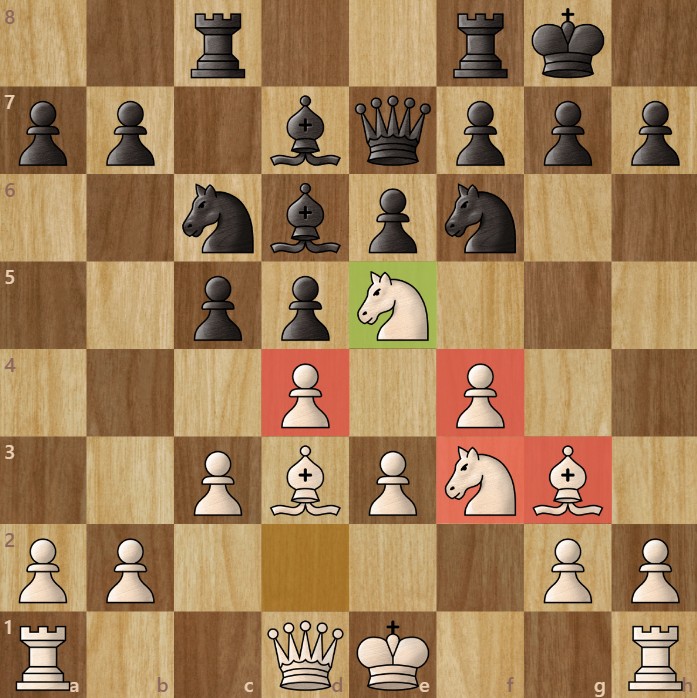
Versus Black’s two pieces attacking e5, White has four defenders, making absolutely sure the square will hold. Furthermore, look what would happen if Black captured it with the knight...
Yes! White would recapture with a pawn and fork Black’s second knight and bishop. This highlights another advantage of overprotection — you can choose which piece to recapture with and therefore occupy the square powerfully again.
Make a Pawn Break in the Center
When the center is locked up with pawns, it’s known as a ‘closed position.' Perhaps nothing has yet been traded, and there are fewer squares for pieces and pawns to move to. Maneuvering in closed positions requires subtle piece improvements and watchful, prophylactic chess moves to prevent the opponent from gaining an advantage.

The Harrwitz Series Timeless Chess Pieces- 3.5" King

Super Deluxe Tournament Director Kit

Large Wedge Chess Clock Carrying Bag
To break open such a position, you’ll need to use a pawn break. This means capturing or trading an opponent's pawn or letting your pawn be captured or traded to open up a file. Pawn breaks can alter the position suddenly and create attacking opportunities where there weren’t any before.
A classic pawn break to open a closed position arises in the Dutch Stonewall Defense. Both sides have been quietly improving their position from behind closed structures of central pawns. Yet Black has been patiently waiting for the perfect time to play the move that changes everything: ...e5:
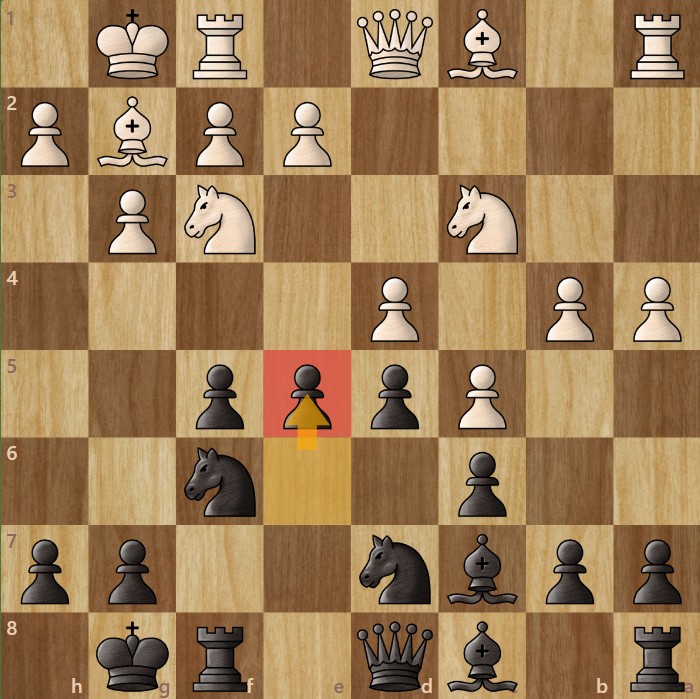
This is an exemplary pawn break because White cannot ignore it. With ...e5, Black threatens to push the pawn to e4, gaining key central space. Instead, White’s only good move is to capture. The subsequent heavy trading that frequently follows on e5 completely transforms the game. Suddenly, the board is open, fluid, and tactical opportunities are back for the taking.
Conclusion
The center is not valuable because chess books say it is. It is valuable because central control gives your pieces greater mobility, restricts your opponent, and creates the flexibility to attack or defend either side of the board. Master the center, and the rest of chess positional strategy will become much easier for you!
meta: Learn how to control the center with pawn structures, hypermodern ideas, overprotection, pawn breaks, and classic chess positional strategy.