
Chess For Beginners: 8 Things to Focus On First
If you are new to chess, there is a very good chance that you are feeling overwhelmed. You thought, “This is a fun game, maybe I could learn some more about it.” But now you have discovered an ocean of information, ideas, tactics, and maybe even rules that you didn’t even know existed. Out of everything out there, what should be your north star for sailing through this sea of chess information? This is a list of the seven things you should focus on first in order to improve at chess the most efficiently. If you are a chess beginner, or even if you have been playing for a little while and have stalled in your improvement, I recommend returning to these basics to ensure you have mastered them.

1. Learning the Basics
Look, chess is just like any other skill. To improve, you must first understand and master the basics. That means fully understanding the game's framework before we study any finer details. If you were learning an instrument, you would start by learning how to play the basic notes, how to read music, etc. What are the basics of chess?
How the Pieces Move
You may be rolling your eyes. But I swear I have taught people who want to learn opening theory, and they still forget how the knight moves! Knowing how the pieces move and actually using those pieces instead of just pushing a bunch of pawns will probably net you a few wins at the family game night. I love to have my students practice piece movement through the Lichess.org learn page, where you can practice each piece individually.
Chess Players Need ALL the Rules
Most chess players have experienced this: you are playing a game in a park or at a chess meetup, and you go to castle, or play en passant, and your opponent stops you like you are trying to cheat! If you want to improve at chess, you have to learn all the rules, including castling and en passant, as well as simpler things like exactly how check and checkmate work. If you are truly new to chess, I recommend picking up a beginner chess book that covers all the basics in one place.
Check
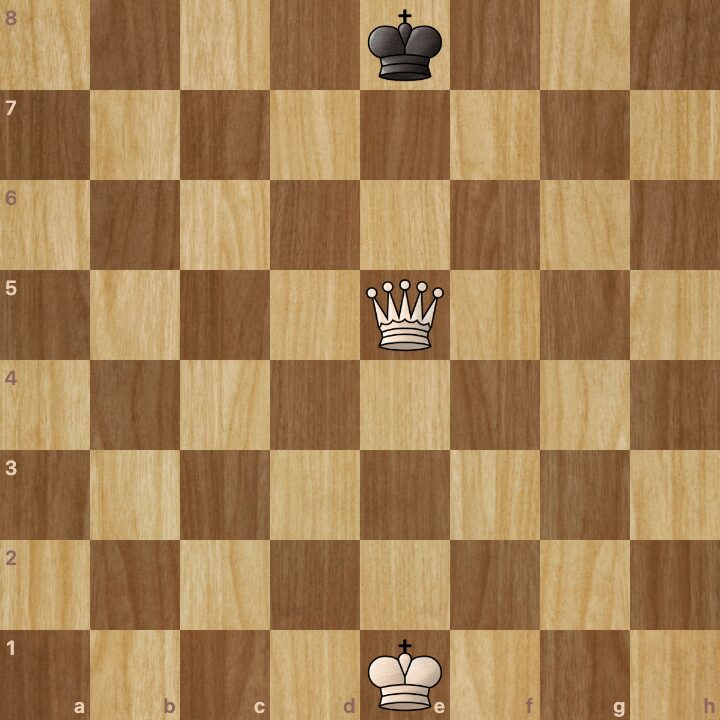
After piece movement, the next most important rule in chess to understand is check. You might think it would be checkmate, but that comes next. First, we need to understand what exactly a check is. Check is when the king is put in danger. If one of your pieces is pointed at the opponent's king, or could move to that square if it were their turn and “capture” the king, then the king is in check. In chess, you never capture your opponent's king. When the king is in danger, it must escape that danger. If it can escape, then it was only a check.
Checkmate
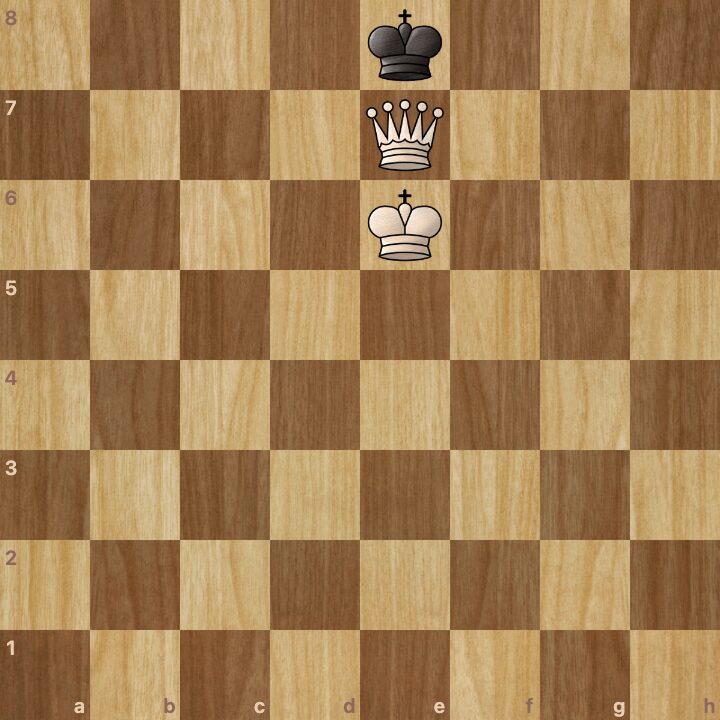
If the king cannot escape that danger in any way, then you have checkmate! Make sure the king cannot run away, that the checking piece cannot be captured, and that the check cannot be blocked. Those are the three ways to escape a check. If the check cannot be escaped, then we have checkmate. Before you can tackle any kind of chess tactics, you need to be able to identify checkmate and spot every check in a position.
2. Basic Checkmate Patterns
Now that you have the basics down, you should start to focus on basic checkmate patterns. I don’t even mean the fancy ones; simple checkmate patterns will get you far when it comes to trying to attack your opponent and win chess games. I would start with a simple mate-in-one, with a queen and helper checkmate. If you can understand what is happening in these types of positions, then you will win more games. Other types of checkmate patterns to focus on include backrank checkmate, ladder checkmate, and the idea of smothered checkmate. You can practice different mate-in-ones by pattern on Lichess, or you could study a book like Everyone's First Chess Workbook and learn those basic patterns from there.
3. Chess Notation for Chess Matches
While you are learning these basic checkmates, it is also a good time to make sure you are fully aware of chess notation. Chess notation is the way that we write down moves and communicate what moves were played in a game. If you play online, it records those moves for you on the side of the screen, but if you want to play a real tournament, which is a great way to improve, then you need to learn how to write down your moves yourself.
How to Notate Chess Moves For Chess Matches
The quick explanation for chess notation is to think of what piece is moving and where it is going. You start with the letter indicating the piece: N for Knight and K for King. If you are moving a pawn, then you move on to the landing square. For the move below, we use N for knight and f3 for the landing square, with the entire move being 1. Nf3, since it was White's first move. If that move had been a capture, then you would add an “x” after the letter, so Nxf3, or Knight captures f3. Checks are also indicated with a + after the move, and # is added if the move is a checkmate. Learn all about chess notation here, and be ready for your next chess tournament.
Why Learn Notation?
Besides the fact that learning chess notation will allow you to play in a real over-the-board chess tournament, it also opens up the world of chess to you once you learn the language. Modern chess books use this notation to showcase master games and to teach you other positions. Learning chess notation is a foundational skill for chess study.
4. Chess Training: Tactics
Once you are familiar with all of the basic rules and chess notation, the next thing to focus on is chess tactics. I often describe chess tactics as the closest thing we have to a cheat code in chess. If you know basic tactics, you will seem like a genius to your friends who do not. What do I mean by tactics? Tactics are usually one or two-move sequences that give you an advantage. These moves often utilize checks, or attacking the king in some way, which is why you need to understand check and checkmate first! There are several basic chess tactics, such as forks, pins, discovered attacks, and others. I will not delve into each one individually here. But take a look at the position below.
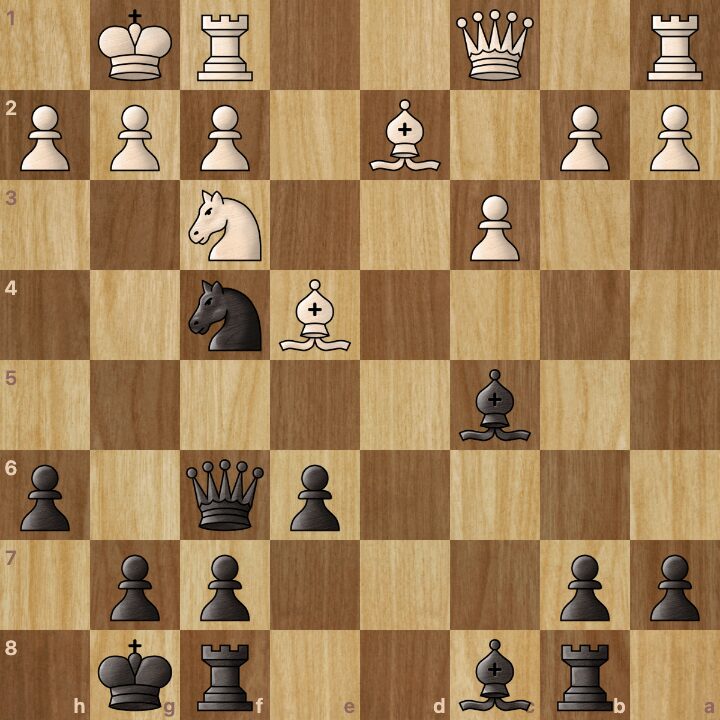
Here, white has a simple move to win material with a fork. A fork is a double attack where two of your opponent's pieces are in danger at once, and they do not have the time to save them both. Because they have to move their king out of danger from the check, you will be able to capture their queen on the next turn.
5. Opening Principles
Truthfully, Chess beginners could spend the rest of their chess training focusing solely on tactics and still improve as players. You can find chess puzzles online, like on Lichess’s puzzle page, or you can use a chess puzzle book. For beginners, it is one of the most effective ways to improve. If you can quickly identify a simple fork or other tactic, you will win games and gain rating. Many beginners believe they must then focus on openings. While some opening study is fine, I would focus instead on ensuring you understand sound opening principles and why you play certain moves in the opening. Control the center, develop your pieces, castle your king, etc.
6. Middlegame Understanding for Chess Beginners
If you do start playing certain openings, even if it is just something simple, try to understand the middlegames you see consistently. Now might be the time for some basic strategy books or information about pawn structures that can help you better understand some of the positions that you consistently see in a game.
7. Winning Endgame Ideas
Not only are checkmate patterns vital to getting better at chess, but if you can start to visualize winning endgame positions, like different winning pawn configurations, how to convert certain material advantages, and how to take advantage of a passed pawn, you can start to strive not just for checkmates during your middlegames, but also point yourself towards different winning situations that don’t have to just rely on tricks or tactics. If you focus on these basic endgames, you will feel more confident in your chess, and you will win more games guaranteed.
8. Playing Games of Chess!
Once you know the basics of chess, the single best thing you can do to improve is to play more games. You can’t learn an instrument without playing it, you can’t learn to play basketball without shooting the ball. Play more chess games, and you will improve. Ideally, you will play against other real-life people! That doesn’t mean that you have to be playing with a real board, though. Playing online chess is an effective way to get in many games against people at your skill level. If you do want to play more in real life, you can find a local chess club or meet up and play either casual games or look for a tournament in your area. Either way, playing more games will not only show you how you are improving, but also show you the areas you can then refocus on in your study.
Frequently Asked Questions
Just play! In order to play, though, you may need to learn how the pieces move, and how check and checkmate work. Then you will be ready to win games!
Chess is a great game for self-improvement and self-learning. You can do this through many of the excellent beginner chess books that are out there, or you can use any of the great online resources that are available on Lichess.org or Chess.com.
Start with learning how the pieces move. Some of them are a little confusing if you have never played before, so that is a good place to start.
Some people say you should spend 20% of your time studying openings, 40% of your time studying middlegames, and 40% of your time studying endgames. I think, for most people, especially beginners, I would recommend spending 30-50% of your time on tactics and the rest on just playing games.