
Your Complete Guide to Chess Puzzles
If you are new to chess, you might not know about the world of chess puzzles. You may even grab a chess book off the shelf of your local bookstore, only to see pages and pages of positions ready to be solved. In a lot of ways, chess puzzles are the cheat code to getting better at chess. If you can look at a position and find the best move consistently, then you will win chess games. Not only that, but learning basic tactics will give you the leg up you need to win against your friends, family, and coworkers.
What Are Chess Puzzles?
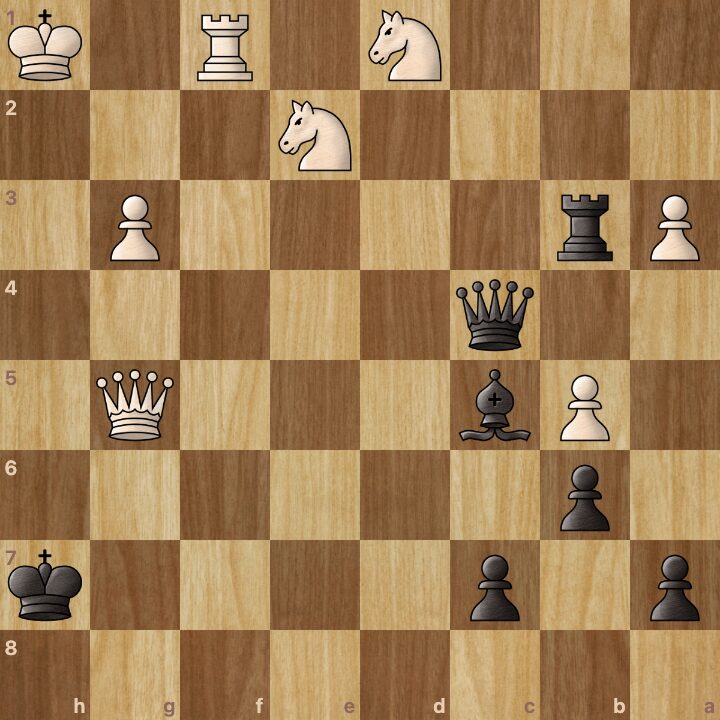
A chess puzzle is a chess position where there is a good move to be found. It is a puzzle because there is a correct solution. In a regular chess game, there are many positions with multiple good, or even great, moves that could be played, but in a puzzle there is often one particular line that needs to be puzzled out.
Is There a Downside to Chess Puzzles
Be careful! If all you do is solve chess puzzles for your chess practice, you actually can learn some bad habits. Here are a couple of bad habits to watch out for, and how to avoid them.
- You become a perfectionist.
If you are used to there always being an absolutely correct answer, it can be difficult in a real game to be satisfied with just playing an improving move. That can even lead you to playing wild sacrifices because you think you calculated out a good line, but you missed something.
- You gain tunnel vision.
Noticing patterns is a vital skill in chess, but if you never practice with real games, you might become used to narrowing your focus in on certain tactical ideas. You might miss the forest for the trees.
- You don’t learn how to convert your advantage.
If all you do is chess puzzles, you might never learn how to actually win games! Finding a tactic is a great first step, but then you need to play out the position. One good practice tool is to take a puzzle you have solved, practice playing out the rest of the position against a friend or the computer, and make sure you can still win from there.

The Broadbent Series Chess Pieces - 3.0" King

DOWNLOAD - Chess King Learn Beginners 6 - Forever Pack All Platforms
Should Chess Players Use Chess Puzzles?
While there may be some bad habits you can gain from only doing chess, they are still a great way to improve at the game. Some players dislike doing chess puzzles because they find them boring or not worth their time. But if you want to get better at chess, puzzles are crucial in your training. For beginners, they help you recognize patterns and train your thinking. Just as musicians learn scales or athletes practice fundamentals, solving tactics puzzles elevates your chess skills. To increase your chances of winning, consistent puzzle practice is essential.
Chess Puzzles in Your Chess Training
There are two approaches you can use to chess puzzles. Online chess puzzles, or chess puzzle books. The benefit to online is that there are endless numbers of puzzles you can do for free on websites like Lichess.org! You can even choose themed puzzles on their puzzle page for more focused puzzle study. Books also do this really well. Many puzzle books separate their puzzles by difficulty, but also by theme or type of puzzle. Now, be careful when solving this kind of puzzle. In a real game, you won’t know what kind of problem you are solving!

The Collector Series Luxury Chess Pieces - 4.0" King

The Camaratta Signature Master Chess Table

LIMITED EDITION - DGT 3000 Digital Chess Clock
Different Ways to Solve Puzzles Online
When you are solving puzzles online, there are different ways to go about it. Just like how there are different chess variants, there are different ways to solve puzzles! If you find one kind of method to be boring or unhelpful, maybe try a different puzzle-solving method. You can use something like Puzzle Streak to see how many you can get correct in a row, or even Puzzle Storm to have more fun with the process of solving puzzles.
General Puzzles
If you click on the Lichess puzzle page while signed in, you'll receive a puzzle suited to your skill level. This rating, similar to an ELO, tracks your puzzle improvement and helps match you with puzzles that are appropriate for your ability. It's an excellent way to access a variety of puzzles at a suitable difficulty for you.
Puzzle Themes
You can also solve puzzles by theme! This means selecting a specific type of puzzle to focus on, which then presents only that kind of tactic or position. Concentrating on particular tactics is a useful way to train your brain to identify them in real games. If you frequently lose to forks or pins, practicing puzzles focused on those tactics can also help you avoid falling into them.

The Harrwitz Series Timeless Chess Pieces- 3.5" King

Super Deluxe Tournament Director Kit

Large Wedge Chess Clock Carrying Bag
Puzzle Streak or Puzzle Storm
One fun way to solve puzzles is Puzzle Streak or Puzzle Storm, a method that starts with easier ones and progressively tackles more difficult challenges. This approach is beneficial because it offers variety in puzzle types and helps you enhance your calculation skills as you advance. Conversely, Puzzle Storm is a timed game where you aim to solve as many puzzles as possible within a set period. On chess.com, this is known as Puzzle Rush, and it provides a valuable way to track your progress by comparing your current score to previous ones.Learning Patterns in Chess
Chess is a game of patterns, and doing chess puzzles is basically just practicing your pattern recognition. If you see enough forks during your study, when you play a game, you will be more likely to see the fork! This is true for basic tactics, but you can also recognize strategic patterns as well as classic endgame situations. There is nothing worse than a new chess player getting to the end of the game and not knowing the pattern for a basic king and queen checkmate!
Types of Chess Puzzles
- Tactics:
When looking at chess puzzles, most people think of forks, pins, skewers, or discovered attacks. These kinds of basic tactics are important, and practicing them can improve your ability to identify them during games. If you do notice the tactics, they can completely change the result of a game!
- Strategy:
Not all chess puzzles are strictly tactical. Some chess puzzles focus on positional sacrifices or ways to improve piece activity. Many strategy books include puzzles that teach you to identify these moves. Remember, a puzzle is just a position where there is one particular move that is better than the rest. Often, a strategic move can be the best thing for your position.

The Burnt Dubrovnik Series Chess Pieces - 3.75" King

DGT 2500 Digital Chess Clock

Premium Chess Box - Brazilian Rosewood
- Endgame puzzles:
Another common style of endgame puzzle is an endgame position. You don’t have to know the right move in every single chess opening, because you partly get to choose what opening you are playing. But, in endgames, you have to have a broad understanding of what kind of moves to play in order to be ready for any type of endgame that you get. That means understanding how to checkmate with certain pieces, as well as how to convert or draw certain pawn endgames. Puzzles are a great tool for practicing these kinds of endgames.
Tracking Your Chess Improvement Through Puzzles
If you include chess puzzles in your training, you'll find them a valuable tool for tracking progress. If you are doing puzzles online, you can monitor not only your online puzzle rating increases but also how quickly you solve puzzles. After several weeks of practice, you'll notice a significant improvement in your pattern recognition speed. Then, as you familiarize yourself with more puzzle types and patterns, both your online and over-the-board ratings are likely to increase with consistent practice. I advise against focusing excessively on puzzle ratings on sites like chess.com or Lichess unless it helps you practice more; otherwise, take your time and just try to calculate.
How to Solve Chess Puzzles
Solving chess puzzles is not easy. If you are new to chess, you might not even know where to start when trying to find the right move in a puzzle position. So, if you are feeling confused at the start, here are some helpful tips. First, don't rush your moves or pick the first one that comes to mind. When in doubt, take the time to calculate; this will improve your skills. Next, avoid focusing on what you think the tactic might be. Instead, just look for the best move by looking at the most forcing moves you have available. Forcing moves are checks, captures, and threats. If you look for those kinds of moves, you will often find the correct answer in a chess puzzle.
Forcing Moves to Win: Checks, Captures, Threats!
Why checks, captures, and threats? Well, those are the moves that force your opponent to respond. If they have to use their move or their tempo to respond to your forcing move, then they won’t have time to play some other move. Focusing on forcing moves limits your options and simplifies calculations, helping you find the best moves. This skill is essential in chess for avoiding major mistakes and recognizing checkmates.

The Library Collection - The Anderssen Dropjaw Series Luxury Chess Pieces - 3'' King

DOWNLOAD - FRITZ 21

Millennium eONE Electronic Chess Board for playing on chess.com
Checks
Check is the most forcing kind of move in all of chess. By the rules of chess, they have to respond. Many tactics depend on checks, making it crucial to protect your king and to be aware of your opponent’s. If you want to avoid blunders, then start looking at all of your opponents' checks before you make a move.

Captures
A capture is not quite as forcing as a check, but it still forces your opponent to respond. If you take their queen, for instance, they are going to want to recapture! Material is a huge part of winning chess games, so make sure you are aware of all the possible captures that are in a position when trying to find the answer to a chess puzzle.
Threats
Another kind of move that is often the answer to a puzzle is a threat. Look and see if there are moves that threaten pieces, because it might be a way to win material, trap a piece, or enter a winning line.