
10 Chess Rules To Know Before Your Next Tournament
A chess tournament can be stressful. Not only are you playing a game that requires intense concentration, pattern recognition, and strategy, but you may also be experiencing a brand new set of rules that accompany over-the-board chess tournaments. If you're used to playing only online, you need to know these 10 chess rules that will help you do your best at your first chess tournaments, so that you can really focus on the moves that you are playing instead of worrying about more than you should.

The Difference Between Online and OTB
OTB chess, or over-the-board chess, is a great way to advance your play. If you have never played in a real chess tournament before, you may not know exactly what to expect. Even though the rules of the game themselves are the same as online chess, there are a few nuances and differences to be aware of. When you play online, a lot of things are automated for you. Whether it's your clock, the board setup, or even finding your opponent, online play makes things easy.
1. Board Set-Up
When you play an over-the-board game, you may not be used to having to set the board up yourself. Make sure your king and queen are in the right places, and that the bottom right square is a white square. This ensures that your board is correctly oriented. If you have pieces on the wrong squares, it could cause confusion or problems later in your game, and the tournament director would have to decide how to continue. So, if you ever realize that something is incorrect with how your board was set up, feel free to let your tournament director know, and they can help you sort out any problem.

The Library Imperial Collector Series Luxury Chess Pieces - 3.0" King

Luxe Premium Chess Box - Amboyna Burl

The House of Staunton DELUXE Tournament Bag
2. The Clock
Once the board is set up correctly and the tournament director gives you the go-ahead, you are ready to start your game. Once you play your first move, you must remember to hit your clock. When you press your clock, your opponent's time will start to tick down. So, if you forget, only your time will go down! It is a very common mistake for beginners to forget to press the clock. If most of your chess has been played online, you will be used to the clock automatically switching over just because you have played a move, but when you play OTB, you have to do it yourself.
3. Notate Your Moves
When you are making your moves in a chess tournament, you have to write down your moves. You do this so that if there are any issues during the game, the tournament director has a record from both players of what happened in the game. In addition to that, after the game, you will then have a record of what happened so that you can study and learn from your mistakes. If you are unfamiliar with chess notation, I recommend taking a few minutes to learn it before your first tournament.
Chess Notation
Briefly, chess notation is about communicating what happened in a game. When you write down the move, think of it as recording which piece moved to which square, whether it captured anything, and whether it delivered a check or checkmate. If you are moving a pawn, you don’t have to worry about naming the piece, so a pawn move to the e4 square is just notated as 1. e4. But if you put a different piece on a square, you need to indicate which piece just moved. So, a knight moving to the f3 square would be Nf3 (K is reserved for the king.) There are more nuances to notating your moves, so check out a more thorough explanation here.

The *NEW* Austrian Coffeehouse Series Chess Pieces - 4.0" King

Premium Chess Box - Golden Heart

The Large Ultimate Chess Bag
4. En Passant
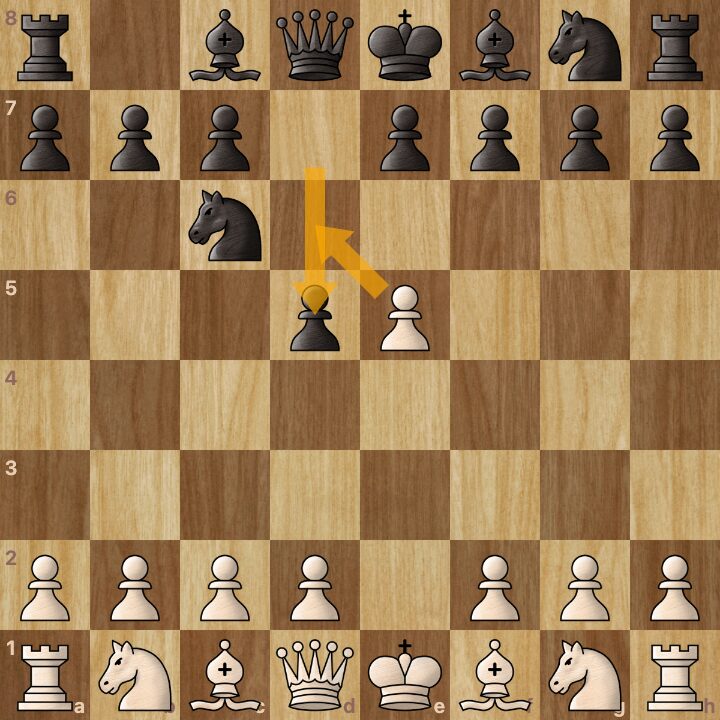
En passant, meaning “in passing” in French, is an important rule to know if you are playing in an over-the-board tournament. Your opponent may even misunderstand this rule, so it is important to understand how it works. When a pawn moves two squares forward, if your opponent's pawn is in a position where it could have captured had it only moved one square, it can still do so.
5. Castling
Another move that you may have to watch out for, so that you or your opponent doesn’t misunderstand, is castling. When you play online, the pieces move for you! It also doesn’t let you castle illegally. When I was a TD in the past, I have seen many new players castling incorrectly. Remember, you move the king two squares over and place your rook on the opposite side of the king. Castling helps move your king out of the dangerous center of the board and also develops your rook. You can castle in either direction, moving your king two squares and positioning the rook accordingly.
When You Can't Castle
If you have already moved your king or rook on the castling side, you can no longer castle. Moving the kingside rook still permits queenside castling, and vice versa. However, if you have moved the king at any point, castling is no longer allowed.

In tournaments, new players often accidentally leave their king in check. Always check if your king is under attack before castling. If attacked, castling isn't allowed, so instead, capture the attacking piece, defend, or move your king. Moving away from the attack means you can't castle later, as your king has already moved.

The Bohemian Series Chess Pieces - 4.0" King - Lacquered

DOWNLOAD - CHESSBASE '26 - Premium Package

The Millennium King Competition Chess Computer
6. Pawn Promotion
When a pawn reaches the end of the board, you promote it to another piece. You can choose a bishop, a knight, a rook, or a queen. Typically, a queen is the best choice because it is the strongest piece. The pawn cannot remain a pawn or become another king. In an OTB tournament, this means that you need to be ready by grabbing the unused queen or captured queen from your opponent's side of the board. Make sure you complete your move and place the promoted piece before your clock runs out. In time scrambles, this is a common mistake that can give one player an unfair advantage.
7. Record Your Result
When you have finished your game in an OTB chess tournament, it is likely that you will need to go and report the result of your game. There will either be a paper for you to write your results, or a TD for you to report to. Even if you lose the game, make sure you don’t just leave the playing area without reporting the result first.
8. Threefold Repetition
When you repeat one exact position three times in a chess game, then the game can be a draw by three-fold repetition. But, in an OTB game, it is up to the player to report a number of different draws to the TD. Unlike online, the game will not just automatically finish just because a position has been repeated. So, if you think there has been a threefold repetition, you can ask your TD to check. Make sure you were notating your game, though, otherwise the TD will have no way to know.

The Library Collection - The Anderssen Dropjaw Series Luxury Chess Pieces - 3'' King

DOWNLOAD - FRITZ 21

Millennium eONE Electronic Chess Board for playing on chess.com
Forced Perpetual Check
A forced perpetual check could be claimed in a game where notation is not necessarily taking place because of time trouble. Just make sure you call over a TD to take a look at the game and show them what is happening.
9. The 50 Move Rule
This is similar and would require notation to be proved to the TD that fifty moves have occurred with no pawn moves or no captures. I have had beginners claim there was a 50-move rule draw just because they happened to reach 50 moves, but that is not how the rule works.
10. No Talking
Generally, if there are any problems in your game, it is best to call over your tournament director to ask a question or have them observe a situation at the end of a game. What you don’t want to do is start discussing with your opponent. When you start talking with your opponent, you not only distract them and make them uncomfortable as they try to focus, but also distract the other players in the playing hall. That's why it is best, if something has gone wrong, not to argue or discuss with your opponent, but to call over your TD. You also never want to chat with friends or other players during your game, because that could become a fair-play issue as well.

The Burnt Dubrovnik Series Chess Pieces - 3.75" King

DGT 2500 Digital Chess Clock

Premium Chess Box - Brazilian Rosewood
Don’t be Nervous
If you are thinking of playing in a chess tournament, I would encourage you to jump in! Give it a try. There are people at the tournaments who can help you and answer your questions. Do your best, and remember to have fun. Nerves are normal for your first chess tournament, so just focus on the moves that are in front of you, and that you are having a good time. I recommend practicing with some over-the-board games if you are not used to that yet. Use a clock if you have one and practice hitting it after every move. Set yourself up for success!