
Outposts and Outpost Knights: Controlling Critical Board Squares
Have you ever heard it said that occupying an outpost square in chess is the most important strategy in the book? Legendary chess theoretician Savielly Tartakower even said, "Seize the outpost e5 with your knight, and you can go to sleep. Checkmate will come by itself.”
But what exactly are outposts, and why do they matter? After reading this post, you’ll not only thoroughly understand outposts but also how to wield them with game-winning power.

What Are Outposts in Chess?
In chess literature, it’s fascinating how many definitions of outposts there are! The most classic definition of an outpost is a piece (most typically a knight) that is:
- In the enemy half of the board
- Cannot be attacked by an enemy pawn
- Protected by an allied pawn
Here is a classic example:

Other Definitions of Outposts
Other chess authors apply the term "outpost" more loosely. Any piece in the opponent’s half of the board that an enemy pawn cannot attack can be considered an outpost—even if it’s not defended by an allied pawn. Some authors call these less typical, yet still functional, outposts ‘de facto outposts.'

The Guardian Series Chess Pieces - 3.75" King

Premium Chess Box - Mahogany

Chronos GX Clock Carrying Bag
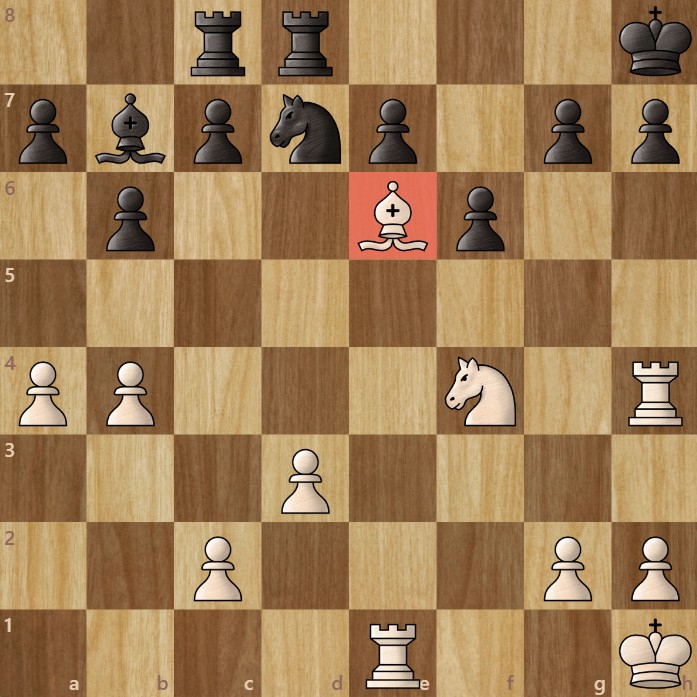
In the example below, White’s bishop is serving as a powerful outpost on e6, pinning Black’s knight and joining a mating attack with White’s rook and knight.
Why Outposts Are So Powerful
Outposts are powerful because your piece in the enemy half of the board can serve many critical functions:
- Control key squares in the enemy camp—including threats to pawns and pieces
- Excellent piece activity—often allows the outpost piece to move to other influential squares
- Restriction of enemy pieces and pawns
- Threatens tactical maneuvers—stands ever ready to pounce on a potential fork, pin, check, etc.
- Can combine with other pieces to support effective attacks
- Difficult for the opponent to drive away—meaning the outpost can serve as a long-term asset, often increasing in value with time
In the diagram below, White has a bishop outpost on h6, while Black has a knight on an outpost on d4. How many threats can you count from these two pieces?
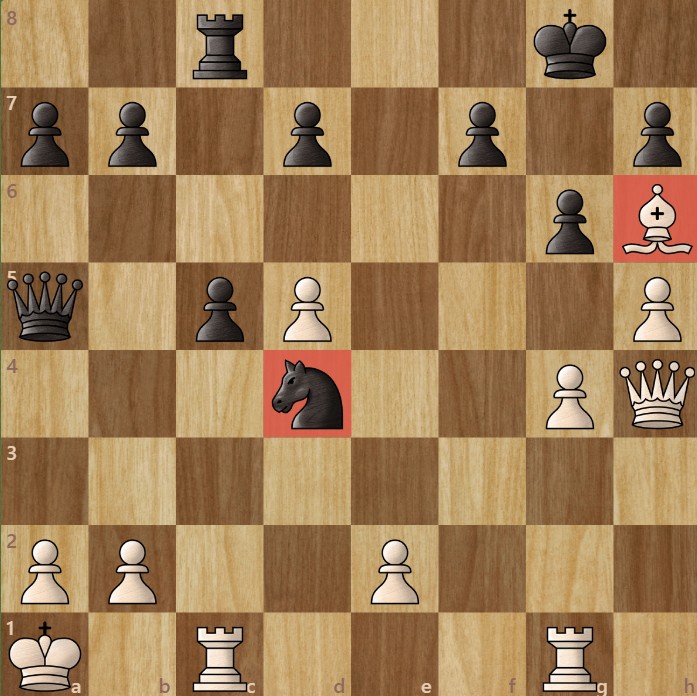
How many did you find? White’s bishop controls the critical g7 and f8 squares—preventing Black’s king from escaping. If it’s White to move, 1. Rxc8 Bxc8 2. Qe8# is checkmate in two moves!
Meanwhile, Black’s knight threatens three forks on b3, e2, and f3. Also, did you notice how, if it’s Black to play, there’s also checkmate in three moves? 1... Nb3+ 2. Kb1 Bd3+ 3. Rc2 Bxc2#
This shows how dangerous outposts can be. Even without immediate tactical opportunities like you see here, occupying weak squares often creates game-changing chances later. Especially when outposts are created near the enemy king!
How to Create an Outpost
Now you know why outposts are so valuable, but how should you create them? Start by identifying weak squares, then plan how to get your piece there!

The *NEW* Austrian Coffeehouse Series Chess Pieces - 4.0" King

DGT 3000 Digital Chess Clock

The Camaratta Signature Championship Chess Table - Dark Brown
Identifying Weak Squares
Weak squares in chess typically refer to ‘holes’ in an opponent’s pawn structure, especially on the fifth and sixth ranks, that can no longer be threatened by an enemy pawn. To create an outpost, first identify these weak squares, then plan to get your piece there.
In this legendary game between Karpov and Kasparov, Karpov’s pawn has just captured on d5. Kasparov’s knight needs to move, so why not begin planning an outpost from here? Can you identify White’s weak squares? There are only two of them!

Answer: d4 and d3. These are White’s only weak squares that a pawn can’t challenge. The more valuable of the two is usually the one on the sixth rank (i.e., the third rank for Black). In fact, International Master Jeremy Silman argues that a knight outpost on the sixth rank is worth as much as a rook! Sometimes, it may be even more so.
Setting Up an Outpost
Now that he’s identified the two weak squares, how can Kasparov get his knight to one of them? With no pawns on the c- or e-files, he would need another piece to support it.
The diagram below shows the board on move 16. Kasparov has done it! With support from the light-squared bishop, Kasparov lands his knight on d3. Just look at how many key squares it controls!

Despite only being defended by a bishop, Kasparov maintained tight pressure on Karpov, leaving him with no time to remove it. 18 moves later, and the knight was still there! It proved such a menace that Karpov eventually had to sacrifice his queen for it and lost shortly after!
This extraordinary display of an outpost knight’s power made this game legendary and a dream exemplar for chess teachers to inspire their students!
Removing an Enemy Outpost
Since outposts are so powerful, you’ll want to do everything you can do to remove them as quickly as possible! Bobby Fischer’s famous ‘Golden Rule’ states that when an opponent lands a piece in your half of the board, your highest priority must be to remove it immediately!
The three ways to challenge an outpost are:
- Trade or threaten to trade pieces
- Threaten or capture the outpost’s defender (aka. undermining the base)
- A pawn capture that creates a challenging pawn on an adjacent file again
In the example below, White has a knight on d5 as an outpost. Black has found a clever way to challenge not only the outpost knight but also the pawn defending it.
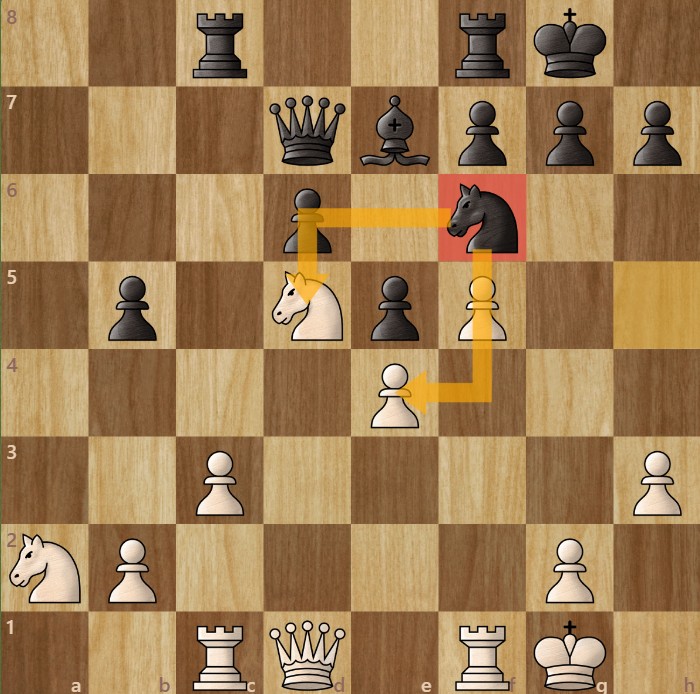
This double attack was important in this position. Otherwise, White’s second knight could have backed up the outpost from b4 – a common strategy for making an outpost persist.

The Modern Series Chess Pieces - 3.75" King

DGT Pegasus Chess Board (e-Board) - Wireless Bluetooth with USB Charger

Bobby Fischer Teaches Chess
Creating the Ultimate Outpost—Remove All Defenders!
We can see from the example above that outposts can sometimes be easily undone by defending pieces. A more sophisticated way to prepare for an outpost, then, is to remove all possible enemy pieces that could threaten it!
In this textbook example, Judit Polgar (White) plays against Vishy Anand and follows a long-term plan to remove all of Black’s minor pieces that could challenge for d5. After eliminating every piece that could present a challenge, she lands her knight on d5. Defended by two pawns, the knight is immovable on the central outpost square.

Amazingly, Polgar’s famous knight outpost remained on d5 until the end of the game, nearly 30 moves later! Although it didn't move, the knight played a central role in establishing Polgar’s lasting positional advantage, which eventually led to a winning attack.
This example offers a key insight about outposts: the outpost piece doesn’t need to create immediate tactical opportunities. Instead, it can remain there, quietly poised to support other pieces or pounce on a later tactic. For this reason, it’s often said that outposts are investments that increase in value over time!

The Camaratta Collection - The Botvinnik Flohr Series Chess Pieces - 4.0" King

Leap Digital Classic Chess Clock

US Chess Premium Chess Box
Outpost Square in Chess – A Brief Recap and a Training Challenge
Outposts are indeed one of the most important strategies in chess. By identifying holes in your opponent’s pawn structure and occupying them with your pieces, you gain a powerful foothold in enemy territory. Outposts serve to control key squares, support future attacks, and restrict enemy pieces and pawns. Furthermore, a well-planned outpost can be extremely difficult to remove.
Even if outposts don’t offer immediate tactical opportunities, it's amazing how often patiently occupying outpost squares pays off in ways you never foresaw. Think about outposts as an excellent investment for the future—by simply occupying a key square, your piece may prove invaluable as the game ripens!
A fun way to train in making outposts in friendly games is to give yourself one point for each outpost that you create. If the outpost helps you to win the game too, double your points. See how many points you can score!